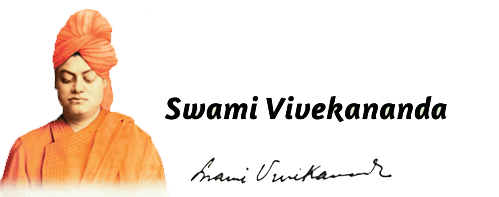
Swami Vivekananda
The Complete Works: Volume VIPage 1 of 1

Writings: Prose and Poems

The Story of the Boy Gopala

"O mother! I am so afraid to go to school through the woods alone; other boys have servants or somebody to bring them to school or take them home—why cannot I have someone to bring me home?”—thus said Gopāla, a little Brahmin boy, to his mother one winter afternoon when he was getting ready for school. The school hours were in the morning and afternoon. It was dark when the school closed in the afternoon, and the path lay through the woods.

Gopāla’s mother was a widow. His father who had lived as a Brahmin should—never caring for the goods of the world, studying and teaching, worshipping and helping others to worship—died when Gopāla was a baby. And the poor widow retired entirely from the concerns of the world—even from that little she ever had—her soul given entirely to God, and waiting patiently with prayers, fasting, and discipline, for the great deliverer death, to meet in another life, him who was the eternal companion of her joys and sorrows, her partner in the good and evil of the beginningless chain of lives. She lived in her little cottage. A small rice-field her husband received as sacred gift to learning brought her sufficient rice; and the piece of land that surrounded her cottage, with its clumps of bamboos, a few cocoanut palms, a few mangoes, and lichis, with the help of the kindly village folk, brought forth sufficient vegetables all the year round. For the rest, she worked hard every day for hours at the spinning-wheel.

She was up long before the rosy dawn touched the tufted heads of the palms, long before the birds had begun to warble in their nests, and sitting on her bed—a mat on the ground covered with a blanket—repeated the sacred names of the holy women of the past, saluted the ancient sages, recited the sacred names of Nārāyana the Refuge of mankind, of Shiva the merciful, of Tārā the Saviour Mother; and above all, (she) prayed to Him whom her heart most loved, Krishna, who had taken the form of Gopāla, a cowherd, to teach and save mankind, and rejoiced that by one day she was nearer to him who had gone ahead, and with him nearer by day to Him, the Cowherd.

Before the light of the day, she had her bath in the neighbouring stream, praying that her mind might be made as clean by the mercy of Krishna, as her body by the water. Then she put on her fresh-washed white cotton garment, collected some flowers, rubbed a piece of sandalwood on a circular stone with a little water to make a fragrant paste, gathered a few sweet-scented Tulasi leaves, and retired into a little room in the cottage, kept apart for worship. In this room she kept her Baby Cowherd; on a small wooden throne under a small silk canopy; on a small velvet cushion, almost covered with flowers, was placed a bronze image of Krishna as a baby. Her mother’s heart could only be satisfied by conceiving God as her baby. Many and many a time her learned husband had talked to her of Him who is preached in the Vedas, the formless, the infinite, the impersonal. She listened with all attention, and the conclusion was always the same—what is written in the Vedas must be true; but, oh! it was so immense, so far off, and she, only a weak, ignorant woman; and then, it was also written: “In whatsoever form one seeks Me, I reach him in that form, for all mankind are but following the paths I laid down for them”—and that was enough. She wanted to know no more. And there she was—all of the devotion, of faith, of love her heart was capable of, was there in Krishna, the Baby Cowherd, and all that heart entwined round the visible Cowherd, this little bronze image. Then again she had heard: “Serve Me as you would a being of flesh and blood, with love and purity, and I accept that all.” So she served as she would a master, a beloved teacher, above all, as she would serve the apple of her eye, her only child, her son.

So she bathed and dressed the image, burned incense before it, and for offering?—oh, she was so poor!—but with tears in her eyes she remembered her husband reading from the books: “I accept with gladness even leaves and flowers, fruits and water, whatever is offered with love”, and she offered: “Thou for whom the world of flowers bloom, accept my few common flowers. Thou who feedest the universe, accept my poor offerings of fruits. I am weak, I am ignorant. I do not know how to approach Thee, how to worship Thee, my God, my Cowherd, my child; let my worship be pure, my love for Thee selfless; and if there is any virtue in worship, let it be Thine, grant me only love, love that never asks for anything—‘never seeks for anything but love’.” Perchance the mendicant in his morning call was singing in the little yard:

Thy knowledge, man! I value not, It is thy love I fear; It is thy love that shakes My throne, Brings God to human tear. For love behold the Lord of all, The formless, ever free, Is made to take the human form To play and live with thee. What learning, they of Vrindā’s groves, The herdsmen, ever got? What science, girls that milked the kine? They loved, and Me they bought.

Then, in the Divine, the mother-heart found her earthly son Gopāla (lit. cowherd), named after the Divine Cowherd. And the soul which would almost mechanically move among its earthly surroundings—which, as it were, was constantly floating in a heavenly ether ready to drift away from contact of things material found its earthly moorings in her child. It was the only thing left to her to pile all her earthly joys and love on. Were not her movements, her thoughts, her pleasures, her very life for that little one that bound her to life?

For years she watched over the day-to-day unfolding of that baby life with all a mother’s care; and now that he was old enough to go to school, how hard she worked for months to get the necessaries for the young scholar!

The necessaries however were few. In a land where men contentedly pass their lives poring over books in the light of a mud lamp, with an ounce of oil in which is a thin cotton wick—a rush mat being the only furniture about them—the necessaries of a student are not many. Yet there were some, and even those cost many a day of hard work to the poor mother.

How for days she toiled over her wheel to buy Gopāla a new cotton Dhoti and a piece of cotton Chādar, the under and upper coverings, the small mat in which Gopāla was to put his bundle of palm leaves for writing and his reed pens, and which he was to carry rolled up under his arm to be used as his seat at school—and the inkstand. And what joy to her it was, when on a day of good omen Gopāla attempted to write his first letters, only a mother’s heart, a poor mother’s, can know!

But today there is a dark shadow in her mind. Gopāla is frightened to go alone through the wood. Never before had she felt her widowhood, her loneliness, her poverty so bitter. For a moment it was all dark, but she recalled to her mind what she had heard of the eternal promise: “Those that depend on Me giving up all other thoughts, to them I Myself carry whatever is necessary.” And she was one of the souls who could believe.

So the mother wiped her tears and told her child that he need not fear. For in those woods lived another son of hers tending cattle, and also called Gopāla; and if he was ever afraid passing through them, he had only to call on brother Gopāla!

The child was that mother’s son, and he believed.

That day, coming home from school through the wood, Gopāla was frightened and called upon his brother Gopāla, the cowherd: “Brother cowherd, are you here? Mother said you are, and I am to call on you: I am frightened being alone.” And a voice came from behind the trees: “Don’t be afraid, little brother, I am here; go home without fear.”

Thus every day the boy called, and the voice answered. The mother heard of it with wonder and love; and she instructed her child to ask the brother of the wood to show himself the next time.

The next day the boy, when passing through the woods, called upon his brother. The voice came as usual, but the boy asked the brother in the woods to show himself to him. The voice replied, “I am busy today, brother, and cannot come.” But the boy insisted, and out of the shade of the trees came the Cowherd of the woods, a boy dressed in the garb of cowherds, with a little crown on his head in which were peacock’s feathers, and the cowherd’s flute in his hands.

And they were so happy: they played together for hours in the woods, climbing trees, gathering fruits and flowers—the widow’s Gopāla and the Gopāla of the woods, till it was almost late for school. Then the widow’s Gopāla went to school with a reluctant heart, and nearly forgot all his lesson, his mind eager to return to the woods and play with his brother.

Months passed this wise. The poor mother heard of it day by day and, in the joy of this Divine mercy, forgot her widowhood, her poverty, and blessed her miseries a thousand times.

Then there came some religious ceremonies which the teacher had to perform in honour of his ancestors. These village teachers, managing alone a number of boys and receiving no fixed fees from them, have to depend a great deal upon presents when the occasion requires them.

Each pupil brought in his share, in goods or money. And Gopāla, the orphan, the widow’s son!—the other boys smiled a smile of contempt on him when they talked of the present they were bringing.

That night Gopāla’s heart was heavy, and he asked his mother for some present for the teacher, and the poor mother had nothing.

But she determined to do what she had been doing all her life, to depend on the Cowherd, and told her son to ask from his brother Gopāla in the forests for some present for the teacher.

The next day, after Gopāla had met the Cowherd boy in the woods as usual and after they had some games together, Gopāla told his brother of the forest the grief that was in his mind and begged him to give him something to present his teacher with.

“Brother Gopāla,” said the cowherd, “I am only a cowherd you see, and have no money, but take this pot of cream as from a poor cowherd and present it to your teacher.”

Gopāla, quite glad that he now had something to give his teacher, more so because it was a present from his brother in the forest, hastened to the home of the teacher and stood with an eager heart behind a crowd of boys handing over their presents to the teacher. Many and varied were the presents they had brought, and no one thought of looking even at the present of the orphan.

The neglect was quite disheartening; tears stood in the eyes of Gopāla, when by a sudden stroke of fortune the teacher happened to take notice of him. He took the small pot of cream from Gopāla’s hand, and poured the cream into a big vessel, when to his wonder the pot filled up again! Again he emptied the contents into a bigger vessel, again it was full; and thus it went on, the small pot filling up quicker than he could empty it.

Then amazement took hold of everyone; and the teacher took the poor orphan in his arms and inquired about the pot of cream.

Gopāla told his teacher all about his brother Cowherd in the forest, how he answered his call, how he played with him, and how at last he gave him the pot of cream.

The teacher asked Gopāla to take him to the woods and show him his brother of the woods, and Gopāla was only too glad to take his teacher there.

The boy called upon his brother to appear, but there was no voice even that day. He called again and again. No answer. And then the boy entreated his brother in the forest to speak, else the teacher would think he was not speaking the truth. Then came the voice as from a great distance:

“Gopāla, thy mother’s and thy love and faith brought Me to thee; but tell thy teacher, he will have to wait a long while yet.”

Share
Comments

Comments

Sign in to leave a comment

Contents

Lectures and Discourses
  1. The Methods and Purpose of Religion
  2. The Nature of the Soul and its Goal
  3. The Importance of Psychology
  4. Nature and Man
  5. Concentration and Breathing
  6. Introduction to Jnana-Yoga
  7. The Vedanta Philosophy and Christianity
  8. Worshipper and Worshipped
  9. Formal Worship
  10. Divine Love
Notes of Class Talks and Lectures
  1. Religion And Science
  2. Religion Is Realisation
  3. Religion Is Self-Abnegation
  4. Unselfish Work Is True Renunciation
  5. Freedom Of The Self
  6. Notes On Vedanta
  7. Hindu And Greek
  8. Thoughts On The Vedas And Upanishads
  9. On Raja-Yoga
  10. On Bhakti-Yoga
  11. On Jnana-Yoga
  12. The Reality And Shadow
  13. How To Become Free
  14. Soul And God
  15. The Goal
  16. On Proof Of Religion
  17. The Design Theory
  18. Spirit And Nature
  19. The Practice Of Religion
  20. Fragmentary Notes On The Ramayana
  21. Notes Taken Down In Madras, 1892-93
  22. Concentration
  23. The Power Of The Mind
  24. Lessons On Raja-Yoga
  25. Lessons On Bhakti-Yoga
  26. Mother-Worship
  27. Narada-Bhakti-Sutras
Writings: Prose and Poems
  1. Historical Evolution of India
  2. The Story of the Boy Gopala
  3. My Play Is Done
  4. The Cup
  5. A Benediction
  6. The Hymn of Creation
  7. On the Sea's Bosom
  8. Hinduism and Shri Ramakrishna
  9. The Bengali Language
  10. Matter for Serious Thought
  11. Shiva's Demon
Epistles: Second Series
  1. 1. Leaving Ayodhya I have reached the holy Vrindavan
  2. 2. Twice did Gangādhar ascend up to Tibet and Bhutan.
  3. 3. A full measure of proficiency in the Vedic language is impossible without first mastering Pānini’s grammar
  4. 4. He must be made of stone whose mind does not melt at the sight of Kashi and its Lord!
  5. 5. You have hit Ramakrishna in the right point.
  6. 6. My health is passable, but the state of mind is terrible!
  7. 7. One has to suffer at times for holding in one’s brain novel views of all sorts.
  8. 8. One may attain to the knowledge of Brahman without having studied the ceremonial parts of the Vedas.
  9. 9. For all time my head shall bend low in reverence wherever I see greatness, broadness of heart, and holiness
  10. 10. When a pitcher is being filled (by immersion), it gurgles, but when full, it is noiseless
  11. 11. Gangādhar’s blood won’t cool down before seeing Lhasa.
  12. 12. I can’t appreciate your citing Spencer’s parody on the German transcendentalists
  13. 13. My resolve is something like “either to lay down my life or realise my ideal”
  14. 14. Please inquire and inform me whether the Kumbha fair this year is going to be held at Hardwar or not.
  15. 15. “Lord have mercy”, is all right, but He helps him who helps himself.
  16. 16. In this land of Bhagavān Shuka’s birth, renunciation is looked down upon as madness and sin!
  17. 17. It is so very difficult to meet the Bābāji.
  18. 18. Unless one is face to face with the life of such men, faith in the scriptures does not grow in all its real integrity.
  19. 19. No trouble taken for the sake of such a great soul can ever go unrewarded.
  20. 20. Such amazing endurance and humility I have never seen
  21. 21. I am greatly suffering from lumbago.
  22. 22. The sons of my Master are indeed the great objects of my service
  23. 23. what the Lord Buddha has designated as Prajnāpāra—the transcendental—if such there be, I want that alone.
  24. 24. The mind does not find rest here any longer
  25. 25. The great conclusion is that Ramakrishna has no peer
  26. 26. I too shall be off to Prayag.
  27. 27. My motto is to learn whatever good things I may come across anywhere.
  28. 28. Gagan Bābu with whom I am putting up, is an exceedingly courteous, noble, and generous-minded man.
  29. 29. Bless me that I may have the most unflinching patience and perseverance.
  30. 30. I shall be drawn up to the hills by the attraction I have for Hrishikesh
  31. 31. If ever I get this true renunciation, I shall let you know
  32. 32. Do please pray for me to Vishvanātha that He may grant me strength
  33. 33. I am Ramakrishna’s slave, having laid my body at his feet “with Til and Tulasi leaves”
  34. 34. We should go on striving and striving even unto death.
  35. 35. Try to be pure and unselfish­—that is the whole of religion.
  36. 36. My children, the secret of religion lies not in theories but in practice.
  37. 37. You must go on with your Japa whatever direction the mind takes.
  38. 38. For us is only submission, calm and perfect.
  39. 39. Please read the Gitā every day to the best of your opportunity.
  40. 40. American women befriended me, gave me shelter and food, took me to their homes and treated me as their own son, their own brother.
  41. 41. The whole American nation loves and respects me, pays my expenses, and reveres me as a Guru.
  42. 42. She wants to work apart from all religions to ameliorate the conditions of women
  43. 43. May even the dust of the world never touch you
  44. 44. Stick to God! Who cares what comes to the body or to anything else!
  45. 45. It won’t do merely to call Shri Ramakrishna an Incarnation, you must manifest power.
  46. 46. A Hindu son never lends to his mother, but the mother has every right over the son
  47. 47. Think all of you that you are the infinitely powerful Ātman, and see what strength comes out.
  48. 48. I can bundle myself up anywhere and feel quite comfortable
  49. 49. Courage! Everything will come about by degrees.
  50. 50. The American women, as everywhere, came to my rescue
  51. 51. Everything will come right if you are pure and sincere
  52. 52. Are you progressing morally, spiritually, and in your worldly affairs?
  53. 53. Honesty is the best policy, and a virtuous man must gain in the end
  54. 54. I want no name—I want to be a voice without a form.
  55. 55. We must work, and this cannot be done by merely sitting idle.
  56. 56. This is a place for action, not enjoyment, and everyone will go home when his task is done
  57. 57. In New York I find more men interested in religion than in any other city
  58. 58. Start centres at different places.
  59. 59. When it comes to doing something I want, they are nowhere.
  60. 60. An immediate work at hand should always have the preference
  61. 61. We must plunge heart and soul and body into the work
  62. 62. In the tiger and in the lamb, in the saint and sinner all He!
  63. 63. See that cooking and drinking water be filtered
  64. 64. Always evil comes out of laziness
  65. 65. This gentleman is the chief citizen of Madras and a Judge of the Supreme Court
  66. 66. Though the attendance is large, it does not even pay enough to cover the rent
  67. 67. I go into the forest alone and read my Gitā and am quite happy
  68. 68. All is for good. All conjunctions are for subsequent disjunction.
  69. 69. To me, the thought of oneself as low and humble is a sin and ignorance
  70. 70. I got up an idea of making books out of the bark
  71. 71. From the day Shri Ramakrishna was born dates the growth of modern India and of the Golden Age.
  72. 72. The first requisite for organisation is obedience.
  73. 73. Know partiality to be the chief cause of all evil
  74. 74. Wherever you can, open a centre.
  75. 75. In this Satya-Yuga the tidal wave of Shri Ramakrishna’s Love has unified all.
  76. 76. Why not wear one’s country-dress, as befits gentlemen?
  77. 77. Why look up to men for approbation, look up to God!
  78. 78. Those who are protected by the Lord must be above fear.
  79. 79. Purity, perseverance, and energy—these three I want
  80. 80. “Avoid not and seek not—wait for what the Lord sends”, is my motto.
  81. 81. When an Englishman takes up a thing, he goes to its very depths.
  82. 82. All great things must of necessity be slow.
  83. 83. I trust those that will not desert me in prosperity and adversity alike.
  84. 84. I am translating a little book on Bhakti with Mr. Sturdy with copious commentaries
  85. 85. Householders of poor means take to various tricks to supply their wants.
  86. 86. I sail by the Britannic on Wednesday, the 27th.
  87. 87. Even if the nation is spiritually poor, it aspires for physical freedom.
  88. 88. The supply must follow the demand, and the demand alone.
  89. 89. Will be glad to lecture before the Harvard Philosophical Club as requested.
  90. 90. Higher direction and not destruction is the law.
  91. 91. Oh, the grief! If I could get two or three like me, I could have left the world convulsed.
  92. 92. Want of sympathy and lack of energy are at the root of all misery
  93. 93. I have worked my best. If there is any seed of truth in it, it will come to life.
  94. 94. What you need is only obedience
  95. 95. I am suffering from slight fever the last two days
  96. 96. I like very much to foster this sort of adventurous spirit among my countrymen
  97. 97. The masses will always have the person, the higher ones the principle; we want both
  98. 98. Above all, his reverence for Ramakrishna Paramahamsa is extreme
  99. 99. In America alone there is that something in the air which brings out whatever is best in every one
  100. 100. We want organisation. Organisation is power, and the secret of this is obedience.
  101. 101. Send Kāli to England as soon as you get this letter.
  102. 102. Beyond, beyond reason and learning and talking is the feeling, the “Love”, the “Beloved”
  103. 103. The English people are very generous.
  104. 104. I want to forget the world entirely at least for the next two months and practise hard. That is my rest.
  105. 105. I want to start a Math at Almora or near Almora rather.
  106. 106. It is for the sinful that the Lord manifests Himself specially, not so much for the virtuous.
  107. 107. Who works? Whose work? There is no world. It is God Himself. In delusion we call it world.
  108. 108. Perfect life is a contradiction in terms
  109. 109. My natural tendency is to go into a cave and be quiet
  110. 110. Great freedom with great law-abidingness.
  111. 111. Specification of work is absolutely necessary. Our special branch is to preach Vedānta.
  112. 112. I am a socialist not because I think it is a perfect system, but half a loaf is better than no bread.
  113. 113. The first edition of Rāja-Yoga is sold out
  114. 114. We want a whole hill, with a view of the snow-range, all to ourselves
  115. 115. Can anything be done unless everybody exerts himself to his utmost?
  116. 116. I am going to start a centre in Calcutta and another in the Himalayas
  117. 117. I intend to return to the U.S. and to Europe thence in about a year.
  118. 118. My idea is to start on a very small scale. I do not know anything yet.
  119. 119. The mind is more powerful than the body.
  120. 120. Tomorrow we reach Rome
  121. 121. My journey has been a huge procession—crowds of people, illuminations, addresses, etc.,
  122. 122. The more the opposition, the more the demon in me is roused.
  123. 123. On metaphysical lines no nation on earth can hold a candle to the Hindus
  124. 124. All caste either on the principle of birth or of merit is bondage.
  125. 125. In all the Vedas illumination alone is the concern
  126. 126. Even my wicked deeds were not for self.
  127. 127. We have been able fearlessly to preach our Vedantic doctrines both in India and England.
  128. 128. Work, work, work, even unto death!
  129. 129. Buy all the good scientific books that you can have in Bengali, and have them read.
  130. 130. Let Memorial Halls and things of that kind go to the dogs.
  131. 131. Never worry about money.
  132. 132. Do not mix in politics etc., nor have any connection with them.
  133. 133. You ought to know from the first that India is the dirtiest and unhealthiest hole in the world
  134. 134. This Kashmir is a veritable heaven on earth.
  135. 135. What one does has no destruction—no, never.
  136. 136. In our country we at present need manhood and kindness.
  137. 137. Victory to the Lord!—To work! To work!
  138. 138. Come out, man! No sleeping all life; time is flying.
  139. 139. Duty must be done first.
  140. 140. Any least trouble undergone, is bound to produce its excellent results.
  141. 141. Be of good cheer. “Never a worker of good came to grief.”
  142. 142. Hinduism and Islam—Vedānta brain and Islam body—is the only hope.
  143. 143. Things go on all right whether we lend them our helping hands or not.
  144. 144. The Mother is our guide and whatever happens or will happen is under Her ordination.
  145. 145. You are appointed by the Mother to watch over my life
  146. 146. Two years of physical suffering have taken away twenty years of my life.
  147. 147. Mother knows best, that is all about me.
  148. 148. Suffering is the lot of the world’s best and bravest
  149. 149. This sort of nervous body is just the instrument to play great music at times
  150. 150. If the Lord has made me His hack to work and die on the streets, let Him have it.
  151. 151. Mother is working it up. She cannot let me go before Her work is done
  152. 152. We are all sacrifices—each in his own way.
  153. 153. One road is quite as good as the other.
  154. 154. The more heart you will be able to manifest, the greater will be the victory you achieve
  155. 155. To become fearless, to be daring, to be careless of everything!
  156. 156. My dreams are breaking. Om Tat Sat!
  157. 157. The seed must die underground to come up as the tree
  158. 158. I have bundled my things and am waiting for the great deliverer.
  159. 159. Mother seems to be kind again and the wheel is slowly rising up.
  160. 160. Mother knows, as I always say. Pray to Mother.
  161. 161. You must know once for all, I am born without jealousy
  162. 162. Who cares for great things? Why not do small things as well?
  163. 163. “Chutney is the thing”, said a voice near the door.
  164. 164. I am surely coming this evening and of course
  165. 165. Two great Englishmen gave up their lives for us—us the Hindus.
  166. 166. Everything is green and gold, and the grass is like velvet
  167. 167. Occasion never found me low yet; Mother will not make me now depressed.
  168. 168. We all work by bits, that is to say, in this cause.
Conversations and Dialogues
  1. I
  2. II
  3. III
  4. IV
  5. V
  6. VI
  7. VII
  8. VIII
  9. IX
  10. X
  11. XI
  12. XII