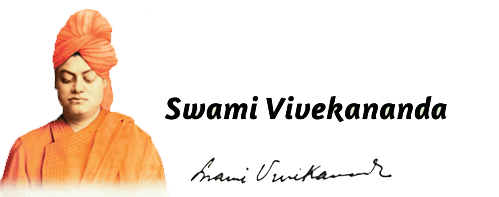
Swami Vivekananda
The Complete Works: Volume VIPage 1 of 1

Conversations and Dialogues

III

( Translated from Bengali )

( From the Diary of a Disciple )

[Place: Cossipore, at the garden of the late Gopal Lal Seal. Year: 1897.]

After his first return from the West, Swamiji resided for a few days at the garden of the late Gopal Lal Seal at Cossipore. Some well-known Pundits living at Barabazar, Calcutta, came to the garden one day with a view to holding a disputation with him. The disciple was present there on the occasion.

All the Pundits who came there could speak in Sanskrit fluently. They came and greeting Swamiji, who sat surrounded by a circle of visitors, began their conversation in Sanskrit. Swamiji also responded to them in melodious Sanskrit. The disciple cannot remember now the subject on which the Pundits argued with him that day. But this much he remembers that the Pundits, almost all in one strident voice, were rapping out to Swamiji in Sanskrit subtle questions of philosophy, and he, in a dignified serious mood, was giving out to them calmly his own well-argued conclusions about those questions.

In the discussion with the Pundits Swamiji represented the side of the Siddhānta or conclusions to be established, while the Pundits represented that of the Purvapaksha or objections to be raised. The disciple remembers that, while arguing, Swamiji wrongly used in one place the word Asti instead of Svasti, which made the Pundits laugh out. At this, Swamiji at once submitted:
“पण्डितानां दासोऽहं क्षन्तव्यमेतत् स्खलनम्—I am but a servant of the Pundits, please excuse this mistake.” The Pundits also were charmed at this humility of Swamiji. After a long dispute, the Pundits at last admitted that the conclusions of the Siddhānta side were adequate, and preparing to depart, they made their greetings to Swamiji.

After the Pundits had left, the disciple learnt from Swamiji that these Pundits who took the side of the Purvapaksha were well versed in the Purva-Mimāmsā Shāstras, Swamiji advocated the philosophy of the Uttara-Mimāmsā or Vedānta and proved to them the superiority of the path of knowledge, and they were obliged to accept his conclusions.

About the way the Pundits laughed at Swamiji, picking up one grammatical mistake, he said that this error of his was due to the fact of his not having spoken in Sanskrit for many years together. He did not blame the Pundits a bit for all that. But he pointed out in this connection that in the West it would imply a great incivility on the part of an opponent to point out any such slip in language, deviating from the real issue of dispute. A civilised society in such cases would accept the idea, taking no notice of the language. “But in your country, all the fighting is going on over the husk, nobody searches for the kernel within.” So saying, Swamiji began to talk with the disciple in Sanskrit. The disciple also gave answers in broken Sanskrit. Yet Swamiji praised him for the sake of encouragement. From that day, at the request of Swamiji, the disciple used to speak with him in Sanskrit off and on.

In reply to the question, what is civilisation, Swamiji said that day: “The more advanced a society or nation is in spirituality, the more is that society or nation civilised. No nation can be said to have become civilised only because it has succeeded in increasing the comforts of material life by bringing into use lots of machinery and things of that sort. The present-day civilisation of the West is multiplying day by day only the wants and distresses of men. On the other hand, the ancient Indian civilisation, by showing people the way to spiritual advancement, doubtless succeeded, if not in removing once for all, at least in lessening, in a great measure, the material needs of men. In the present age, it is to bring into coalition both these civilisations that Bhagavān Shri Ramakrishna was born. In this age, as on the one hand people have to be intensely practical, so on the other hand they have to acquire deep spiritual knowledge.” Swamiji made us clearly understand that day that from such interaction of the Indian civilisation with that of the West would dawn on the world a new era. In the course of dilating upon this, he happened to remark in one place, “Well, another thing. People there in the West think that the more a man is religious, the more demure he must be in his outward bearing—no word about anything else from his lips! As the priests in the West would on the one hand be struck with wonder at my liberal religious discourses, they would be as much puzzled on the other hand when they found me, after such discourses, talking frivolities with my friends. Sometimes they would speak out to my face: ‘Swami, you are a priest, you should not be joking and laughing in this way like ordinary men. Such levity does not look well in you.’ To which I would reply, ‘We are children of bliss, why should we look morose and sombre?’ But I doubt if they could rightly catch the drift of my words.”

That day Swamiji spoke many things about Bhāva Samādhi and Nirvikalpa Samādhi as well. These are produced below as far as possible:

Suppose a man is cultivating that type of devotion to God which Hanumān represents. The more intense the attitude becomes, the more will the pose and demeanour of that aspirant, nay even his physical configuration, be cast in that mould. It is in this way that transmutation of species takes place. Taking up any such emotional attitude, the worshipper becomes gradually shaped into the very form of his ideal. The ultimate stage of any such sentiment is called Bhava Samādhi. While the aspirant in the path of Jnāna, pursuing the process of Neti, Neti, “not this, not this”, such as “I am not the body, nor the mind, nor the intellect”, and so on, attains to the Nirvikalpa Samādhi when he is established in absolute consciousness. It requires striving through many births to reach perfection or the ultimate stage with regard to a single one of these devotional attitudes. But Shri Ramakrishna, the king of the realm of spiritual sentiment, perfected himself in no less than eighteen different forms of devotion! He also used to say that his body would not have endured, had he not held himself on to this play of spiritual sentiment.

The disciple asked that day, “Sir, what sort of food did you use to take in the West?”

Swamiji: The same as they take there. We are Sannyāsins and nothing can take away our caste!

On the subject of how he would work in future in this country, Swamiji said that day that starting two centres, one in Madras and another in Calcutta, he would rear up a new type of Sannyāsins for the good of all men in all its phases. He further said that by a destructive method no progress either for the society or for the country could be achieved. In all ages and times progress has been effected by the constructive process, that is, by giving a new mould to old methods and customs. Every religious preacher in India, during the past ages, worked in that line. Only the religion of Bhagavān Buddha was destructive. Hence that religion has been extirpated from India.

The disciple remembers that while thus speaking on, he remarked, “If the Brahman is manifested in one man, thousands of men advance, finding their way out in that light. Only the knowers of Brahman are the spiritual teachers of mankind. This is corroborated by all scriptures and by reason too. It is only the selfish Brahmins who have introduced into this country the system of hereditary Gurus, which is against the Vedas and against the Shāstras. Hence it is that even through their spiritual practice men do not now succeed in perfecting themselves or in realising Brahman. To remove all this corruption in religion, the Lord has incarnated Himself on earth in the present age in the person of Shri Ramakrishna. The universal teachings that he offered, if spread all over the world, will do good to humanity and the world. Not for many a century past has India produced so great, so wonderful, a teacher of religious synthesis.”

A brother-disciple of Swamiji at that time asked him, “Why did you not publicly preach Shri Ramakrishna as an Avatāra in the West?”

Swamiji: They make much flourish and fuss over their science and philosophy. Hence, unless you first knock to pieces their intellectual conceit through reasoning, scientific argument, and philosophy, you cannot build anything there. Those who finding themselves off their moorings through their utmost intellectual reasoning would approach me in a real spirit of truth-seeking, to them alone, I would speak of Shri Ramakrishna. If, otherwise, I had forthwith spoken of the doctrine of incarnation, they might have said, “Oh, you do not say anything new—why, we have our Lord Jesus for all that!”

After thus spending some three or four delightful hours, the disciple came back to Calcutta that day along with the other visitors.

Share
Comments

Comments

Sign in to leave a comment

Contents

Lectures and Discourses
  1. The Methods and Purpose of Religion
  2. The Nature of the Soul and its Goal
  3. The Importance of Psychology
  4. Nature and Man
  5. Concentration and Breathing
  6. Introduction to Jnana-Yoga
  7. The Vedanta Philosophy and Christianity
  8. Worshipper and Worshipped
  9. Formal Worship
  10. Divine Love
Notes of Class Talks and Lectures
  1. Religion And Science
  2. Religion Is Realisation
  3. Religion Is Self-Abnegation
  4. Unselfish Work Is True Renunciation
  5. Freedom Of The Self
  6. Notes On Vedanta
  7. Hindu And Greek
  8. Thoughts On The Vedas And Upanishads
  9. On Raja-Yoga
  10. On Bhakti-Yoga
  11. On Jnana-Yoga
  12. The Reality And Shadow
  13. How To Become Free
  14. Soul And God
  15. The Goal
  16. On Proof Of Religion
  17. The Design Theory
  18. Spirit And Nature
  19. The Practice Of Religion
  20. Fragmentary Notes On The Ramayana
  21. Notes Taken Down In Madras, 1892-93
  22. Concentration
  23. The Power Of The Mind
  24. Lessons On Raja-Yoga
  25. Lessons On Bhakti-Yoga
  26. Mother-Worship
  27. Narada-Bhakti-Sutras
Writings: Prose and Poems
  1. Historical Evolution of India
  2. The Story of the Boy Gopala
  3. My Play Is Done
  4. The Cup
  5. A Benediction
  6. The Hymn of Creation
  7. On the Sea's Bosom
  8. Hinduism and Shri Ramakrishna
  9. The Bengali Language
  10. Matter for Serious Thought
  11. Shiva's Demon
Epistles: Second Series
  1. 1. Leaving Ayodhya I have reached the holy Vrindavan
  2. 2. Twice did Gangādhar ascend up to Tibet and Bhutan.
  3. 3. A full measure of proficiency in the Vedic language is impossible without first mastering Pānini’s grammar
  4. 4. He must be made of stone whose mind does not melt at the sight of Kashi and its Lord!
  5. 5. You have hit Ramakrishna in the right point.
  6. 6. My health is passable, but the state of mind is terrible!
  7. 7. One has to suffer at times for holding in one’s brain novel views of all sorts.
  8. 8. One may attain to the knowledge of Brahman without having studied the ceremonial parts of the Vedas.
  9. 9. For all time my head shall bend low in reverence wherever I see greatness, broadness of heart, and holiness
  10. 10. When a pitcher is being filled (by immersion), it gurgles, but when full, it is noiseless
  11. 11. Gangādhar’s blood won’t cool down before seeing Lhasa.
  12. 12. I can’t appreciate your citing Spencer’s parody on the German transcendentalists
  13. 13. My resolve is something like “either to lay down my life or realise my ideal”
  14. 14. Please inquire and inform me whether the Kumbha fair this year is going to be held at Hardwar or not.
  15. 15. “Lord have mercy”, is all right, but He helps him who helps himself.
  16. 16. In this land of Bhagavān Shuka’s birth, renunciation is looked down upon as madness and sin!
  17. 17. It is so very difficult to meet the Bābāji.
  18. 18. Unless one is face to face with the life of such men, faith in the scriptures does not grow in all its real integrity.
  19. 19. No trouble taken for the sake of such a great soul can ever go unrewarded.
  20. 20. Such amazing endurance and humility I have never seen
  21. 21. I am greatly suffering from lumbago.
  22. 22. The sons of my Master are indeed the great objects of my service
  23. 23. what the Lord Buddha has designated as Prajnāpāra—the transcendental—if such there be, I want that alone.
  24. 24. The mind does not find rest here any longer
  25. 25. The great conclusion is that Ramakrishna has no peer
  26. 26. I too shall be off to Prayag.
  27. 27. My motto is to learn whatever good things I may come across anywhere.
  28. 28. Gagan Bābu with whom I am putting up, is an exceedingly courteous, noble, and generous-minded man.
  29. 29. Bless me that I may have the most unflinching patience and perseverance.
  30. 30. I shall be drawn up to the hills by the attraction I have for Hrishikesh
  31. 31. If ever I get this true renunciation, I shall let you know
  32. 32. Do please pray for me to Vishvanātha that He may grant me strength
  33. 33. I am Ramakrishna’s slave, having laid my body at his feet “with Til and Tulasi leaves”
  34. 34. We should go on striving and striving even unto death.
  35. 35. Try to be pure and unselfish­—that is the whole of religion.
  36. 36. My children, the secret of religion lies not in theories but in practice.
  37. 37. You must go on with your Japa whatever direction the mind takes.
  38. 38. For us is only submission, calm and perfect.
  39. 39. Please read the Gitā every day to the best of your opportunity.
  40. 40. American women befriended me, gave me shelter and food, took me to their homes and treated me as their own son, their own brother.
  41. 41. The whole American nation loves and respects me, pays my expenses, and reveres me as a Guru.
  42. 42. She wants to work apart from all religions to ameliorate the conditions of women
  43. 43. May even the dust of the world never touch you
  44. 44. Stick to God! Who cares what comes to the body or to anything else!
  45. 45. It won’t do merely to call Shri Ramakrishna an Incarnation, you must manifest power.
  46. 46. A Hindu son never lends to his mother, but the mother has every right over the son
  47. 47. Think all of you that you are the infinitely powerful Ātman, and see what strength comes out.
  48. 48. I can bundle myself up anywhere and feel quite comfortable
  49. 49. Courage! Everything will come about by degrees.
  50. 50. The American women, as everywhere, came to my rescue
  51. 51. Everything will come right if you are pure and sincere
  52. 52. Are you progressing morally, spiritually, and in your worldly affairs?
  53. 53. Honesty is the best policy, and a virtuous man must gain in the end
  54. 54. I want no name—I want to be a voice without a form.
  55. 55. We must work, and this cannot be done by merely sitting idle.
  56. 56. This is a place for action, not enjoyment, and everyone will go home when his task is done
  57. 57. In New York I find more men interested in religion than in any other city
  58. 58. Start centres at different places.
  59. 59. When it comes to doing something I want, they are nowhere.
  60. 60. An immediate work at hand should always have the preference
  61. 61. We must plunge heart and soul and body into the work
  62. 62. In the tiger and in the lamb, in the saint and sinner all He!
  63. 63. See that cooking and drinking water be filtered
  64. 64. Always evil comes out of laziness
  65. 65. This gentleman is the chief citizen of Madras and a Judge of the Supreme Court
  66. 66. Though the attendance is large, it does not even pay enough to cover the rent
  67. 67. I go into the forest alone and read my Gitā and am quite happy
  68. 68. All is for good. All conjunctions are for subsequent disjunction.
  69. 69. To me, the thought of oneself as low and humble is a sin and ignorance
  70. 70. I got up an idea of making books out of the bark
  71. 71. From the day Shri Ramakrishna was born dates the growth of modern India and of the Golden Age.
  72. 72. The first requisite for organisation is obedience.
  73. 73. Know partiality to be the chief cause of all evil
  74. 74. Wherever you can, open a centre.
  75. 75. In this Satya-Yuga the tidal wave of Shri Ramakrishna’s Love has unified all.
  76. 76. Why not wear one’s country-dress, as befits gentlemen?
  77. 77. Why look up to men for approbation, look up to God!
  78. 78. Those who are protected by the Lord must be above fear.
  79. 79. Purity, perseverance, and energy—these three I want
  80. 80. “Avoid not and seek not—wait for what the Lord sends”, is my motto.
  81. 81. When an Englishman takes up a thing, he goes to its very depths.
  82. 82. All great things must of necessity be slow.
  83. 83. I trust those that will not desert me in prosperity and adversity alike.
  84. 84. I am translating a little book on Bhakti with Mr. Sturdy with copious commentaries
  85. 85. Householders of poor means take to various tricks to supply their wants.
  86. 86. I sail by the Britannic on Wednesday, the 27th.
  87. 87. Even if the nation is spiritually poor, it aspires for physical freedom.
  88. 88. The supply must follow the demand, and the demand alone.
  89. 89. Will be glad to lecture before the Harvard Philosophical Club as requested.
  90. 90. Higher direction and not destruction is the law.
  91. 91. Oh, the grief! If I could get two or three like me, I could have left the world convulsed.
  92. 92. Want of sympathy and lack of energy are at the root of all misery
  93. 93. I have worked my best. If there is any seed of truth in it, it will come to life.
  94. 94. What you need is only obedience
  95. 95. I am suffering from slight fever the last two days
  96. 96. I like very much to foster this sort of adventurous spirit among my countrymen
  97. 97. The masses will always have the person, the higher ones the principle; we want both
  98. 98. Above all, his reverence for Ramakrishna Paramahamsa is extreme
  99. 99. In America alone there is that something in the air which brings out whatever is best in every one
  100. 100. We want organisation. Organisation is power, and the secret of this is obedience.
  101. 101. Send Kāli to England as soon as you get this letter.
  102. 102. Beyond, beyond reason and learning and talking is the feeling, the “Love”, the “Beloved”
  103. 103. The English people are very generous.
  104. 104. I want to forget the world entirely at least for the next two months and practise hard. That is my rest.
  105. 105. I want to start a Math at Almora or near Almora rather.
  106. 106. It is for the sinful that the Lord manifests Himself specially, not so much for the virtuous.
  107. 107. Who works? Whose work? There is no world. It is God Himself. In delusion we call it world.
  108. 108. Perfect life is a contradiction in terms
  109. 109. My natural tendency is to go into a cave and be quiet
  110. 110. Great freedom with great law-abidingness.
  111. 111. Specification of work is absolutely necessary. Our special branch is to preach Vedānta.
  112. 112. I am a socialist not because I think it is a perfect system, but half a loaf is better than no bread.
  113. 113. The first edition of Rāja-Yoga is sold out
  114. 114. We want a whole hill, with a view of the snow-range, all to ourselves
  115. 115. Can anything be done unless everybody exerts himself to his utmost?
  116. 116. I am going to start a centre in Calcutta and another in the Himalayas
  117. 117. I intend to return to the U.S. and to Europe thence in about a year.
  118. 118. My idea is to start on a very small scale. I do not know anything yet.
  119. 119. The mind is more powerful than the body.
  120. 120. Tomorrow we reach Rome
  121. 121. My journey has been a huge procession—crowds of people, illuminations, addresses, etc.,
  122. 122. The more the opposition, the more the demon in me is roused.
  123. 123. On metaphysical lines no nation on earth can hold a candle to the Hindus
  124. 124. All caste either on the principle of birth or of merit is bondage.
  125. 125. In all the Vedas illumination alone is the concern
  126. 126. Even my wicked deeds were not for self.
  127. 127. We have been able fearlessly to preach our Vedantic doctrines both in India and England.
  128. 128. Work, work, work, even unto death!
  129. 129. Buy all the good scientific books that you can have in Bengali, and have them read.
  130. 130. Let Memorial Halls and things of that kind go to the dogs.
  131. 131. Never worry about money.
  132. 132. Do not mix in politics etc., nor have any connection with them.
  133. 133. You ought to know from the first that India is the dirtiest and unhealthiest hole in the world
  134. 134. This Kashmir is a veritable heaven on earth.
  135. 135. What one does has no destruction—no, never.
  136. 136. In our country we at present need manhood and kindness.
  137. 137. Victory to the Lord!—To work! To work!
  138. 138. Come out, man! No sleeping all life; time is flying.
  139. 139. Duty must be done first.
  140. 140. Any least trouble undergone, is bound to produce its excellent results.
  141. 141. Be of good cheer. “Never a worker of good came to grief.”
  142. 142. Hinduism and Islam—Vedānta brain and Islam body—is the only hope.
  143. 143. Things go on all right whether we lend them our helping hands or not.
  144. 144. The Mother is our guide and whatever happens or will happen is under Her ordination.
  145. 145. You are appointed by the Mother to watch over my life
  146. 146. Two years of physical suffering have taken away twenty years of my life.
  147. 147. Mother knows best, that is all about me.
  148. 148. Suffering is the lot of the world’s best and bravest
  149. 149. This sort of nervous body is just the instrument to play great music at times
  150. 150. If the Lord has made me His hack to work and die on the streets, let Him have it.
  151. 151. Mother is working it up. She cannot let me go before Her work is done
  152. 152. We are all sacrifices—each in his own way.
  153. 153. One road is quite as good as the other.
  154. 154. The more heart you will be able to manifest, the greater will be the victory you achieve
  155. 155. To become fearless, to be daring, to be careless of everything!
  156. 156. My dreams are breaking. Om Tat Sat!
  157. 157. The seed must die underground to come up as the tree
  158. 158. I have bundled my things and am waiting for the great deliverer.
  159. 159. Mother seems to be kind again and the wheel is slowly rising up.
  160. 160. Mother knows, as I always say. Pray to Mother.
  161. 161. You must know once for all, I am born without jealousy
  162. 162. Who cares for great things? Why not do small things as well?
  163. 163. “Chutney is the thing”, said a voice near the door.
  164. 164. I am surely coming this evening and of course
  165. 165. Two great Englishmen gave up their lives for us—us the Hindus.
  166. 166. Everything is green and gold, and the grass is like velvet
  167. 167. Occasion never found me low yet; Mother will not make me now depressed.
  168. 168. We all work by bits, that is to say, in this cause.
Conversations and Dialogues
  1. I
  2. II
  3. III
  4. IV
  5. V
  6. VI
  7. VII
  8. VIII
  9. IX
  10. X
  11. XI
  12. XII