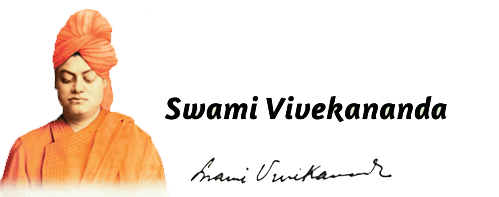
Swami Vivekananda
The Complete Works: Volume VIPage 1 of 1

Conversations and Dialogues

I

[Place: Calcutta, the house of the late Babu Priyanath Mukhopadhyaya, Baghbazar. Year: 1897.]

It is three or four days since Swamiji has set his foot in Calcutta1 after his first return from the West. The joy of the devotees of Shri Ramakrishna knows no bounds at enjoying his holy presence after a long time. And the well-to-do among them are considering themselves blessed to cordially invite Swamiji to their own houses. This afternoon Swamiji had an invitation to the house of Srijut Priyanāth Mukhopādhyāya, a devotee of Shri Ramakrishna, at Rājballabhpara in Baghbazar. Receiving this news, many devotees assembled today in his house.

The disciple also, informed of it through indirect sources, reached the house of Mr. Mukherjee at about 2–30 p.m. He had not yet made his acquaintance with Swamiji. So this was to be his first meeting with the Swami.

On the disciple’s reaching there, Swami Turiyānanda took him to Swamiji and introduced him. After his return to the Math, the Swami had already heard about him, having read a Hymn on Shri Ramakrishna composed by the disciple.

Swamiji also had come to know that the disciple used to visit Nāg Mahāshaya, a foremost devotee of Shri Ramakrishna2.

When the disciple prostrated himself before him and took his seat, Swamiji addressed him in Sanskrit and asked him about Nāg Mahāshaya and his health, and while referring to his superhuman renunciation, his unbounded love for God, and his humility, he said:

“वयं तत्त्वान्वेषात् हता3 मधुकर त्वं खलु कृती।

—“We are undone by our vain quest after reality; while, O bee, you are indeed blessed with success!” He then asked the disciple to send these words to Nāg Mahāshaya. Afterwards, finding it rather inconvenient to talk to the disciple in the crowd, he called him and Swami Turiyānanda to a small room to the west and, addressing himself to the disciple, began to recite these words from the Vivekachudāmani (43):

“मा भैष्ट विद्वंस्तव नास्त्यपाय:

संसारसिन्धोस्तरणेऽस्त्युपाय:।
येनैव याता यतयोऽस्य पारं
तमेव मार्गं तव निर्दिशामि॥

—“O wise one, fear not; you have not to perish. Means there are for crossing the ocean of this round of birth and death. I shall show you the same way by which holy men of renunciation have crossed this ocean.” He then asked him to read Āchārya Shankara’s work named Vivekachudāmani.

At these words, the disciple went on musing within himself. Was the Swami in this way hinting at the desirability of his own formal initiation? The disciple was at that time a staunch orthodox man in his ways, and a Vedāntin. He had not yet settled his mind as regards the adoption of a Guru and was a devoted advocate of Varnāshrama or caste ordinances.

While various topics were going on, a man came in and announced that Mr. Narendranāth Sen, the Editor of the Mirror, had come for an interview with Swamiji. Swamiji asked the bearer of this news to show him into that small room. Narendra Bābu came and taking a seat there introduced various topics about England and America. In answer to his questions Swamiji said, “Nowhere in the world is to be found another nation like the Americans, so generous, broad-minded, hospitable, and so sincerely eager to accept new ideas.” “Wherever work”, he went on, “has been done in America has not been done through my power. The people of America have accepted the ideas of Vedānta, because they are so good-hearted.” Referring to England he said, “There is no nation in the world so conservative as the English. They do not like so easily to accept any new idea, but if through perseverance they can be once made to understand any idea, they will never give it up by any means. Such firm determination you will find in no other nation. This is why they occupy the foremost position in the world in power and civilization.”

Then declaring that if qualified preachers could be had, there was greater likelihood of the Vedānta work being permanently established in England than in America, he continued, “I have only laid the foundation of the work. If future preachers follow my path, a good deal of work may be done in time.”

Narendra Bābu asked, “What future prospect is there for us in preaching religion in this way?”

Swamiji said: “In our country there is only this religion of Vedānta. Compared with the Western civilisation, it may be said, we have hardly got anything else. But by the preaching of this universal religion of Vedānta, a religion which gives equal rights to acquire spirituality to men of all creeds and all paths of religious practice, the civilised West would come to know what a wonderful degree of spirituality once developed in India and how that is still existing. By the study of this religion, the Western nations will have increasing regard and sympathy for us. Already these have grown to some extent. In this way, if we have their real sympathy and regard, we would learn from them the sciences bearing on our material life, thereby qualifying ourselves better for the struggle for existence. On the other hand, by learning this Vedānta from us, they will be enabled to secure their own spiritual welfare.”

Narendra Bābu asked, “Is there any hope of our political progress in this kind of interchange?”

Swamiji said, “They (the Westerners) are the children of the great hero Virochana!4 Their power makes the five elements play like puppets in their hands. If you people believe that we shall in case of conflict with them gain freedom by applying those material forces, you are profoundly mistaken. Just as a little piece of stone figures before the Himalayas, so we differ from them in point of skill in the use of those forces. Do you know what my idea is? By preaching the profound secrets of the Vedānta religion in the Western world, we shall attract the sympathy and regard of these mighty nations, maintaining for ever the position of their teacher in spiritual matters, and they will remain our teachers in all material concerns. The day when, surrendering the spiritual into their hands, our countrymen would sit at the feet of the West to learn religion, that day indeed the nationality of this fallen nation will be dead and gone for good. Nothing will come of crying day and night before them, ‘Give me this or give me that.’ When there will grow a link of sympathy and regard between both nations by this give-and-take intercourse, there will be then no need for these noisy cries. They will do everything of their own accord. I believe that by this cultivation of religion and the wider diffusion of Vedānta, both this country and the West will gain enormously. To me the pursuit of politics is a secondary means in comparison with this. I will lay down my life to carry out this belief practically. If you believe in any other way of accomplishing the good of India, well, you may go on working your own way.”

Narendra Bābu shortly left, expressing his unqualified agreement with Swamiji’s ideas. The disciple, hearing the above words from Swamiji, astonishingly contemplated his luminous features with steadfast gaze.

When Narendra Bābu had departed, an enthusiastic preacher belonging to the society for the protection of cows came for an interview with Swamiji. He was dressed almost like a Sannyāsin, if not fully so—with a Geruā turban on the head; he was evidently an up-country Indian. At the announcement of this preacher of cow-protection Swamiji came out to the parlour room. The preacher saluted Swamiji and presented him with a picture of the mother-cow. Swamiji took that in his hand and, making it over to one standing by, commenced the following conversation with the preacher:

Swamiji: What is the object of your society?

Preacher: We protect the mother-cows of our country from the hands of the butcher. Cow-infirmaries have been founded in some places where the diseased, decrepit mother-cows or those bought from the butchers are provided for.

Swamiji: That is very good indeed. What is the source of your income?

Preacher: The work of the society is carried on only by gifts kindly made by great men like you.

Swamiji: What amount of money have you now laid by?

Preacher: The Marwari traders’ community are the special supporters of this work. They have given a big amount for this good cause.

Swamiji: A terrible famine has now broken out in Central India. The Indian Government has published a death-roll of nine lakhs of starved people. Has your society done anything to render help in this time of famine?

Preacher: We do not help during famine or other distresses. This society has been established only for the protection of mother-cows.

Swamiji: During a famine when lakhs of people, your own brothers and sisters, have fallen into the jaws of death, you have not thought it your duty, though having the means, to help them in that terrible calamity with food!

Preacher: No. This famine broke out as a result of men’s Karma, their sins. It is a case of “like Karma, like fruit”.

Hearing the words of the preacher, sparks of fire, as it were, scintillated in Swamiji’s large eyes; his face became flushed. But he suppressed his feeling and said: “Those associations which do not feel sympathy for men and, even seeing their own brothers dying from starvation, do not give them a handful of rice to save their lives, while giving away piles of food to save birds and beasts, I have not the least sympathy for, and I do not believe that society derives any good from them. If you make a plea of Karma by saying that men die through their Karma, then it becomes a settled fact that it is useless to try or struggle for anything in this world; and your work for the protection of animals is no exception. With regard to your cause also, it can be said—the mother-cows through their own Karma fall into the hands of the butchers and die, and we need not do anything in the matter.”

The preacher was a little abashed and said: “Yes, what you say is true, but the Shāstras say that the cow is our mother.”

Swamiji smilingly said, “Yes, that the cow is our mother, I understand: who else could give birth to such accomplished children?”

The up-country preacher did not speak further on the subject; perhaps he could not understand the point of Swamiji’s poignant ridicule. He told Swamiji that he was begging something of him for the objects of the society.

Swamiji: I am a Sannyāsin, a fakir. Where shall I find money enough to help you? But if ever I get money in my possession, I shall first spend that in the service of man. Man is first to be saved; he must be given food, education, and spirituality. If any money is left after doing all these, then only something would be given to your society.

At these words, the preacher went away after saluting Swamiji. Then Swamiji began to speak to us: “What words, these, forsooth! Says he that men are dying by reason of their Karma, so what avails doing any kindness to them! This is decisive proof that the country has gone to rack and ruin! Do you see how much abused the Karma theory of your Hinduism has been? Those who are men and yet have no feeling in the heart for man, well, are such to be counted as men at all?” While speaking these words, Swamiji’s whole body seemed to shiver in anguish and grief.

Then, while smoking, Swamiji said to the disciple, “Well, see me again.”

Disciple: Where will you be staying, sir? Perhaps you might put up in some rich man’s house. Will he allow me there?

Swamiji: At present, I shall be living either at the Alambazar Math or at the garden-house of Gopal Lal Seal at Cossipore. You may come to either place.

Disciple: Sir, I very much wish to speak with you in solitude.

Swamiji: All right. Come one night. We shall speak plenty of Vedānta.

Disciple: Sir, I have heard that some Europeans and Americans have come with you. Will they not get offended at my dress or my talk?

Swamiji: Why, they are also men, and moreover they are devoted to the Vedānta religion. They will be glad to converse with you.

Disciple: Sir, Vedānta speaks of some distinctive qualifications for its aspirants; how could these come out in your Western disciples? The Shāstras say—he who has studied the Vedas and the Vedānta, who has formally expiated his sins, who has performed all the daily and occasional duties enjoined by the scriptures, who is self-restrained in his food and general conduct, and specially he who is accomplished in the four special Sādhanās (preliminary disciplines), he alone has a right to the practice of Vedānta. Your Western disciples are in the first place non-Brahmins, and then they are lax in point of proper food and dress; how could they understand the system of Vedānta?

Swamiji: When you speak with them, you will know at once whether they have understood Vedānta or not.

Swamiji, perhaps, could now see that the disciple was rigidly devoted to the external observances of orthodox Hinduism. Swamiji then, surrounded by some devotees of Shri Ramakrishna, went over to the house of Srijut Balaram Bose of Baghbazar. The disciple bought the book Vivekachudāmani at Bat-tala and went towards his own home at Darjipara.

Notes

  1. On February 20,1897. ↩
  2. Durgācharan Nāg, the great saint and perfected soul, living as a householder, who wonderfully reflected in his life—in many of its phases—the greatness of the Master, Shri Ramakrishna. ↩
  3. Words addressed by King Dushyanta to the bee which was teasing Shakuntalā by darting at her lips­—Kālidāsa’s Shākuntalam. ↩
  4. In ancient Indian tradition Virochana was the first great king of the Asuras, possessing supernatural powers. Recent investigations in Assyrian mythology prove the existence of a tradition in Assyrian history about such a king, called Berosus in certain ancient generalogies. ↩
Share
Comments

Comments

Sign in to leave a comment

Contents

Lectures and Discourses
  1. The Methods and Purpose of Religion
  2. The Nature of the Soul and its Goal
  3. The Importance of Psychology
  4. Nature and Man
  5. Concentration and Breathing
  6. Introduction to Jnana-Yoga
  7. The Vedanta Philosophy and Christianity
  8. Worshipper and Worshipped
  9. Formal Worship
  10. Divine Love
Notes of Class Talks and Lectures
  1. Religion And Science
  2. Religion Is Realisation
  3. Religion Is Self-Abnegation
  4. Unselfish Work Is True Renunciation
  5. Freedom Of The Self
  6. Notes On Vedanta
  7. Hindu And Greek
  8. Thoughts On The Vedas And Upanishads
  9. On Raja-Yoga
  10. On Bhakti-Yoga
  11. On Jnana-Yoga
  12. The Reality And Shadow
  13. How To Become Free
  14. Soul And God
  15. The Goal
  16. On Proof Of Religion
  17. The Design Theory
  18. Spirit And Nature
  19. The Practice Of Religion
  20. Fragmentary Notes On The Ramayana
  21. Notes Taken Down In Madras, 1892-93
  22. Concentration
  23. The Power Of The Mind
  24. Lessons On Raja-Yoga
  25. Lessons On Bhakti-Yoga
  26. Mother-Worship
  27. Narada-Bhakti-Sutras
Writings: Prose and Poems
  1. Historical Evolution of India
  2. The Story of the Boy Gopala
  3. My Play Is Done
  4. The Cup
  5. A Benediction
  6. The Hymn of Creation
  7. On the Sea's Bosom
  8. Hinduism and Shri Ramakrishna
  9. The Bengali Language
  10. Matter for Serious Thought
  11. Shiva's Demon
Epistles: Second Series
  1. 1. Leaving Ayodhya I have reached the holy Vrindavan
  2. 2. Twice did Gangādhar ascend up to Tibet and Bhutan.
  3. 3. A full measure of proficiency in the Vedic language is impossible without first mastering Pānini’s grammar
  4. 4. He must be made of stone whose mind does not melt at the sight of Kashi and its Lord!
  5. 5. You have hit Ramakrishna in the right point.
  6. 6. My health is passable, but the state of mind is terrible!
  7. 7. One has to suffer at times for holding in one’s brain novel views of all sorts.
  8. 8. One may attain to the knowledge of Brahman without having studied the ceremonial parts of the Vedas.
  9. 9. For all time my head shall bend low in reverence wherever I see greatness, broadness of heart, and holiness
  10. 10. When a pitcher is being filled (by immersion), it gurgles, but when full, it is noiseless
  11. 11. Gangādhar’s blood won’t cool down before seeing Lhasa.
  12. 12. I can’t appreciate your citing Spencer’s parody on the German transcendentalists
  13. 13. My resolve is something like “either to lay down my life or realise my ideal”
  14. 14. Please inquire and inform me whether the Kumbha fair this year is going to be held at Hardwar or not.
  15. 15. “Lord have mercy”, is all right, but He helps him who helps himself.
  16. 16. In this land of Bhagavān Shuka’s birth, renunciation is looked down upon as madness and sin!
  17. 17. It is so very difficult to meet the Bābāji.
  18. 18. Unless one is face to face with the life of such men, faith in the scriptures does not grow in all its real integrity.
  19. 19. No trouble taken for the sake of such a great soul can ever go unrewarded.
  20. 20. Such amazing endurance and humility I have never seen
  21. 21. I am greatly suffering from lumbago.
  22. 22. The sons of my Master are indeed the great objects of my service
  23. 23. what the Lord Buddha has designated as Prajnāpāra—the transcendental—if such there be, I want that alone.
  24. 24. The mind does not find rest here any longer
  25. 25. The great conclusion is that Ramakrishna has no peer
  26. 26. I too shall be off to Prayag.
  27. 27. My motto is to learn whatever good things I may come across anywhere.
  28. 28. Gagan Bābu with whom I am putting up, is an exceedingly courteous, noble, and generous-minded man.
  29. 29. Bless me that I may have the most unflinching patience and perseverance.
  30. 30. I shall be drawn up to the hills by the attraction I have for Hrishikesh
  31. 31. If ever I get this true renunciation, I shall let you know
  32. 32. Do please pray for me to Vishvanātha that He may grant me strength
  33. 33. I am Ramakrishna’s slave, having laid my body at his feet “with Til and Tulasi leaves”
  34. 34. We should go on striving and striving even unto death.
  35. 35. Try to be pure and unselfish­—that is the whole of religion.
  36. 36. My children, the secret of religion lies not in theories but in practice.
  37. 37. You must go on with your Japa whatever direction the mind takes.
  38. 38. For us is only submission, calm and perfect.
  39. 39. Please read the Gitā every day to the best of your opportunity.
  40. 40. American women befriended me, gave me shelter and food, took me to their homes and treated me as their own son, their own brother.
  41. 41. The whole American nation loves and respects me, pays my expenses, and reveres me as a Guru.
  42. 42. She wants to work apart from all religions to ameliorate the conditions of women
  43. 43. May even the dust of the world never touch you
  44. 44. Stick to God! Who cares what comes to the body or to anything else!
  45. 45. It won’t do merely to call Shri Ramakrishna an Incarnation, you must manifest power.
  46. 46. A Hindu son never lends to his mother, but the mother has every right over the son
  47. 47. Think all of you that you are the infinitely powerful Ātman, and see what strength comes out.
  48. 48. I can bundle myself up anywhere and feel quite comfortable
  49. 49. Courage! Everything will come about by degrees.
  50. 50. The American women, as everywhere, came to my rescue
  51. 51. Everything will come right if you are pure and sincere
  52. 52. Are you progressing morally, spiritually, and in your worldly affairs?
  53. 53. Honesty is the best policy, and a virtuous man must gain in the end
  54. 54. I want no name—I want to be a voice without a form.
  55. 55. We must work, and this cannot be done by merely sitting idle.
  56. 56. This is a place for action, not enjoyment, and everyone will go home when his task is done
  57. 57. In New York I find more men interested in religion than in any other city
  58. 58. Start centres at different places.
  59. 59. When it comes to doing something I want, they are nowhere.
  60. 60. An immediate work at hand should always have the preference
  61. 61. We must plunge heart and soul and body into the work
  62. 62. In the tiger and in the lamb, in the saint and sinner all He!
  63. 63. See that cooking and drinking water be filtered
  64. 64. Always evil comes out of laziness
  65. 65. This gentleman is the chief citizen of Madras and a Judge of the Supreme Court
  66. 66. Though the attendance is large, it does not even pay enough to cover the rent
  67. 67. I go into the forest alone and read my Gitā and am quite happy
  68. 68. All is for good. All conjunctions are for subsequent disjunction.
  69. 69. To me, the thought of oneself as low and humble is a sin and ignorance
  70. 70. I got up an idea of making books out of the bark
  71. 71. From the day Shri Ramakrishna was born dates the growth of modern India and of the Golden Age.
  72. 72. The first requisite for organisation is obedience.
  73. 73. Know partiality to be the chief cause of all evil
  74. 74. Wherever you can, open a centre.
  75. 75. In this Satya-Yuga the tidal wave of Shri Ramakrishna’s Love has unified all.
  76. 76. Why not wear one’s country-dress, as befits gentlemen?
  77. 77. Why look up to men for approbation, look up to God!
  78. 78. Those who are protected by the Lord must be above fear.
  79. 79. Purity, perseverance, and energy—these three I want
  80. 80. “Avoid not and seek not—wait for what the Lord sends”, is my motto.
  81. 81. When an Englishman takes up a thing, he goes to its very depths.
  82. 82. All great things must of necessity be slow.
  83. 83. I trust those that will not desert me in prosperity and adversity alike.
  84. 84. I am translating a little book on Bhakti with Mr. Sturdy with copious commentaries
  85. 85. Householders of poor means take to various tricks to supply their wants.
  86. 86. I sail by the Britannic on Wednesday, the 27th.
  87. 87. Even if the nation is spiritually poor, it aspires for physical freedom.
  88. 88. The supply must follow the demand, and the demand alone.
  89. 89. Will be glad to lecture before the Harvard Philosophical Club as requested.
  90. 90. Higher direction and not destruction is the law.
  91. 91. Oh, the grief! If I could get two or three like me, I could have left the world convulsed.
  92. 92. Want of sympathy and lack of energy are at the root of all misery
  93. 93. I have worked my best. If there is any seed of truth in it, it will come to life.
  94. 94. What you need is only obedience
  95. 95. I am suffering from slight fever the last two days
  96. 96. I like very much to foster this sort of adventurous spirit among my countrymen
  97. 97. The masses will always have the person, the higher ones the principle; we want both
  98. 98. Above all, his reverence for Ramakrishna Paramahamsa is extreme
  99. 99. In America alone there is that something in the air which brings out whatever is best in every one
  100. 100. We want organisation. Organisation is power, and the secret of this is obedience.
  101. 101. Send Kāli to England as soon as you get this letter.
  102. 102. Beyond, beyond reason and learning and talking is the feeling, the “Love”, the “Beloved”
  103. 103. The English people are very generous.
  104. 104. I want to forget the world entirely at least for the next two months and practise hard. That is my rest.
  105. 105. I want to start a Math at Almora or near Almora rather.
  106. 106. It is for the sinful that the Lord manifests Himself specially, not so much for the virtuous.
  107. 107. Who works? Whose work? There is no world. It is God Himself. In delusion we call it world.
  108. 108. Perfect life is a contradiction in terms
  109. 109. My natural tendency is to go into a cave and be quiet
  110. 110. Great freedom with great law-abidingness.
  111. 111. Specification of work is absolutely necessary. Our special branch is to preach Vedānta.
  112. 112. I am a socialist not because I think it is a perfect system, but half a loaf is better than no bread.
  113. 113. The first edition of Rāja-Yoga is sold out
  114. 114. We want a whole hill, with a view of the snow-range, all to ourselves
  115. 115. Can anything be done unless everybody exerts himself to his utmost?
  116. 116. I am going to start a centre in Calcutta and another in the Himalayas
  117. 117. I intend to return to the U.S. and to Europe thence in about a year.
  118. 118. My idea is to start on a very small scale. I do not know anything yet.
  119. 119. The mind is more powerful than the body.
  120. 120. Tomorrow we reach Rome
  121. 121. My journey has been a huge procession—crowds of people, illuminations, addresses, etc.,
  122. 122. The more the opposition, the more the demon in me is roused.
  123. 123. On metaphysical lines no nation on earth can hold a candle to the Hindus
  124. 124. All caste either on the principle of birth or of merit is bondage.
  125. 125. In all the Vedas illumination alone is the concern
  126. 126. Even my wicked deeds were not for self.
  127. 127. We have been able fearlessly to preach our Vedantic doctrines both in India and England.
  128. 128. Work, work, work, even unto death!
  129. 129. Buy all the good scientific books that you can have in Bengali, and have them read.
  130. 130. Let Memorial Halls and things of that kind go to the dogs.
  131. 131. Never worry about money.
  132. 132. Do not mix in politics etc., nor have any connection with them.
  133. 133. You ought to know from the first that India is the dirtiest and unhealthiest hole in the world
  134. 134. This Kashmir is a veritable heaven on earth.
  135. 135. What one does has no destruction—no, never.
  136. 136. In our country we at present need manhood and kindness.
  137. 137. Victory to the Lord!—To work! To work!
  138. 138. Come out, man! No sleeping all life; time is flying.
  139. 139. Duty must be done first.
  140. 140. Any least trouble undergone, is bound to produce its excellent results.
  141. 141. Be of good cheer. “Never a worker of good came to grief.”
  142. 142. Hinduism and Islam—Vedānta brain and Islam body—is the only hope.
  143. 143. Things go on all right whether we lend them our helping hands or not.
  144. 144. The Mother is our guide and whatever happens or will happen is under Her ordination.
  145. 145. You are appointed by the Mother to watch over my life
  146. 146. Two years of physical suffering have taken away twenty years of my life.
  147. 147. Mother knows best, that is all about me.
  148. 148. Suffering is the lot of the world’s best and bravest
  149. 149. This sort of nervous body is just the instrument to play great music at times
  150. 150. If the Lord has made me His hack to work and die on the streets, let Him have it.
  151. 151. Mother is working it up. She cannot let me go before Her work is done
  152. 152. We are all sacrifices—each in his own way.
  153. 153. One road is quite as good as the other.
  154. 154. The more heart you will be able to manifest, the greater will be the victory you achieve
  155. 155. To become fearless, to be daring, to be careless of everything!
  156. 156. My dreams are breaking. Om Tat Sat!
  157. 157. The seed must die underground to come up as the tree
  158. 158. I have bundled my things and am waiting for the great deliverer.
  159. 159. Mother seems to be kind again and the wheel is slowly rising up.
  160. 160. Mother knows, as I always say. Pray to Mother.
  161. 161. You must know once for all, I am born without jealousy
  162. 162. Who cares for great things? Why not do small things as well?
  163. 163. “Chutney is the thing”, said a voice near the door.
  164. 164. I am surely coming this evening and of course
  165. 165. Two great Englishmen gave up their lives for us—us the Hindus.
  166. 166. Everything is green and gold, and the grass is like velvet
  167. 167. Occasion never found me low yet; Mother will not make me now depressed.
  168. 168. We all work by bits, that is to say, in this cause.
Conversations and Dialogues
  1. I
  2. II
  3. III
  4. IV
  5. V
  6. VI
  7. VII
  8. VIII
  9. IX
  10. X
  11. XI
  12. XII