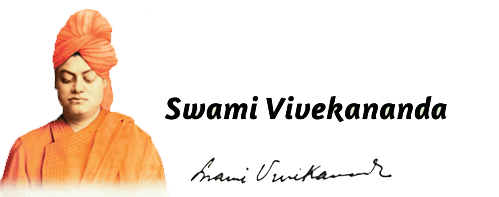
Lectures and Discourses
Divine Love
(This lecture is reproduced from the Vedanta and the West.)
(Delivered in San Francisco area, April 12, 1900)
[Love may be symbolised by a triangle. The first angle is,] love questions not. It is not a beggar. … Beggar’s love is no love at all. The first sign of love is when love asks nothing, [when it] gives everything. This is the real spiritual worship, the worship through love. Whether God is merciful is no longer questioned. He is God; He is my love. Whether God is omnipotent and almighty, limited or unlimited, is no longer questioned. If He distributes good, all right; if He brings evil, what does it matter? All other attributes vanish except that one—infinite love.]
THERE WAS AN OLD Indian emperor who on a hunting expedition came across a great sage in the forest. He was so pleased with this sage that he insisted that the latter come to the capital to receive some presents. [At first] the sage refused. [But] the emperor insisted, and at last the sage consented. When he arrived [at the palace], he was announced to the emperor who said, “Wait a minute until I finish my prayer.” The emperor prayed, “Lord, give me more wealth, more [land, more health], more children.” The sage stood up and began to walk out of the room. The emperor said, “You have not received my presents.” The sage replied, “I do not beg from beggars. All this time you have been praying for more land, [for] more money, for this and that. What can you give me? First satisfy your own wants!”
Love never asks; it always gives. … When a young man goes to see his sweetheart, … there is no business relationship between them; theirs is a relationship of love, and love is no beggar. [In the same way], we understand that the beginning of real spiritual worship means no begging. We have finished all begging: “Lord, give me this and that.” Then will religion begin.
The second [angle of the triangle of love] is that love knows no fear. You may cut me to pieces, and I [will] still love you. Suppose one of you mothers, a weak woman, sees a tiger in the street snatching your child. I know where you will be: you will face the tiger. Another time a dog appears in the street, and you will fly. But you jump at the mouth of the tiger and snatch your child away. Love knows no fear. It conquers all evil. The fear of God is the beginning of religion, but the love of God is the end of religion. All fear has died out.
The third [angle of the love-triangle is that] love is its own end. It can never be the means. The man who says, “I love you for such and such a thing”, does not love. Love can never be the means; it must be the perfect end. What is the end and aim of love? To love God, that is all. Why should one love God? [There is] no why, because it is not the means. When one can love, that is salvation, that is perfection, that is heaven. What more? What else can be the end? What can you have higher than love?
I am not talking about what everyone of us means by love. Little namby-pamby love is lovely. Man falls in love with a woman, and woman goes to die for man. The chances are that in five minutes John kicks Jane, and Jane kicks John. This is a materialism and no love at all. If John could really love Jane, he would be perfect that moment. [His true] nature is love; he is perfect in himself. John will get all the powers of Yoga simply by loving Jane, [although] he may not know a word about religion, psychology, or theology. I believe that if a man and woman can really love, [they can acquire] all the powers the Yogis claim to have, for love itself is God. That God is omnipresent, and [therefore] you have that love, whether you know it or not.
I saw a boy waiting for a girl the other evening. … I thought it a good experiment to study this boy. He developed clairvoyance and clairaudience through the intensity of his love. Sixty or seventy times he never made a mistake, and the girl was two hundred miles away. [He would say], “She is dressed this way.” [Or], “There she goes.” I have seen that with my own eyes.
This is the question: Is not your husband God, your child God? If you can love your wife, you have all the religion in the world. You have the whole secret of religion and Yoga in you. But can you love? This is the question. You say, “I love … Oh Mary, I die for you!” [But if you] see Mary kissing another man, you want to cut his throat. If Mary sees John talking to another girl, she cannot sleep at night, and she makes life hell for John. This is not love. This is barter and sale in sex. It is blasphemy to talk of it as love. The world talks day and night of God and religion—so of love. Making a shame of everything, that is what you are doing! Everybody talks of love, [yet in the] columns in the newspapers [we read] of divorces every day. When you love John, do you love John for his sake or for your sake? [If you love him for your sake], you expect something from John. [If you love him for his sake], you do not want anything from John. He can do anything he likes, [and] you [will] love him just the same.
These are the three points, the three angles that constitute the triangle [of love]. Unless there is love, philosophy becomes dry bones, psychology becomes a sort of [theory], and work becomes mere labour. [If there is love], philosophy becomes poetry, psychology becomes [mysticism], and work the most delicious thing in creation. [By merely] reading books [one] becomes barren. Who becomes learned? He who can feel even one drop of love. God is love, and love is God. And God is everywhere. After seeing that God is love and God is everywhere, one does not know whether one stands on one’s head or [on one’s] feet—like a man who gets a bottle of wine and does not know where he stands. … If we weep ten minutes for God, we will not know where we are for the next two months. … We will not remember the times for meals. We will not know what we are eating. [How can] you love God and always be so nice and businesslike? … The … all-conquering, omnipotent power of love—how can it come? …
Judge people not. They are all mad. Children are [mad] after their games, the young after the young, the old [are] chewing the cud of their past years; some are mad after gold. Why not some after God? Go crazy over the love of God as you go crazy over Johns and Janes. Who are they? [People] say, “Shall I give up this? Shall I give up that?” One asked, “Shall I give up marriage?” Do not give up anything! Things will give you up. Wait, and you will forget them.
[To be completely] turned into love of God—there is the real worship! You have a glimpse of that now and then in the Roman Catholic Church—some of those wonderful monks and nuns going mad with marvellous love. Such love you ought to have! Such should be the love of God—without asking anything, without seeking anything. …
The question was asked: How to worship? Worship Him as dearer than all your possessions, dearer than all your relatives, [dearer than] your children. [Worship Him as] the one you love as Love itself. There is one whose name is infinite Love. That is the only definition of God. Do not care if this … universe is destroyed. What do we care as long as He is infinite love? [Do you] see what worship means? All other thoughts must go. Everything must vanish except God. The love the father or mother has for the child, [the love] the wife [has] for the husband, the husband, for the wife, the friend for the friend—all these loves concentrated into one must be given to God. Now, if the woman loves the man, she cannot love another man. If the man loves the woman, he cannot love another [woman]. Such is the nature of love.
My old Master used to say, “Suppose there is a bag of gold in this room, and in the next room there is a robber. The robber is well aware that there is a bag of gold. Would the robber be able to sleep? Certainly not. All the time he would be crazy thinking how to reach the gold.”… [Similarly], if a man loves God, how can he love anything else? How can anything else stand before the mighty love of God? Everything else vanishes [before it]. How can the mind stop without going crazy to find [that love], to realise, to feel, to live in that?
This is how we are to love God: “I do not want wealth, nor [friends, nor beauty], nor possessions, nor learning, nor even salvation. If it be Thy will, send me a thousand deaths. Grant me, this—that I may love Thee and that for love’s sake. That love which materialistic persons have for their worldly possessions, may that strong love come into my heart, but only for the Beautiful. Praise to God! Praise to God the Lover!” God is nothing else than that. He does not care for the wonderful things many Yogis can do. Little magicians do little tricks. God is the big magician; He does all the tricks. Who cares how many worlds [there are]? …
There is another [way. It is to] conquer everything, [to] subdue everything—to conquer the body [and] the mind. …”What is the use of conquering everything? My business is with God!” [says the devotee.]
There was one Yogi, a great lover. He was dying of cancer of the throat. He [was] visited [by] another Yogi, who was a philosopher. [The latter] said, “Look here, my friend, why don’t you concentrate your mind on that sore of yours and get it cured?” The third time this question was asked [this great Yogi] said, “Do you think it possible that the [mind] which I have given entirely to the Lord [can be fixed upon this cage of flesh and blood]?” Christ refused to bring legions of angels to his aid. Is this little body so great that I should bring twenty thousand angels to keep it two or three days more?
[From the worldly standpoint,] my all is this body. My world is this body. My God is this body. I am the body. If you pinch me, I am pinched. I forget God the moment I have a headache. I am the body! God and everything must come down for this highest goal—the body. From this standpoint, when Christ died on the cross and did not bring angels [to his aid], he was a fool. He ought to have brought down angels and gotten himself off the cross! But from the standpoint of the lover, to whom this body is nothing, who cares for this nonsense? Why bother thinking about this body that comes and goes? There is no more to it than the piece of cloth the Roman soldiers cast lots for.
There is a whole gamut of difference between [the worldly standpoint] and the lover’s standpoint. Go on loving. If a man is angry, there is no reason why you should be angry; if he degrades himself, that is no reason why you should degrade yourself. … “Why should I become angry just because another man has made a fool of himself. Do thou resist not evil!” That is what the lovers of God say. Whatever the world does, wherever it goes, has no influence [on them].
One Yogi had attained supernatural powers. He said, “See my power! See the sky; I will cover it with clouds.” It began to rain. [Someone] said, “My lord, you are wonderful. But teach me that, knowing which, I shall not ask for anything else.” … To get rid even of power, to have nothing, not to want power! [What this means] cannot be understood simply by intellect. … You cannot understand by reading thousands of books. … When we begin to understand, the whole world opens before us. … The girl is playing with her dolls, getting new husbands all the time; but when her real husband comes, all the dolls will be put away [for ever]. … So [with] all these goings-on here. [When] the sun of love rises, all these play-suns of power and these [cravings] all pass [away]. What shall we do with power? Thank God if you can get rid of the power that you have. Begin to love. Power must go. Nothing must stand between me and God except love. God is only love and nothing else—love first, love in the middle, and love at the end.
[There is the] story of a queen preaching [the love of God] in the streets. Her enraged husband persecuted her, and she was hunted up and down the country. She used to sing songs describing her [love]. Her songs have been sung everywhere. “With tears in my eyes I [nourished the everlasting creeper] of love. …” This is the last, the great [goal]. What else is there? [People] want this and that. They all want to have and possess. That is why so few understand [love], so few come to it. Wake them and tell them! They will get a few more hints.
Love itself is the eternal, endless sacrifice. You will have to give up everything. You cannot take possession of anything. Finding love, you will never [want] anything [else]. … “Only be Thou my love for ever!” That is what love wants. “My love, one kiss of those lips! [For him] who has been kissed by Thee, all sorrows vanish. Once kissed by Thee, man becomes happy and forgets love of everything else. He praises Thee alone and he sees Thee alone.” In the nature of human love even, [there lurk divine elements. In] the first moment of intense love the whole world seems in tune with your own heart. Every bird in the universe sings your love; the flowers bloom for you. It is infinite, eternal love itself that [human] love comes from.
Why should the lover of God fear anything—fear robbers, fear distress, fear even for his life? … The lover [may] go to the utmost hell, but would it be hell? We all have to give up these ideas of heaven [and hell] and get greater [love]. … Hundreds there are seeking this madness of love before which everything [but God vanishes].
At last, love, lover, and beloved become one. That is the goal. … Why is there any separation between soul and man, between soul and God? … Just to have this enjoyment of love. He wanted to love Himself, so He split Himself into many. … “This is the whole reason for creation”, says the lover. “We are all one. ‘I and my Father are one.’ Just now I am separate in order to love God. … Which is better—to become sugar or to eat sugar? To become sugar, what fun is that? To eat sugar—that is infinite enjoyment of love.”
All the ideals of love—[God] as [our] father, mother, friend, child—[are conceived in order to strengthen devotion in us and make us feel nearer and dearer to God.] The intensest love is that between the sexes. God must be loved with that sort of love. The woman loves her father; she loves her mother; she loves her child; she loves her friend. But she cannot express herself all to the father, nor to the mother, nor to the child, nor to the friend. There is only one person from whom she does not hide anything. So with the man. … The [husband-] wife relationship is the all-rounded relationship. The relationship of the sexes [has] all the other loves concentrated into one. In the husband, the woman has the father, the friend, the child. In the wife, the husband has mother, daughter, and something else. That tremendous complete love of the sexes must come [for God]—that same love with which a woman opens herself to a man without any bond of blood—perfectly, fearlessly, and shamelessly. No darkness! She would no more hide anything from her lover than she would from her own self. That very love must come [for God]. These things are hard and difficult to understand. You will begin to understand by and by, and all idea of sex will fall away. “Like the water drop on the sand of the river bank on a summer day, even so is this life and all its relations.”
All these ideas [like] “He is the creator”, are ideas fit for children. He is my love, my life itself—that must be the cry of my heart! …
“I have one hope. They call Thee the Lord of the world, and—good or evil, great or small—I am part of the world, and Thou art also my love. My body, my mind, and my soul are all at Thy altar. Love, refuse these gifts not!”
(Vedānta and the West, Sept.–Oct. 1955)
Comments
Comments
Sign in to leave a comment