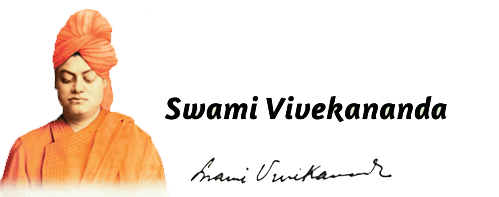
Swami Vivekananda
The Complete Works: Volume VIIPage 1 of 1

Conversations and Dialogues: Miscellaneous

Religion, Civilisation, And Miracles (The Appeal-Avalanche )

"I am a monk," he said, as he sat in the parlors of La Salette Academy, (On January 21, 1894.) which is his home while in Memphis, "and not a priest. When at home I travel from place to place, teaching the people of the villages and towns through which I pass. I am dependent upon them for my sustenance, as I am not allowed to touch money."

"I was born," he continued, in answer to a question, "in Bengal and become a monk and a celibate from choice. At my birth my father had a horoscope taken of my life, but would never tell me what it was. Some years ago when I visited my home, my father having died, I came across the chart among some papers in my mother's possession and saw from it that I was destined to become a wanderer on the face of the earth."

There was a touch of pathos in the speaker's voice and a murmur of sympathy ran around the group of listeners. Kananda (American reporters generally spelt his name as Vive Kananda in those days.) knocked the ashes from his cigar and was silent for a space.

Presently some one asked:

"If your religion is all that you claim it is, if it is the only true faith, how is it that your people are not more advanced in civilisation than we are? Why has it not elevated them among the nations of the world?"

"Because that is not the sphere of any religion," replied the Hindu gravely. "My people are the most moral in the world, or quite as much as any other race. They are more considerate of their fellow man's rights, and even those of dumb animals, but they are not materialists. No religion has ever advanced the thought or inspiration of a nation or people. In fact, no great achievement has ever been attained in the history of the world that religion has not retarded. Your boasted Christianity has not proven an exception in this respect. Your Darwins, your Mills, your Humes, have never received the endorsement of your prelates. Why, then, criticise my religion on this account?"

"I would not give a fig for a faith that does not tend to elevate mankind's lot on earth as well as his spiritual condition," said one of the group, 'and therein I am not prepared to admit the correctness of your statements. Christianity has founded colleges, hospitals and raised the degenerate. It has elevated the downcast and helped its followers to live."

"You are right there to a certain extent," replied the monk calmly, "and yet it is not shown that these things are directly the result of your Christianity. There are many causes operating in the West to produce these results.

"Religious thought should be directed to developing man's spiritual side. Science, art, learning and metaphysical research all have their proper functions in life, but if you seek to blend them, you destroy their individual characteristics until, in time, you eliminate the spiritual, for instance, from the religious altogether. You Americans worship what? The dollar. In the mad rush for gold, you forget the spiritual until you have become a nation of materialists. Even your preachers and churches are tainted with the all-pervading desire. Show me one in the history of your people, who has led the spiritual lives that those whom I can name at home have done. Where are those who, when death comes, could say, 'O Brother Death, I welcome thee.' Your religion helps you to build Ferris wheels and Eiffel towers, but does it aid you in the development of your inner lives?"

The monk spoke earnestly, and his voice, rich and well modulated, came through the dusk that pervaded the apartment, half-sadly, half-accusingly. There was something of the weird in the comments of this stranger from a land whose history dates back 6,000 years upon the civilisation of the Nineteenth Century America.

"But, in pursuing the spiritual, you lost sight of the demands of the present," said some one. "Your doctrine does not help men to live."

"It helps them to die," was the answer.

"We are sure of the present."

"You are sure of nothing."

"The aim of the ideal religion should be to help one to live and to prepare one to die at the same time."

"Exactly," said the Hindu, quickly, "and it is that which we are seeking to attain. I believe that the Hindu faith has developed the spiritual in its devotees at the expense of the material, and I think that in the Western world the contrary is true. By uniting the materialism of the West with the spiritualism of the East I believe much can be accomplished. It may be that in the attempt the Hindu faith will lose much of its individuality."

"Would not the entire social system of India have to be revolutionised to do what you hope to do?"

"Yet, probably, still the religion would remain unimpaired."

The conversation here turned upon the form of worship of the Hindus, and Kananda gave some interesting information on this subject. There are agnostics and atheists in India as well as elsewhere. "Realisation" is the one thing essential in the lives of the followers of Brahma. Faith is not necessary. Theosophy is a subject with which Kananda is not versed, nor is it a part of his creed unless he chooses to make it so. It is more of a separate study. Kananda never met Mme. Blavatsky, but has met Col. Olcott of the American Theosophical Society. He is also acquainted with Annie Besant. Speaking of the "fakirs" of India, the famous jugglers or musicians [magicians?], whose feats have made for them a world-wide reputation, Kananda told of a few episodes that had come within his observation and which almost surpass belief.

"Five months ago," he said, when questioned on this subject, "or just one month before I left India to come to this country, I happened in company in a caravan or party of 25 to sojourn for a space in a city in the interior. While there we learned of the marvellous work of one of these itinerant magicians and had him brought before us. He told us he would produce for us any article we desired. We stripped him, at his request, until he was quite naked and placed him in the corner of the room. I threw my travelling blanket about him and then we called upon him to do as he had promised. He asked what we should like, and I asked for a bunch of California [?] grapes, and straightway the fellow brought them forth from under his blanket. Oranges and other fruits were produced, and finally great dishes of steaming rice."

Continuing, the monk said he believed in the existence of a "sixth sense" and in telepathy. He offered no explanation of the feats of the fakirs, merely saying that they were very wonderful. The subject of idols came up and the monk said that idols formed a part of his religion insomuch as the symbol is concerned.

"What do you worship?" said the monk, "What is your idea of God?"

"The spirit," said a lady quietly.

"What is the spirit? Do you Protestants worship the words of the Bible or something beyond? We worship the God through the idol."

"That is, you attain the subjective through the objective," said a gentleman who had listened attentively to the words of the stranger.

"Yes, that is it," said the monk, gratefully.

Vive Kananda discussed further in the same strain until the call terminated as the hour for the Hindu's lecture approached.

Share
Comments

Comments

Sign in to leave a comment

Contents

Inspired Talks
  1. Inspired Talks: Wednesday, June 19
  2. Inspired Talks: Sunday, June 23
  3. Inspired Talks: Monday, June 24
  4. Inspired Talks: Tuesday, June 25
  5. Inspired Talks: Wednesday, June 26
  6. Inspired Talks: Thursday, June 27
  7. Inspired Talks: Friday, June 28
  8. Inspired Talks: Saturday, June 29
  9. Inspired Talks: Sunday, June 30
  10. Inspired Talks: Monday, July 1
  11. Inspired Talks: Tuesday, July 2
  12. Inspired Talks: Wednesday, July 3
  13. Inspired Talks: Friday, July 5
  14. Inspired Talks: Saturday, July 6
  15. Inspired Talks: Sunday, July 7
  16. Inspired Talks: Monday, July 8
  17. Inspired Talks: Tuesday, July 9
  18. Inspired Talks: Wednesday, July 10
  19. Inspired Talks: Thursday, July 11
  20. Inspired Talks: Friday, July 12
  21. Inspired Talks: Saturday, July 13
  22. Inspired Talks: Sunday, July 14
  23. Inspired Talks: Monday, July 15
  24. Inspired Talks: Tuesday, July 16
  25. Inspired Talks: Wednesday, July 17
  26. Inspired Talks: Thursday, July 18
  27. Inspired Talks: Friday, July 19
  28. Inspired Talks: Saturday, July 20
  29. Inspired Talks: Sunday, July 21
  30. Inspired Talks: Tuesday, July 23
  31. Inspired Talks: Wednesday, July 24
  32. Inspired Talks: Thursday, July 25
  33. Inspired Talks: Friday, July 26
  34. Inspired Talks: Saturday, July 27
  35. Inspired Talks: Sunday, July 28
  36. Inspired Talks: Monday, July 29
  37. Inspired Talks: Tuesday, July 30
  38. Inspired Talks: Wednesday, July 31
  39. Inspired Talks: Thursday, August 1
  40. Inspired Talks: Friday, August 2
  41. Inspired Talks: Saturday, August 3
  42. Inspired Talks: Sunday, August 4
  43. Inspired Talks: Monday, August 5
  44. Inspired Talks: Tuesday, August 6
Conversations and Dialogues: Shri Sharat Chandra Chakravarty
  1. 1. Each Hindu, I say, is a brother to every other
  2. 2. Always talk and hear and reason about this Ātman.
  3. 3. He who is truly and sincerely reliant on the Lord goes beyond all idea of the duality of good and bad.
  4. 4. Since visiting Amarnāth, I feel as if Shiva is sitting on my head for twenty-four hours and would not come down.
  5. 5. Try to manifest this Ātman, and you will see your intellect penetrating into all subjects.
  6. 6. You have only got to know that you are Eternal Brahman.
  7. 7. You have locked up your intelligence, thrown away your inherited wealth to others, and roam about crying piteously for food.
  8. 8. I am of opinion that the conclusion of the ancient Indian philosophers is the last word on the causes of evolution.
  9. 9. “नायमात्मा बलहीनेन लभ्य:—This Ātman cannot be attained by the weak.
  10. 10. Negative thoughts weaken men.
  11. 11. I am ready to undergo a hundred thousand rebirths to train up a single man.
  12. 12. Laziness, meanness, and hypocrisy have covered the whole length and breadth of the country.
  13. 13. Now is wanted—as said in the Gitā by the Lord—intense Karma-Yoga
  14. 14. Nāg Mahāshaya has lost himself in the Divine, his body-consciousness has vanished altogether.
  15. 15. Shri Ramakrishna used to deprecate lukewarmness in spiritual attainments
  16. 16. Shri Ramakrishna was born to vivify all branches of art and culture in this country.
  17. 17. The few days that the body lasts, I will work for you. I shall die in harness.
  18. 18. As far as you can, you must go on doing good work.
  19. 19. Come what may, I shall not forget my duty, whether the world remains or dissolves—these are the words of a great hero.
  20. 20. This Kāli is Brahman in manifestation.
  21. 21. Nothing good in the world becomes fruitless, be it work or thought.
  22. 22. The philosophic portion of the Upanishads has remained unchanged up till now
  23. 23. Always remember that renunciation is the root idea.
  24. 24. God is present in every Jiva; there is no other God besides that.
  25. 25. Real monasticism is not easy to attain. There is no order of life so rigorous as this.
  26. 26. The gift of knowledge is the highest gift in the world.
  27. 27. Shri Ramakrishna was a wonderful gardener.
  28. 28. Without drinking the water of mother Gangā, a sweet, musical voice is not acquired.
  29. 29. Always try to get absorbed in the eternally present Ātman.
Conversations and Dialogues: Shri Priya Nath Sinha
  1. 30. Self-sacrifice, indeed, is the basis of all civilisation.
  2. 31. This idea must be preached to everyone—work, work, endless work—without looking at results,
Conversations and Dialogues: Miscellaneous
  1. 32. Vengeance of History
  2. Religion, Civilisation, And Miracles (The Appeal-Avalanche )
  3. Religion, Civilisation, and Miracles
  4. Religious Harmony
  5. Fallen Women
Translation of Writings
  1. Note
  2. I. Memoirs of European Travel
  3. II. Memoirs of European Travel
  4. III. Memoirs of European Travel-Addenda
Notes of Class Talks and Lectures
  1. On Art
  2. On Music
  3. On Mantra And Mantra-Chaitanya
  4. On Conceptions Of Godhead
  5. On Food
  6. On Sannyasa And Family Life
  7. On Questioning The Competency Of The Guru
  8. Shri Ramakrishna: The Significance Of His Life And Teachings
  9. On Shri Ramakrishna And His Views
  10. Shri Ramakrishna: The Nation's Ideal
Notes of Lectures
  1. Mercenaries In Religion
  2. The Destiny Of Man
  3. Reincarnation
  4. Comparative Theology
  5. Buddhism, The Religion Of The Light Of Asia
  6. The Science Of Yoga
Epistles: Third Series
  1. NOTE
  2. 1. Such courage is impossible in a lying and unchaste woman.
  3. 2. The doctor is a noble soul, and they have got a brotherhood
  4. 3. Of the few places I have recently visited, this is the healthiest.
  5. 4. May the Lord ordain that your son becomes a man, and never a coward!
  6. 5. Whoever takes the name of Ramakrishna, know him to be your Guru
  7. 6. Any shortcoming in adopting remedial measures is to be considered as idleness—it is a fault and a guilt.
  8. 7. How, O man, dost thou want satisfaction in such a world!
  9. 8. You are a real Mahātmā (a great soul) and Mrs. Wright is nonpareil.
  10. 9. All creeds do come from Thee; The Vedas, Bible, and Koran bold Sing Thee in harmony.
  11. 10. He who was guiding me on the snow tops of the Himalayas and the burning plains of India is here to help me and guide me.
  12. 11. Just now I am lecturing about Chicago—and am doing as I think very well
  13. 12. America is the only place where there is a chance of success for everything.
  14. 13. Dr. Momerie came to the Parliament in spite of the Archbishop of Canterbury’s denouncing of the Parliament of Religions.
  15. 14. May your feet never touch the mud and dirt of this terrible world
  16. 15. All religions are sacred to me.
  17. 16. Your love and noble heart can convert the stone into down.
  18. 17. The Lord is great, none can injure His children.
  19. 18. I am a vegetarian …, because I prefer it when I can get it.
  20. 19. It is unnecessary for me to say that I will be very happy to do as you say
  21. 20. The way to God is the opposite to that of the world.
  22. 21. I am bound, my dear friend, to give you every satisfaction of my being a genuine Sannyāsin, but to you alone.
  23. 22. This is a queer place—this world of ours.
  24. 23. Keeping aloof from the community of nations is the only cause for the downfall of India.
  25. 24. May you have exceeding love for one another among yourselves
  26. 25. Be the servant if you will rule. That is the real secret.
  27. 26. It is character that can cleave through adamantine walls of difficulties. Bear this in mind.
  28. 27. If you have the spirit within, you will never fail to attract others.
  29. 28. It is a great work to bring this world into a spirit of sympathy with each other
  30. 29. Teaching has become a part of my life, as necessary to my life as eating or breathing.
  31. 30. The city is hot in summer, exactly like Calcutta.
  32. 31. You must always remember that you are addressing the whole world, not India alone
  33. 32. Obedience is the first duty
  34. 33. The eternal, the infinite, the omnipresent, the omniscient is a principle, not a person.
  35. 34. Our whole country is steeped in Tamas, and nothing but that.
  36. 35. This is the world my brother—this illusion of Māyā—the Lord alone is true.
  37. 36. I only say, awake, awake!
  38. 37. No one of the types we call religious ought to die
  39. 38. It is this yearning that gradually brings on a concentration of the mind on the eternal Brahman.
  40. 39. India is already Ramakrishna’s whether I live a few years more or not.
  41. 40. What we want are brave young men who will work, not tomfools.
  42. 41. Lord bless you for your great self-sacrifice for the poor Indians.
  43. 42. It is absolutely necessary to stand on one’s own feet.
  44. 43. Love stops not for questions of birth. Nor the hungry man for stale food.
  45. 44. Whosoever of you have given me a coat? Whosoever a cigar? Whosoever a bit of fish or flesh?
  46. 45. Miss Noble is doing very well here, and working her way out.
  47. 46. It is a grand sight to see a giant pine struggling against a cyclone. Is it not?
  48. 47. It is the Saviour who should “go his way rejoicing, and not the saved”.
  49. 48. Seeing such souls here and there repays for all the nonsense of this life.
  50. 49. I am eternally thankful to you for all your kindness
  51. 50. I do not mind at all whether people come round to help me or not
  52. 51. It is human nature to ask for more favours (now that they have come) where it gets from.
  53. 52. I just want a bit of peace badly—pray for me.
  54. 53. Eternal faith in Self, in all The sight Divine in great in small