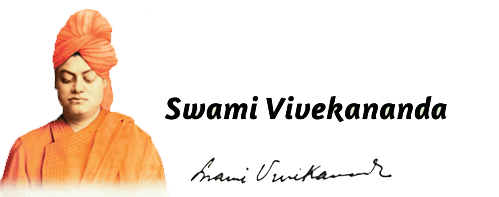
Swami Vivekananda
The Complete Works: Volume VPage 1 of 1

Interviews

On the Bounds of Hinduism

(Prabuddha Bharata, April, 1899 )

HAVING BEEN DIRECTED BY the Editor, writes our representative, to interview Swami Vivekananda on the question of converts to Hinduism, I found an opportunity one evening on the roof of a Gangā houseboat. It was after nightfall, and we had stopped at the embankment of the Ramakrishna Math, and there the Swami came down to speak with me.

Time and place were alike delightful. Overhead the stars, and around—the rolling Gangā; and on one side stood the dimly lighted building, with its background of palms and lofty shade-trees.

“I want to see you, Swami”, I began, “on this matter of receiving back into Hinduism those who have been perverted from it. Is it your opinion that they should be received?”

“Certainly,” said the Swami, “they can and ought to be taken.”

He sat gravely for a moment, thinking, and then resumed. “Besides,” he said, “we shall otherwise decrease in numbers. When the Mohammedans first came, we are said—I think on the authority of Ferishta, the oldest Mohammedan historian—to have been six hundred millions of Hindus. Now we are about two hundred millions. And then every man going out of the Hindu pale is not only a man less, but an enemy the more.

“Again, the vast majority of Hindu perverts to Islam and Christianity are perverts by the sword, or the descendants of these. It would be obviously unfair to subject these to disabilities of any kind. As to the case of born aliens, did you say? Why, born aliens have been converted in the past by crowds, and the process is still going on.

“In my own opinion, this statement not only applies to aboriginal tribes, to outlying nations, and to almost all our conquerors before the Mohammedan conquest, but also to all those castes who find a special origin in the Purānas. I hold that they have been aliens thus adopted.

“Ceremonies of expiation are no doubt suitable in the case of willing converts, returning to the Mother-Church, as it were; but on those who were alienated by conquest—as in Kashmir and Nepal—or on strangers wishing to join us, no penance should be imposed.”

“But of what caste would these people be, Swamiji?” I ventured to ask. “They must have some, or they can never be assimilated into the great body of Hindus. Where shall we look for their rightful place?”

“Returning converts”, said the Swami quietly, “will gain their own castes, of course. And new people will make theirs. You will remember,” he added, “that this has already been done in the case of Vaishnavism. Converts from different castes and aliens were all able to combine under that flag and form a caste by themselves—and a very respectable one too. From Rāmānuja down to Chaitanya of Bengal, all great Vaishnava Teachers have done the same.”

“And where should these new people expect to marry?” I asked.

“Amongst themselves, as they do now”, said the Swami quietly.

“Then as to names,” I enquired, “I suppose aliens and perverts who have adopted non-Hindu names should be named newly. Would you give them caste-names, or what?”

“Certainly,” said the Swami, thoughtfully, “there is a great deal in a name!” and on this question he would say no more.

But my next enquiry drew blood. “Would you leave these new-comers, Swamiji, to choose their own form of religious belief out of many-visaged Hinduism, or would you chalk out a religion for them?”

“Can you ask that?” he said. “They will choose for themselves. For unless a man chooses for himself, the very spirit of Hinduism is destroyed. The essence of our Faith consists simply in this freedom of the Ishta.”

I thought the utterance a weighty one, for the man before me has spent more years than any one else living, I fancy, in studying the common bases of Hinduism in a scientific and sympathetic spirit—and the freedom of the Ishta is obviously a principle big enough to accommodate the world.

But the talk passed to other matters, and then with a cordial good night this great teacher of religion lifted his lantern and went back into the monastery, while I, by the pathless paths of the Gangā, in and out amongst her crafts of many sizes, made the best of my way back to my Calcutta home.

Share
Comments

Comments

Sign in to leave a comment

Contents

Epistles: First Series
  1. NOTE
  2. Be moral. Be brave.
  3. We must travel, we must go to foreign parts
  4. Calm and silent and steady work
  5. Feel for the miserable and look up for help — it shall come
  6. The Hindu must not give up his religion
  7. Do you know who is the real “Shakti-worshipper”?
  8. My whole ambition in life is to set in motion a machinery
  9. Up, up, my boys, we are sure to win!
  10. Whenever anyone of you is sick
  11. Appreciation or no appreciation, sleep not, slacken not.
  12. Fight on bravely! Life is short! Give it up to a great cause
  13. XII
  14. You will have to take charge of the whole movement, not as a leader, but as a servant
  15. Asians are the most charitable race in the world
  16. Wait, have patience, everything will come right in time
  17. XVI
  18. I care only for the Spirit—when that is right everything will be righted by itself
  19. Hope and do not despair
  20. XIX
  21. XX
  22. Look not at me, look to yourselves
  23. The life of Shri Ramakrishna was an extraordinary searchlight
  24. Preach Shri Ramakrishna. Pass the Cup that has satisfied your thirst. Preach Bhakti
  25. Remember that "Never one meets with evil who tries to do good"
  26. It is jealousy and want of combination which cause and perpetuate slavery
  27. XXVI
  28. Go to work, the rest will come
  29. I owe much to the Hale family
  30. Even after death I shall work for the good of the world
  31. Work for the idea, not the person
  32. 31. Coming and going is all pure delusion. The soul never comes nor goes
  33. 32. One cannot serve the God of Truth who leans upon somebody
  34. 33. Do not lose heart, do not lose faith in your Guru, do not lose faith in God
  35. 34. All’s well that ends well
  36. 35. Do not figure out big plans at first, but begin slowly, feel your ground, and proceed up and up
  37. 36. Hoping you the best dreams (for that is the only way to be happy)
  38. 37. Be cheerful.… Hold on to your own idea. Be the servant of all.
  39. 38. Love makes the whole universe as one's own home.
  40. 39. Be the servant of all, and do not try in the least to govern others.
  41. 40. Men are more valuable than all the wealth of the world.
  42. 41. A pestle must pound even if it goes to heaven.
  43. 42. Work on, my boy. Rome was not built in a day.
  44. 43. My disciples must not be cowards.
  45. 44. I wish you a life that will be like a torch to generations to come
  46. 45. May the Lord bless you and yours for ever and ever
  47. 46. May all happiness be yours for ever
  48. 47. Each work has to pass through these stages—ridicule, opposition, and then acceptance.
  49. 48. It is unnecessary to repeat my everlasting love and blessings for you and yours.
  50. 49. Truth is my God, the universe my country
  51. 50. Man is the greatest of all beings.
  52. 51. E. T. Sturdy
  53. 52. God and truth are the only politics in the world, everything else is trash.
  54. 53. So long as you are pure, and true to your principles, you will never fail.
  55. 54. Any other Hindu would have died if he had to work as hard as I have to.
  56. 55. Be perfectly pure in money dealings.
  57. 56. The whole life is a succession of dreams.
  58. 57. I am working a good deal now upon the cosmology and eschatology of the Vedānta
  59. 58. The dry, abstract Advaita must become living
  60. 59. The greatness of a teacher consists in the simplicity of his language.
  61. 60. So long as you have faith in your Guru, nothing will be able to obstruct your way.
  62. 61. Be obedient and eternally faithful to the cause of truth, humanity, and your country
  63. 62. The lotus is a symbol of regeneration.
  64. 63. Nothing can resist truth.
  65. 64. Work on! Hold on! Be brave! Dare anything and everything!
  66. 65. E.T. Sturdy
  67. 66. Work unto death—I am with you, and when I am gone, my spirit will work with you.
  68. 67. Work on with all energy.
  69. 68. I wish at least that a million Hindus had travelled all over the world!
  70. 69. We Hindus are so slow that when we have done a work, the opportunity has already passed away, and thus we are the losers.
  71. 70. We must remember that gratitude and hospitality are the peculiar characteristics of Indian humanity
  72. 71. Goodwin is an Englishman, through whose shorthand notes it has been possible for the pamphlets to be published.
  73. 72. You must not forget that my interests are international and not Indian alone
  74. 73. We have to learn that evil is destroyed by the growth of good.
  75. 74. Good motives, sincerity, and infinite love can conquer the world.
  76. 75. In Darjeeling I always felt that I was not the same man. Here I feel that I have no disease whatsoever
  77. 76. The word Vedas includes the three parts, the Samhitās, the Brāhmanas, and the Upanishads
  78. 77. For us, it is not to pity but to serve. Ours is not the feeling of compassion but of love
  79. 78. May I be born again and again, and suffer thousands of miseries so that I may worship the only God that exists
  80. 79. I am going down to the plains to be harnessed once more for work.
  81. 80. The work of the Mother will not suffer; because it has been built and up to date maintained upon truth
  82. 81. I have no more faith in all this noise and humbug which brings no practical good.
  83. 82. Our Teacher and Lord was so original, and each one of us will have to be original or nothing.
  84. 83. I want a couple of tiger skins, if I can, to be sent to the Math as present to two European friends
  85. 84. I have no shame to beg of one person in the world and that is yourself.
  86. 85. For the last ten years or so I have not seen the Pujā of Shri Durgā in Bengal which is the great affair there.
  87. 86. Do not lose heart if anything befalls, the “Mother” is your protection.
  88. 87. There is only one element in life which is worth having at any cost, and it is love.
  89. 88. Ever praying for you and yours
  90. 89. Those institutions should be encouraged by which men advance in the path of freedom.
  91. 90. My last breath will be on the battlefield.
  92. 91. May you be protected from all dangers and may all blessings ever attend you!
  93. 92. The secret of life is not enjoyment, but education through experience.
  94. 93. Give my love to all. Don’t work too hard.
  95. 94. Kāli has taken two sacrifices; the cause has already two European martyrs. Now, it is going to rise up splendidly.
  96. 95. This life is full of shocks, but the effects pass away anyhow, that is the hope.
  97. 96. I am going to take my mother on pilgrimage next week.
  98. 97. I am going with my mother to Rameswaram
  99. 98. Everybody is praising Margot's Kali the Mother; but alas! they can't get a book to buy
  100. 99. I am ever so glad to hear that Bois is coming to Calcutta.
  101. 100. I am so glad you saw Mr. Tata and find him so strong and good.
  102. 101. Good solid work must wait.
  103. 102. I have just returned from my tour through East Bengal and Assam.
  104. 103. The subtle Hindu's gratitude runs through generations.
  105. 104. Know this for certain that my love can never cease.
  106. 105. Certainly it is very desirable to establish a connection between India and Japan.
  107. 106. Never mind, I am trying my best. Only my terribly poor health
  108. 107. I can’t even in imagination pay the immense debt of gratitude I owe you.
  109. 108. The snake represents mysticism; the sun knowledge; the worked up waters activity; the lotus love; the swan the soul in the midst of all.
  110. 109. I have dedicated you to the Mother. She is your shield, your guide.
  111. 110. Meeting or no meeting, I remain, Ever your loving brother
  112. 111. “Mother” knows best. That is all I know too.
  113. 112. The idea of taking a house for a whole year must be worked out with deliberation.
  114. 113. Lord Curzon was not allowed inside.
  115. 114. A total revolution has occurred in my mind about the relation of Buddhism and Neo-Hinduism
  116. 115. The reception Nivedita had in Madras was for the good of both Nivedita and Madras.
  117. 116. If there was any truth in Shri Ramakrishna, may He take you into His leading
  118. 117. Continue doing your work as the Lord guides. Why bother about the opinion of this man and that?
  119. 118. Give a little money—whatever is needed.
  120. 119. Write me in detail about the matter of the Nepal Minister.
  121. 120. Now I shall be relieved if I get the accounts.
  122. 121. How did you like Mayavati? Write me a line about it.
  123. 122. A great idea of quiet has come upon me.
  124. 123. A race must first cultivate a great respect for motherhood, through the sanctification and inviolability of marriage
Interviews
  1. Miracles
  2. An Indian Yogi in London
  3. India's Mission
  4. India and England
  5. Indian Missionary's Mission to England
  6. With the Swami Vivekananda at Madura
  7. The Abroad and the Problems at Home
  8. The Missionary Work of the First Hindu Sannyasin to the West
  9. Reawakening of Hinduism on a National Basis
  10. On Indian Women — Their Past, Present and Future
  11. On the Bounds of Hinduism
Notes from Lectures and Discourses
  1. On Karma-Yoga
  2. On Fanaticism
  3. Work Is Worship
  4. Work Without Motive
  5. Sadhanas or Preparations for Higher Life
  6. The Cosmos and the Self
  7. Who Is a Real Guru?
  8. On Art
  9. On Language
  10. The Sannyasin
  11. The Sannyasin and the Householder
  12. The Evils of Adhikarivada
  13. On Bhakti-Yoga
  14. Ishvara and Brahman
  15. On Jnana-Yoga
  16. The Cause of Illusion
  17. Evolution
  18. Buddhism and Vedanta
  19. On the Vedanta Philosophy
  20. Law and Freedom
  21. The Goal and Methods of Realisation
  22. World-Wide Unity
  23. The Aim of Raja-Yoga
Questions and Answers
  1. I. A Discussion
  2. II. At the Twentieth Century Club of Boston, U. S. A.
  3. III. At the Brooklyn Ethical Society, Brooklyn, U. S. A.
  4. IV. Selections from the Math Diary
  5. V. Yoga, Vairagya, Tapasya, Love
  6. VI. in Answer to Nivedita
  7. VII. Guru, Avatara, Yoga, Japa, Seva
Conversations and Dialogues
  1. I
  2. II
  3. III
  4. IV
  5. V
  6. VI
  7. VII
  8. VIII
  9. IX
  10. X
  11. XI
  12. XII
  13. XIII
  14. XIV
  15. XV
Sayings and Utterances
  1. Sayings and Utterances
Writings: Prose and Poems
  1. Reason, Faith and Love
  2. Six Sanskrit Mottoes
  3. The Message of Divine Wisdom
  4. The Belur Math: an Appeal
  5. The Advaita Ashrama, Himalayas
  6. The Ramakrishna Home of Service Varanasi: an Appeal
  7. Who Knows How Mother Plays!
  8. To the Fourth of July
  9. The East and the West