Epistles: First Series
Feel for the miserable and look up for help — it shall come
BREEZY MEADOWS,
METCALF, MASS.,
20th August, 1893.
DEAR ALASINGA,
Received your letter yesterday. Perhaps you have by this time got my letter from Japan. From Japan I reached Vancouver. The way was by the Northern Pacific. It was very cold and I suffered much for want of warm clothing. However, I reached Vancouver anyhow, and thence went through Canada to Chicago. I remained about twelve days in Chicago. And almost every day I used to go to the Fair. It is a tremendous affair. One must take at least ten days to go through it. The lady to whom Varada Rao introduced me and her husband belong to the highest Chicago society, and they were so very kind to me. I took my departure from Chicago and came to Boston. Mr. Lâlubhâi was with me up to Boston. He was very kind to me. . . .
The expense I am bound to run into here is awful. You remember, you gave me £170 in notes and £9 in cash. It has come down to £130 in all!! On an average it costs me £1 every day; a cigar costs eight annas of our money. The Americans are so rich that they spend money like water, and by forced legislation keep up the price of everything so high that no other nation on earth can approach it. Every common coolie earns nine or ten rupees a day and spends as much. All those rosy ideas we had before starting have melted, and I have now to fight against impossibilities. A hundred times I had a mind to go out of the country and go back to India. But I am determined, and I have a call from Above; I see no way, but His eyes see. And I must stick to my guns, life or death. . . .
Just now I am living as the guest of an old lady in a village near Boston. I accidentally made her acquaintance in the railway train, and she invited me to come over and live with her. I have an advantage in living with her, in saving for some time my expenditure of £1 per day, and she has the advantage of inviting her friends over here and showing them a curio from India! And all this must be borne. Starvation, cold, hooting in the streets on account of my quaint dress, these are what I have to fight against. But, my dear boy, no great things were ever done without great labour.
. . . Know, then, that this is the land of Christians, and any other influence than that is almost zero. Nor do I care a bit for the enmity of any — ists in the world. I am here amongst the children of the Son of Mary and the Lord Jesus will help me. They like much the broad views of Hinduism and my love for the Prophet of Nazareth. I tell them that I preach nothing against the Great One of Galilee. I only ask the Christians to take in the Great Ones of Ind along with the Lord Jesus, and they appreciate it.
Winter is approaching and I shall have to get all sorts of warm clothing, and we require more warm clothing than the natives. . . Look sharp, my boy, take courage. We are destined by the Lord to do great things in India. Have faith. We will do. We, the poor and the despised, who really feel, and not those. . . .
In Chicago, the other day, a funny thing happened The Raja of Kapurthala was here, and he was being lionised by some portion of Chicago society. I once met the Raja in the Fair grounds, but he was too big to speak with a poor Fakir. There was an eccentric Mahratta Brâhmin selling nail-made pictures in the Fair, dressed in a dhoti. This fellow told the reporters all sorts of things against the Raja —, that he was a man of low caste, that those Rajas were nothing but slaves, and that they generally led immoral lives, etc., etc. And these truthful (?) editors, for which America is famous, wanted to give to the boy's stories some weight; and so the next day they wrote huge columns in their papers about the description of a man of wisdom from India, meaning me — extolling me to the skies, and putting all sorts of words in my mouth, which I never even dreamt of, and ascribing to me all those remarks made by the Mahratta Brahmin about the Raja of Kapurthala. And it was such a good brushing that Chicago society gave up the Raja in hot haste. . . . These newspaper editors made capital out of me to give my countryman a brushing. That shows, however, that in this country intellect carries more weight than all the pomp of money and title.
Yesterday Mrs. Johnson, the lady superintendent of the women's prison, was here. They don't call it prison but reformatory here. It is the grandest thing I have seen in America. How the inmates are benevolently treated, how they are reformed and sent back as useful members of society; how grand, how beautiful, You must see to believe! And, oh, how my heart ached to think of what we think of the poor, the low, in India. They have no chance, no escape, no way to climb up. The poor, the low, the sinner in India have no friends, no help — they cannot rise, try however they may. They sink lower and lower every day, they feel the blows showered upon them by a cruel society, and they do not know whence the blow comes. They have forgotten that they too are men. And the result is slavery. Thoughtful people within the last few years have seen it, but unfortunately laid it at the door of the Hindu religion, and to them, the only way of bettering is by crushing this grandest religion of the world. Hear me, my friend, I have discovered the secret through the grace of the Lord. Religion is not in fault. On the other hand, your religion teaches you that every being is only your own self multiplied. But it was the want of practical application, the want of sympathy — the want of heart. The Lord once more came to you as Buddha and taught you how to feel, how to sympathise with the poor, the miserable, the sinner, but you heard Him not. Your priests invented the horrible story that the Lord was here for deluding demons with false doctrines! True indeed, but we are the demons, not those that believed. And just as the Jews denied the Lord Jesus and are since that day wandering over the world as homeless beggars, tyrannised over by everybody, so you are bond-slaves to any nation that thinks it worth while to rule over you. Ah, tyrants! you do not know that the obverse is tyranny, and the reverse slavery. The slave and the tyrant are synonymous.
Balaji and G. G. may remember one evening at Pondicherry — we were discussing the matter of sea-voyage with a Pandit, and I shall always remember his brutal gestures and his Kadâpi Na (never)! They do not know that India is a very small part of the world, and the whole world looks down with contempt upon the three hundred millions of earthworms crawling upon the fair soil of India and trying to oppress each other. This state of things must be removed, not by destroying religion but by following the great teachings of the Hindu faith, and joining with it the wonderful sympathy of that logical development of Hinduism — Buddhism.
A hundred thousand men and women, fired with the zeal of holiness, fortified with eternal faith in the Lord, and nerved to lion's courage by their sympathy for the poor and the fallen and the downtrodden, will go over the length and breadth of the land, preaching the gospel of salvation, the gospel of help, the gospel of social raising-up — the gospel of equality.
No religion on earth preaches the dignity of humanity in such a lofty strain as Hinduism, and no religion on earth treads upon the necks of the poor and the low in such a fashion as Hinduism. The Lord has shown me that religion is not in fault, but it is the Pharisees and Sadducees in Hinduism, hypocrites, who invent all sorts of engines of tyranny in the shape of doctrines of
Pâramârthika and Vyâvahârika.
Despair not; remember the Lord says in the Gita, "To work you have the right, but not to the result." Gird up your loins, my boy. I am called by the Lord for this. I have been dragged through a whole life full of crosses and tortures, I have seen the nearest and dearest die, almost of starvation; I have been ridiculed, distrusted, and have suffered for my sympathy for the very men who scoff and scorn. Well, my boy, this is the school of misery, which is also the school for great souls and prophets for the cultivation of sympathy, of patience, and, above all, of an indomitable iron will which quakes not even if the universe be pulverised at our feet. I pity them. It is not their fault. They are children, yea, veritable children, though they be great and high in society. Their eyes see nothing beyond their little horizon of a few yards — the routine-work, eating, drinking, earning, and begetting, following each other in mathematical precision. They know nothing beyond — happy little souls! Their sleep is never disturbed, their nice little brown studies of lives never rudely shocked by the wail of woe, of misery, of degradation, and poverty, that has filled the Indian atmosphere — the result of centuries of oppression. They little dream of the ages of tyranny, mental, moral, and physical, that has reduced the image of God to a mere beast of burden; the emblem of the Divine Mother, to a slave to bear children; and life itself, a curse. But there are others who see, feel, and shed tears of blood in their hearts, who think that there is a remedy for it, and who are ready to apply this remedy at any cost, even to the giving up of life. And "of such is the kingdom of Heaven". Is it not then natural, my friends, that they have no time to look down from their heights to the vagariese of these contemptible little insects, ready every moment to spit their little venoms?
Trust not to the so-called rich, they are more dead than alive. The hope lies in you — in the meek, the lowly, but the faithful. Have faith in the Lord; no policy, it is nothing. Feel for the miserable and look up for help — it shall come. I have travelled twelve years with this load in my heart and this idea in my head. I have gone from door to door of the so-called rich and great. With a bleeding heart I have crossed half the world to this strange land, seeking for help. The Lord is great. I know He will help me. I may perish of cold or hunger in this land, but I bequeath to you, young men, this sympathy, this struggle for the poor, the ignorant, the oppressed. Go now this minute to the temple of Pârthasârathi, (Shri Krishna as Sârathi, charioteer, of Pârtha or Arjuna.) and before Him who was friend to the poor and lowly cowherds of Gokula, who never shrank to embrace the Pariah Guhaka, who accepted the invitation of a prostitute in preference to that of the nobles and saved her in His incarnation as Buddha — yea, down on your faces before Him, and make a great sacrifice, the sacrifice of a whole life for them, for whom He comes from time to time, whom He loves above all, the poor, the lowly, the oppressed. Vow, then, to devote your whole lives to the cause of the redemption of these three hundred millions, going down and down every day.
It is not the work of a day, and the path is full of the most deadly thorns. But Parthasarathi is ready to be our Sârathi — we know that. And in His name and with eternal faith in Him, set fire to the mountain of misery that has been heaped upon India for ages — and it shall be burned down. Come then, look it in the face, brethren, it is a grand task, and we are so low. But we are the sons of Light and children of God. Glory unto the Lord, we will succeed. Hundreds will fall in the struggle, hundreds will be ready to take it up. I may die here unsuccessful, another will take up the task. You know the disease, you know the remedy, only have faith. Do not look up to the so-called rich and great; do not care for the heartless intellectual writers, and their cold-blooded newspaper articles. Faith, sympathy — fiery faith and fiery sympathy! Life is nothing, death is nothing, hunger nothing, cold nothing. Glory unto the Lord — march on, the Lord is our General. Do not look back to see who falls — forward — onward! Thus and thus we shall go on, brethren. One falls, and another takes up the work.
From this village I am going to Boston tomorrow. I am going to speak at a big Ladies' Club here, which is helping Ramâbâi. I must first go and buy some clothing in Boston. If I am to live longer here, my quaint dress will not do. People gather by hundreds in the streets to see me. So what I want is to dress myself in a long black coat, and keep a red robe and turban to wear when I lecture. This is what the ladies advise me to do, and they are the rulers here, and I must have their sympathy. Before you get this letter my money would come down to somewhat about £70 of £60. So try your best to send some money. It is necessary to remain here for some time to have any influence here. I could not see the phonograph for Mr. Bhattacharya as I got his letter here. If I go to Chicago again, I will look for them. I do not know whether I shall go back to Chicago or not. My friends there write me to represent India. And the gentleman, to whom Varada Rao introduced me, is one of the directors of the Fair; but then I refused as I would have to spend all any little stock of money in remaining more than a month in Chicago.
In America, there are no classes in the railway except in Canada. So I have to travel first-class, as that is the only class; but I do not venture in the Pullmans. They are very comfortable — you sleep, eat, drink, even bathe in them, just as if you were in a hotel — but they are too expensive.
It is very hard work getting into society and making yourself heard. Now nobody is in the towns, they are all away in summer places. They will all come back in winter. Therefore I must wait. After such a struggle, I am not going to give up easily. Only try your best to help me as much as you can; and even if you cannot, I must try to the end. And even if I die of cold or disease or hunger here, you take up the task. Holiness sincerity, and faith. I have left instructions with Cooks to forward any letter or money to me wherever I am. Rome was not built in a day. If you can keep me here for six months at least, I hope everything will come right. In the meantime I am trying my best to find any plank I can float upon. And if I find out any means to support myself, I shall wire to you immediately.
First I will try in America; and if I fail, try in England; if I fail, go back to India and wait for further commands from High. Ramdas's father has gone to England. He is in a hurry to gone home. He is a very good man at heart, only the Baniya roughness on the surface. It would take more than twenty days for the letter to reach. Even now it is so cold in New England that every day we have fires night and morning. Canada is still colder. I never saw snow on such low hills as there.
Gradually I can make my way; but that means a longer residence in this horribly expensive country. Just now the raising of the Rupee in India has created a panic in this country, and lots of mills have been stopped. So I cannot hope for anything just now, but I must wait.
Just now I have been to the tailor and ordered some winter clothings, and that would cost at least Rs. 300 and up. And still it would not be good clothes, only decent. Ladies here are very particular about a man's dress, and they are the power in this country. They. . . never fail the missionaries. They are helping our Ramabai every year. If you fail in keeping me here, send some money to get me out of the country. In the meantime if anything turns out in my favour, I will write or wire. A word costs Rs. 4 in cable!!
Yours,
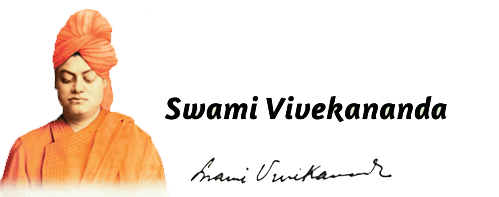
VIVEKANANDA.
Comments
Comments
Sign in to leave a comment