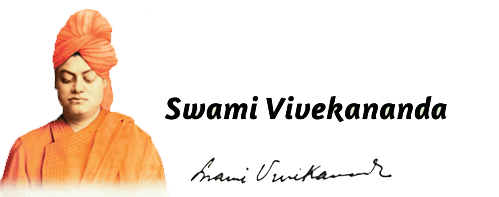
Swami Vivekananda
The Complete Works: Volume VPage 1 of 1

Epistles: First Series

57. I am working a good deal now upon the cosmology and eschatology of the Vedānta

228 W. 39TH ST. NEW YORK,

13th February, 1896.

BLESSED AND BELOVED,1

About the Sannyāsin coming over from India, I am sure he will help you in the translation work, also in other work. Later on, when I come, I may send him over to America. Today another Sannyāsin has been added to the list. This time it is a man who is a genuine American and a religious teacher of some standing in the country. He was Dr. Street. He is now Yogānanda, as his leaning is all towards Yoga.

I have been sending regular reports to the Brahmavādin from here. They will be published soon. It takes such a long time for things to reach India! Things are growing nobly in America. As there was no hocus-pocus from the beginning, the Vedānta is drawing the attention of the highest classes in American society. Sarah Bernhardt, the French actress, has been playing “Iziel” here. It is a sort of Frenchified life of Buddha, where a courtesan “Iziel” wants to seduce the Buddha, under the banyan—and the Buddha preaches to her the vanity of the world, whilst she is sitting all the time in Buddha’s lap. However, all is well that ends well—the courtesan fails. Madame Bernhardt acts the courtesan. I went to see the Buddha business—and Madame spying me in the audience wanted to have an interview with me. A swell family of my acquaintance arranged the affair. There were besides Madame M. Morrel, the celebrated singer, also the great electrician Tesla. Madame is a very scholarly lady and has studied up the metaphysics a good deal. M. Morrel was being interested, but Mr. Tesla was charmed to hear about the Vedantic Prāna and Ākāsha and the Kalpas, which according to him are the only theories modern science can entertain. Now both Ākāsha and Prāna again are produced from the cosmic Mahat, the Universal Mind, the Brahmā or Ishvara. Mr. Tesla thinks he can demonstrate mathematically that force and matter are reducible to potential energy. I am to go and see him next week, to get this new mathematical demonstration.

In that case, the Vedantic cosmology will be placed on the surest of foundations. I am working a good deal now upon the cosmology and eschatology2 of the Vedānta. I clearly see their perfect unison with modern science, and the elucidation of the one will be followed by that of the other. I intend to write a book later on in the form of questions and answers3. The first chapter will be on cosmology showing the harmony between Vedantic theories and modern science.

The eschatology will be explained from the Advaitic standpoint only. That is to say, the dualist claims that the soul after death passes on to the Solar sphere, thence to the Lunar sphere, thence to the Electric sphere. Thence he is accompanied by a Purusha to Brahmaloka. (Thence, says the Advaitist, he goes to Nirvāna.)

Now on the Advaitic side, it is held that the soul neither comes nor goes; and that all these spheres or layers of the universe are only so many varying products of Ākāsha and Prāna. That is to say, the lowest or most condensed is the Solar sphere, consisting of the visible universe, in which Prāna appears as physical force, and Ākāsha as sensible matter. The next is called the Lunar sphere, which surrounds the Solar sphere. This is not the moon at all, but the habitation of the gods, that is to say, Prāna appears in it as psychic forces, and Ākāsha as Tanmātras or fine particles. Beyond this is the Electric sphere, that is to say, a condition in which the Prāna is almost inseparable from Ākāsha, and you can hardly tell whether Electricity is force or matter. Next is the Brahmaloka, where there is neither Prāna nor Ākāsha, but both are merged in the mind-stuff, the primal energy. And here—there being neither Prāna nor Ākāsha—the Jiva contemplates the whole universe as Samashti or the sum total of Mahat or mind. This appears as a Purusha, an abstract universal soul, yet not the Absolute, for still there is multiplicity. From this the Jiva finds at last that Unity which is the end. Advaitism says that these are the visions which rise in succession before the Jiva, who himself neither goes nor comes, and that in the same way this present vision has been projected. The projection (Srishti) and dissolution must take place in the same order, only one means going backward, and the other coming out.

Now as each individual can only see his own universe, that universe is created with his bondage and goes away with his liberation, although it remains for others who are in bondage. Now name and form constitute the universe. A wave in the ocean is a wave, only in so far as it is bound by name and form. If the wave subsides, it is the ocean, but those name and form have immediately vanished for ever. So though the name and form of wave could never be without water that was fashioned into the wave by them, yet the name and form themselves were not the wave. They die as soon as ever it returns to water. But other names and forms live in relation to other waves. This name-and-form is called Māyā, and the water is Brahman. The wave was nothing but water all the time, yet as a wave it had the name and form. Again this name and form cannot remain for one moment separated from the wave, although the wave as water can remain eternally separate from name and form. But because the name and form can never be separated, they can never be said to exist. Yet they are not zero. This is called Māyā.

I want to work all this out carefully, but you will see at a glance that I am on the right track. It will take more study in physiology, on the relations between the higher and lower centres, to fill out the psychology of mind, Chitta (mind-stuff), and Buddhi (intellect), and so on. But I have clear light now, free of all hocus-pocus. I want to give them dry, hard reason, softened in the sweetest syrup of love and made spicy with intense work, and cooked in the kitchen of Yoga, so that even a baby can easily digest it.

Yours etc.,
VIVEKANANDA.

Notes

  1. E. T. Sturdy. ↩
  2. That is, doctrine of the last things—death, judgment, etc. ↩
  3. This was never done. But from his lectures in London in 1896, it is easy to see that his mind was still working on these ideas. (See also CW Vol. 8, p. 348). ↩
Share
Comments

Comments

Sign in to leave a comment

Contents

Epistles: First Series
  1. NOTE
  2. Be moral. Be brave.
  3. We must travel, we must go to foreign parts
  4. Calm and silent and steady work
  5. Feel for the miserable and look up for help — it shall come
  6. The Hindu must not give up his religion
  7. Do you know who is the real “Shakti-worshipper”?
  8. My whole ambition in life is to set in motion a machinery
  9. Up, up, my boys, we are sure to win!
  10. Whenever anyone of you is sick
  11. Appreciation or no appreciation, sleep not, slacken not.
  12. Fight on bravely! Life is short! Give it up to a great cause
  13. XII
  14. You will have to take charge of the whole movement, not as a leader, but as a servant
  15. Asians are the most charitable race in the world
  16. Wait, have patience, everything will come right in time
  17. XVI
  18. I care only for the Spirit—when that is right everything will be righted by itself
  19. Hope and do not despair
  20. XIX
  21. XX
  22. Look not at me, look to yourselves
  23. The life of Shri Ramakrishna was an extraordinary searchlight
  24. Preach Shri Ramakrishna. Pass the Cup that has satisfied your thirst. Preach Bhakti
  25. Remember that "Never one meets with evil who tries to do good"
  26. It is jealousy and want of combination which cause and perpetuate slavery
  27. XXVI
  28. Go to work, the rest will come
  29. I owe much to the Hale family
  30. Even after death I shall work for the good of the world
  31. Work for the idea, not the person
  32. 31. Coming and going is all pure delusion. The soul never comes nor goes
  33. 32. One cannot serve the God of Truth who leans upon somebody
  34. 33. Do not lose heart, do not lose faith in your Guru, do not lose faith in God
  35. 34. All’s well that ends well
  36. 35. Do not figure out big plans at first, but begin slowly, feel your ground, and proceed up and up
  37. 36. Hoping you the best dreams (for that is the only way to be happy)
  38. 37. Be cheerful.… Hold on to your own idea. Be the servant of all.
  39. 38. Love makes the whole universe as one's own home.
  40. 39. Be the servant of all, and do not try in the least to govern others.
  41. 40. Men are more valuable than all the wealth of the world.
  42. 41. A pestle must pound even if it goes to heaven.
  43. 42. Work on, my boy. Rome was not built in a day.
  44. 43. My disciples must not be cowards.
  45. 44. I wish you a life that will be like a torch to generations to come
  46. 45. May the Lord bless you and yours for ever and ever
  47. 46. May all happiness be yours for ever
  48. 47. Each work has to pass through these stages—ridicule, opposition, and then acceptance.
  49. 48. It is unnecessary to repeat my everlasting love and blessings for you and yours.
  50. 49. Truth is my God, the universe my country
  51. 50. Man is the greatest of all beings.
  52. 51. E. T. Sturdy
  53. 52. God and truth are the only politics in the world, everything else is trash.
  54. 53. So long as you are pure, and true to your principles, you will never fail.
  55. 54. Any other Hindu would have died if he had to work as hard as I have to.
  56. 55. Be perfectly pure in money dealings.
  57. 56. The whole life is a succession of dreams.
  58. 57. I am working a good deal now upon the cosmology and eschatology of the Vedānta
  59. 58. The dry, abstract Advaita must become living
  60. 59. The greatness of a teacher consists in the simplicity of his language.
  61. 60. So long as you have faith in your Guru, nothing will be able to obstruct your way.
  62. 61. Be obedient and eternally faithful to the cause of truth, humanity, and your country
  63. 62. The lotus is a symbol of regeneration.
  64. 63. Nothing can resist truth.
  65. 64. Work on! Hold on! Be brave! Dare anything and everything!
  66. 65. E.T. Sturdy
  67. 66. Work unto death—I am with you, and when I am gone, my spirit will work with you.
  68. 67. Work on with all energy.
  69. 68. I wish at least that a million Hindus had travelled all over the world!
  70. 69. We Hindus are so slow that when we have done a work, the opportunity has already passed away, and thus we are the losers.
  71. 70. We must remember that gratitude and hospitality are the peculiar characteristics of Indian humanity
  72. 71. Goodwin is an Englishman, through whose shorthand notes it has been possible for the pamphlets to be published.
  73. 72. You must not forget that my interests are international and not Indian alone
  74. 73. We have to learn that evil is destroyed by the growth of good.
  75. 74. Good motives, sincerity, and infinite love can conquer the world.
  76. 75. In Darjeeling I always felt that I was not the same man. Here I feel that I have no disease whatsoever
  77. 76. The word Vedas includes the three parts, the Samhitās, the Brāhmanas, and the Upanishads
  78. 77. For us, it is not to pity but to serve. Ours is not the feeling of compassion but of love
  79. 78. May I be born again and again, and suffer thousands of miseries so that I may worship the only God that exists
  80. 79. I am going down to the plains to be harnessed once more for work.
  81. 80. The work of the Mother will not suffer; because it has been built and up to date maintained upon truth
  82. 81. I have no more faith in all this noise and humbug which brings no practical good.
  83. 82. Our Teacher and Lord was so original, and each one of us will have to be original or nothing.
  84. 83. I want a couple of tiger skins, if I can, to be sent to the Math as present to two European friends
  85. 84. I have no shame to beg of one person in the world and that is yourself.
  86. 85. For the last ten years or so I have not seen the Pujā of Shri Durgā in Bengal which is the great affair there.
  87. 86. Do not lose heart if anything befalls, the “Mother” is your protection.
  88. 87. There is only one element in life which is worth having at any cost, and it is love.
  89. 88. Ever praying for you and yours
  90. 89. Those institutions should be encouraged by which men advance in the path of freedom.
  91. 90. My last breath will be on the battlefield.
  92. 91. May you be protected from all dangers and may all blessings ever attend you!
  93. 92. The secret of life is not enjoyment, but education through experience.
  94. 93. Give my love to all. Don’t work too hard.
  95. 94. Kāli has taken two sacrifices; the cause has already two European martyrs. Now, it is going to rise up splendidly.
  96. 95. This life is full of shocks, but the effects pass away anyhow, that is the hope.
  97. 96. I am going to take my mother on pilgrimage next week.
  98. 97. I am going with my mother to Rameswaram
  99. 98. Everybody is praising Margot's Kali the Mother; but alas! they can't get a book to buy
  100. 99. I am ever so glad to hear that Bois is coming to Calcutta.
  101. 100. I am so glad you saw Mr. Tata and find him so strong and good.
  102. 101. Good solid work must wait.
  103. 102. I have just returned from my tour through East Bengal and Assam.
  104. 103. The subtle Hindu's gratitude runs through generations.
  105. 104. Know this for certain that my love can never cease.
  106. 105. Certainly it is very desirable to establish a connection between India and Japan.
  107. 106. Never mind, I am trying my best. Only my terribly poor health
  108. 107. I can’t even in imagination pay the immense debt of gratitude I owe you.
  109. 108. The snake represents mysticism; the sun knowledge; the worked up waters activity; the lotus love; the swan the soul in the midst of all.
  110. 109. I have dedicated you to the Mother. She is your shield, your guide.
  111. 110. Meeting or no meeting, I remain, Ever your loving brother
  112. 111. “Mother” knows best. That is all I know too.
  113. 112. The idea of taking a house for a whole year must be worked out with deliberation.
  114. 113. Lord Curzon was not allowed inside.
  115. 114. A total revolution has occurred in my mind about the relation of Buddhism and Neo-Hinduism
  116. 115. The reception Nivedita had in Madras was for the good of both Nivedita and Madras.
  117. 116. If there was any truth in Shri Ramakrishna, may He take you into His leading
  118. 117. Continue doing your work as the Lord guides. Why bother about the opinion of this man and that?
  119. 118. Give a little money—whatever is needed.
  120. 119. Write me in detail about the matter of the Nepal Minister.
  121. 120. Now I shall be relieved if I get the accounts.
  122. 121. How did you like Mayavati? Write me a line about it.
  123. 122. A great idea of quiet has come upon me.
  124. 123. A race must first cultivate a great respect for motherhood, through the sanctification and inviolability of marriage
Interviews
  1. Miracles
  2. An Indian Yogi in London
  3. India's Mission
  4. India and England
  5. Indian Missionary's Mission to England
  6. With the Swami Vivekananda at Madura
  7. The Abroad and the Problems at Home
  8. The Missionary Work of the First Hindu Sannyasin to the West
  9. Reawakening of Hinduism on a National Basis
  10. On Indian Women — Their Past, Present and Future
  11. On the Bounds of Hinduism
Notes from Lectures and Discourses
  1. On Karma-Yoga
  2. On Fanaticism
  3. Work Is Worship
  4. Work Without Motive
  5. Sadhanas or Preparations for Higher Life
  6. The Cosmos and the Self
  7. Who Is a Real Guru?
  8. On Art
  9. On Language
  10. The Sannyasin
  11. The Sannyasin and the Householder
  12. The Evils of Adhikarivada
  13. On Bhakti-Yoga
  14. Ishvara and Brahman
  15. On Jnana-Yoga
  16. The Cause of Illusion
  17. Evolution
  18. Buddhism and Vedanta
  19. On the Vedanta Philosophy
  20. Law and Freedom
  21. The Goal and Methods of Realisation
  22. World-Wide Unity
  23. The Aim of Raja-Yoga
Questions and Answers
  1. I. A Discussion
  2. II. At the Twentieth Century Club of Boston, U. S. A.
  3. III. At the Brooklyn Ethical Society, Brooklyn, U. S. A.
  4. IV. Selections from the Math Diary
  5. V. Yoga, Vairagya, Tapasya, Love
  6. VI. in Answer to Nivedita
  7. VII. Guru, Avatara, Yoga, Japa, Seva
Conversations and Dialogues
  1. I
  2. II
  3. III
  4. IV
  5. V
  6. VI
  7. VII
  8. VIII
  9. IX
  10. X
  11. XI
  12. XII
  13. XIII
  14. XIV
  15. XV
Sayings and Utterances
  1. Sayings and Utterances
Writings: Prose and Poems
  1. Reason, Faith and Love
  2. Six Sanskrit Mottoes
  3. The Message of Divine Wisdom
  4. The Belur Math: an Appeal
  5. The Advaita Ashrama, Himalayas
  6. The Ramakrishna Home of Service Varanasi: an Appeal
  7. Who Knows How Mother Plays!
  8. To the Fourth of July
  9. The East and the West