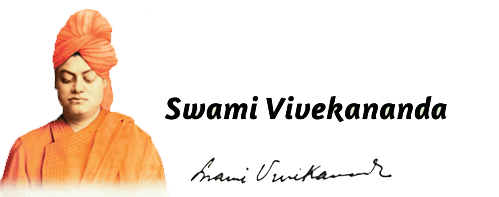
Swami Vivekananda
The Complete Works: Volume VPage 1 of 1

Interviews

India's Mission

(Sunday Times, London, 1896)

ENGLISH PEOPLE ARE WELL acquainted with the fact that they send missionaries to India’s “coral strands”. Indeed, so thoroughly do they obey the behest, “Go ye forth into all the world and preach the Gospel”, that none of the chief British sects are behindhand in obedience to the call to spread Christ’s teaching. People are not so well aware that India also sends missionaries to England.

By accident, if the term may be allowed, I fell across the Swami Vivekananda in his temporary home at 63 St. George’s Road, S. W., and as he did not object to discuss the nature of his work and visit to England, I sought him there and began our talk with an expression of surprise at his assent to my request.

“I got thoroughly used to the interviewer in America. Because it is not the fashion in my country, that is no reason why I should not use means existing in any country I visit, for spreading what I desire to be known! There I was representative of the Hindu religion at the World’s Parliament of Religions at Chicago in 1893. The Rājā of Mysore and some other friends sent me there. I think I may lay claim to having had some success in America. I had many invitations to other great American cities besides Chicago; my visit was a very long one, for, with the exception of a visit to England last summer, repeated as you see this year, I remained about three years in America. The American civilisation is, in my opinion, a very great one. I find the American mind peculiarly susceptible to new ideas; nothing is rejected because it is new. It is examined on its own merits, and stands or falls by these alone.”

“Whereas in England—you mean to imply something?”

“Yes, in England, civilisation is older, it has gathered many accretions as the centuries have rolled on. In particular, you have many prejudices that need to be broken through, and whoever deals with you in ideas must lay this to his account.”

“So they say. I gather that you did not found anything like a church or a new religion in America.”

“That is true. It is contrary to our principles to multiply organisations, since, in all conscience, there are enough of them. And when organisations are created, they need individuals to look after them. Now, those who have made Sannyāsa—that is, renunciation of all worldly position, property, and name—whose aim is to seek spiritual knowledge, cannot undertake this work, which is, besides, in other hands.”

“Is your teaching a system of comparative religion?”

“It might convey a more definite idea to call it the kernel of all forms of religion, stripping from them the non-essential, and laying stress on that which is the real basis. I am a disciple of Ramakrishna Paramahamsa, a perfect Sannyāsin whose influence and ideas I fell under. This great Sannyāsin never assumed the negative or critical attitude towards other religions, but showed their positive side—how they could be carried into life and practised. To fight, to assume the antagonistic attitude, is the exact contrary of his teaching, which dwells on the truth that the world is moved by love. You know that the Hindu religion never persecutes. It is the land where all sects may live in peace and amity. The Mohammedans brought murder and slaughter in their train, but until their arrival peace prevailed. Thus the Jains, who do not believe in a God and who regard such belief as a delusion, were tolerated, and still are there today. India sets the example of real strength, that is meekness. Dash, pluck, fight, all these things are weakness.”

“It sounds very like Tolstoy’s doctrine; it may do for individuals, though personally I doubt it. But how will it answer for nations?”

“Admirably for them also. It was India’s Karma, her fate, to be conquered, and in her turn, to conquer her conqueror. She has already done so with her Mohammedan victors: Educated Mohammedans are Sufis, scarcely to be distinguished from Hindus. Hindu thought has permeated their civilisation; they assumed the position of learners. The great Akbar, the Mogul Emperor, was practically a Hindu. And England will be conquered in her turn. Today she has the sword, but it is worse than useless in the world of ideas. You know what Schopenhauer said of Indian thought. He foretold that its influence would be as momentous in Europe, when it became well known, as the revival of Greek and Latin culture after the Dark Ages.”

“Excuse me saying that there do not seem many signs of it just now.”

“Perhaps not”, said the Swami, gravely. “I dare say a good many people saw no signs of the old Renaissance and did not know it was there, even after it had come. But there is a great movement, which can be discerned by those who know the signs of the times. Oriental research has of recent years made great progress. At present it is in the hands of scholars, and it seems dry and heavy in the work they have achieved. But gradually the light of comprehension will break.”

“And India is to be the great conqueror of the future? Yet she does not send out many missionaries to preach her ideas. I presume she will wait until the world comes to her feet?”

“India was once a great missionary power. Hundreds of years before England was converted to Christianity, Buddha sent out missionaries to convert the world of Asia to his doctrine. The world of thought is being converted. We are only at the beginning as yet. The number of those who decline to adopt any special form of religion is greatly increasing, and this movement is among the educated classes. In a recent American census, a large number of persons declined to class themselves as belonging to any form of religion. All religions are different expressions of the same truth; all march on or die out. They are the radii of the same truth, the expression that variety of minds requires.”

“Now we are getting near it. What is that central truth?”

“The Divine within; every being, however degraded, is the expression of the Divine. The Divinity becomes covered, hidden from view. I call to mind an incident of the Indian Mutiny. A Swami, who for years had fulfilled a vow of eternal silence, was stabbed by a Mohammedan. They dragged the murderer before his victim and cried out, ‘Speak the word, Swami, and he shall die.’ After many years of silence, he broke it to say with his last breath: ‘My children, you are all mistaken. That man is God Himself.’ The great lesson is, that unity is behind all. Call it God, Love, Spirit, Allah, Jehovah—it is the same unity that animates all life from the lowest animal to the noblest man. Picture to yourself an ocean ice-bound, pierced with many different holes. Each of these is a soul, a man, emancipated according to his degree of intelligence, essaying to break through the ice.”

“I think I see one difference between the wisdom of the East and that of the West. You aim at producing very perfect individuals by Sannyāsa, concentration, and so forth. Now the ideal of the West seems to be the perfecting of the social state; and so we work at political and social questions, since we think that the permanence of our civilisation depends upon the well-being of the people.”

“But the basis of all systems, social or political,” said the Swami with great earnestness, “rests upon the goodness of men. No nation is great or good because Parliament enacts this or that, but because its men are great and good. I have visited China which had the most admirable organisation of all nations. Yet today China is like a disorganised mob, because her men are not equal to the system contrived in the olden days. Religion goes to the root of the matter. If it is right, all is right.”

“It sounds just a little vague and remote from practical life, that the Divine is within everything but covered. One can’t be looking for it all the time.”

“People often work for the same ends but fail to recognise the fact. One must admit that law, government, politics are phases not final in any way. There is a goal beyond them where law is not needed. And by the way, the very word Sannyāsin means the divine outlaw, one might say, divine nihilist, but that miscomprehension pursues those that use such a word. All great Masters teach the same thing. Christ saw that the basis is not law, that morality and purity are the only strength. As for your statement that the East aims at higher self-development and the West at the perfecting of the social state, you do not of course forget that there is an apparent Self and a real Self.”

“The inference, of course, being that we work for the apparent, you for the real?”

“The mind works through various stages to attain its fuller development. First, it lays hold of the concrete, and only gradually deals with abstractions. Look, too, how the idea of universal brotherhood is reached. First it is grasped as brotherhood within a sect—hard, narrow, and exclusive. Step by step we reach broad generalisations and the world of abstract ideas.”

“So you think that those sects, of which we English are so fond, will die out. You know what the Frenchman said, ‘England, the land of a thousand sects and but one sauce’.”

“I am sure that they are bound to disappear. Their existence is founded on non-essentials; the essential part of them will remain and be built up into another edifice. You know the old saying that it is good to be born in a church, but not to die in it.”

“Perhaps you will say how your work is progressing in England?”

“Slowly, for the reasons I have already named. When you deal with roots and foundations, all real progress must be slow. Of course, I need not say that these ideas are bound to spread by one means or another, and to many of us the right moment for their dissemination seems now to have come.”

Then I listened to an explanation of how the work is carried on. Like many an old doctrine, this new one is offered without money and without price, depending entirely upon the voluntary efforts of those who embrace it.

The Swami is a picturesque figure in his Eastern dress. His simple and cordial manner, savouring of anything but the popular idea of asceticism, an unusual command of English and great conversational powers add not a little to an interesting personality. … His vow of Sannyāsa implies renunciation of position, property, and name, as well as the persistent search for spiritual knowledge.

Share
Comments

Comments

Sign in to leave a comment

Contents

Epistles: First Series
  1. NOTE
  2. Be moral. Be brave.
  3. We must travel, we must go to foreign parts
  4. Calm and silent and steady work
  5. Feel for the miserable and look up for help — it shall come
  6. The Hindu must not give up his religion
  7. Do you know who is the real “Shakti-worshipper”?
  8. My whole ambition in life is to set in motion a machinery
  9. Up, up, my boys, we are sure to win!
  10. Whenever anyone of you is sick
  11. Appreciation or no appreciation, sleep not, slacken not.
  12. Fight on bravely! Life is short! Give it up to a great cause
  13. XII
  14. You will have to take charge of the whole movement, not as a leader, but as a servant
  15. Asians are the most charitable race in the world
  16. Wait, have patience, everything will come right in time
  17. XVI
  18. I care only for the Spirit—when that is right everything will be righted by itself
  19. Hope and do not despair
  20. XIX
  21. XX
  22. Look not at me, look to yourselves
  23. The life of Shri Ramakrishna was an extraordinary searchlight
  24. Preach Shri Ramakrishna. Pass the Cup that has satisfied your thirst. Preach Bhakti
  25. Remember that "Never one meets with evil who tries to do good"
  26. It is jealousy and want of combination which cause and perpetuate slavery
  27. XXVI
  28. Go to work, the rest will come
  29. I owe much to the Hale family
  30. Even after death I shall work for the good of the world
  31. Work for the idea, not the person
  32. 31. Coming and going is all pure delusion. The soul never comes nor goes
  33. 32. One cannot serve the God of Truth who leans upon somebody
  34. 33. Do not lose heart, do not lose faith in your Guru, do not lose faith in God
  35. 34. All’s well that ends well
  36. 35. Do not figure out big plans at first, but begin slowly, feel your ground, and proceed up and up
  37. 36. Hoping you the best dreams (for that is the only way to be happy)
  38. 37. Be cheerful.… Hold on to your own idea. Be the servant of all.
  39. 38. Love makes the whole universe as one's own home.
  40. 39. Be the servant of all, and do not try in the least to govern others.
  41. 40. Men are more valuable than all the wealth of the world.
  42. 41. A pestle must pound even if it goes to heaven.
  43. 42. Work on, my boy. Rome was not built in a day.
  44. 43. My disciples must not be cowards.
  45. 44. I wish you a life that will be like a torch to generations to come
  46. 45. May the Lord bless you and yours for ever and ever
  47. 46. May all happiness be yours for ever
  48. 47. Each work has to pass through these stages—ridicule, opposition, and then acceptance.
  49. 48. It is unnecessary to repeat my everlasting love and blessings for you and yours.
  50. 49. Truth is my God, the universe my country
  51. 50. Man is the greatest of all beings.
  52. 51. E. T. Sturdy
  53. 52. God and truth are the only politics in the world, everything else is trash.
  54. 53. So long as you are pure, and true to your principles, you will never fail.
  55. 54. Any other Hindu would have died if he had to work as hard as I have to.
  56. 55. Be perfectly pure in money dealings.
  57. 56. The whole life is a succession of dreams.
  58. 57. I am working a good deal now upon the cosmology and eschatology of the Vedānta
  59. 58. The dry, abstract Advaita must become living
  60. 59. The greatness of a teacher consists in the simplicity of his language.
  61. 60. So long as you have faith in your Guru, nothing will be able to obstruct your way.
  62. 61. Be obedient and eternally faithful to the cause of truth, humanity, and your country
  63. 62. The lotus is a symbol of regeneration.
  64. 63. Nothing can resist truth.
  65. 64. Work on! Hold on! Be brave! Dare anything and everything!
  66. 65. E.T. Sturdy
  67. 66. Work unto death—I am with you, and when I am gone, my spirit will work with you.
  68. 67. Work on with all energy.
  69. 68. I wish at least that a million Hindus had travelled all over the world!
  70. 69. We Hindus are so slow that when we have done a work, the opportunity has already passed away, and thus we are the losers.
  71. 70. We must remember that gratitude and hospitality are the peculiar characteristics of Indian humanity
  72. 71. Goodwin is an Englishman, through whose shorthand notes it has been possible for the pamphlets to be published.
  73. 72. You must not forget that my interests are international and not Indian alone
  74. 73. We have to learn that evil is destroyed by the growth of good.
  75. 74. Good motives, sincerity, and infinite love can conquer the world.
  76. 75. In Darjeeling I always felt that I was not the same man. Here I feel that I have no disease whatsoever
  77. 76. The word Vedas includes the three parts, the Samhitās, the Brāhmanas, and the Upanishads
  78. 77. For us, it is not to pity but to serve. Ours is not the feeling of compassion but of love
  79. 78. May I be born again and again, and suffer thousands of miseries so that I may worship the only God that exists
  80. 79. I am going down to the plains to be harnessed once more for work.
  81. 80. The work of the Mother will not suffer; because it has been built and up to date maintained upon truth
  82. 81. I have no more faith in all this noise and humbug which brings no practical good.
  83. 82. Our Teacher and Lord was so original, and each one of us will have to be original or nothing.
  84. 83. I want a couple of tiger skins, if I can, to be sent to the Math as present to two European friends
  85. 84. I have no shame to beg of one person in the world and that is yourself.
  86. 85. For the last ten years or so I have not seen the Pujā of Shri Durgā in Bengal which is the great affair there.
  87. 86. Do not lose heart if anything befalls, the “Mother” is your protection.
  88. 87. There is only one element in life which is worth having at any cost, and it is love.
  89. 88. Ever praying for you and yours
  90. 89. Those institutions should be encouraged by which men advance in the path of freedom.
  91. 90. My last breath will be on the battlefield.
  92. 91. May you be protected from all dangers and may all blessings ever attend you!
  93. 92. The secret of life is not enjoyment, but education through experience.
  94. 93. Give my love to all. Don’t work too hard.
  95. 94. Kāli has taken two sacrifices; the cause has already two European martyrs. Now, it is going to rise up splendidly.
  96. 95. This life is full of shocks, but the effects pass away anyhow, that is the hope.
  97. 96. I am going to take my mother on pilgrimage next week.
  98. 97. I am going with my mother to Rameswaram
  99. 98. Everybody is praising Margot's Kali the Mother; but alas! they can't get a book to buy
  100. 99. I am ever so glad to hear that Bois is coming to Calcutta.
  101. 100. I am so glad you saw Mr. Tata and find him so strong and good.
  102. 101. Good solid work must wait.
  103. 102. I have just returned from my tour through East Bengal and Assam.
  104. 103. The subtle Hindu's gratitude runs through generations.
  105. 104. Know this for certain that my love can never cease.
  106. 105. Certainly it is very desirable to establish a connection between India and Japan.
  107. 106. Never mind, I am trying my best. Only my terribly poor health
  108. 107. I can’t even in imagination pay the immense debt of gratitude I owe you.
  109. 108. The snake represents mysticism; the sun knowledge; the worked up waters activity; the lotus love; the swan the soul in the midst of all.
  110. 109. I have dedicated you to the Mother. She is your shield, your guide.
  111. 110. Meeting or no meeting, I remain, Ever your loving brother
  112. 111. “Mother” knows best. That is all I know too.
  113. 112. The idea of taking a house for a whole year must be worked out with deliberation.
  114. 113. Lord Curzon was not allowed inside.
  115. 114. A total revolution has occurred in my mind about the relation of Buddhism and Neo-Hinduism
  116. 115. The reception Nivedita had in Madras was for the good of both Nivedita and Madras.
  117. 116. If there was any truth in Shri Ramakrishna, may He take you into His leading
  118. 117. Continue doing your work as the Lord guides. Why bother about the opinion of this man and that?
  119. 118. Give a little money—whatever is needed.
  120. 119. Write me in detail about the matter of the Nepal Minister.
  121. 120. Now I shall be relieved if I get the accounts.
  122. 121. How did you like Mayavati? Write me a line about it.
  123. 122. A great idea of quiet has come upon me.
  124. 123. A race must first cultivate a great respect for motherhood, through the sanctification and inviolability of marriage
Interviews
  1. Miracles
  2. An Indian Yogi in London
  3. India's Mission
  4. India and England
  5. Indian Missionary's Mission to England
  6. With the Swami Vivekananda at Madura
  7. The Abroad and the Problems at Home
  8. The Missionary Work of the First Hindu Sannyasin to the West
  9. Reawakening of Hinduism on a National Basis
  10. On Indian Women — Their Past, Present and Future
  11. On the Bounds of Hinduism
Notes from Lectures and Discourses
  1. On Karma-Yoga
  2. On Fanaticism
  3. Work Is Worship
  4. Work Without Motive
  5. Sadhanas or Preparations for Higher Life
  6. The Cosmos and the Self
  7. Who Is a Real Guru?
  8. On Art
  9. On Language
  10. The Sannyasin
  11. The Sannyasin and the Householder
  12. The Evils of Adhikarivada
  13. On Bhakti-Yoga
  14. Ishvara and Brahman
  15. On Jnana-Yoga
  16. The Cause of Illusion
  17. Evolution
  18. Buddhism and Vedanta
  19. On the Vedanta Philosophy
  20. Law and Freedom
  21. The Goal and Methods of Realisation
  22. World-Wide Unity
  23. The Aim of Raja-Yoga
Questions and Answers
  1. I. A Discussion
  2. II. At the Twentieth Century Club of Boston, U. S. A.
  3. III. At the Brooklyn Ethical Society, Brooklyn, U. S. A.
  4. IV. Selections from the Math Diary
  5. V. Yoga, Vairagya, Tapasya, Love
  6. VI. in Answer to Nivedita
  7. VII. Guru, Avatara, Yoga, Japa, Seva
Conversations and Dialogues
  1. I
  2. II
  3. III
  4. IV
  5. V
  6. VI
  7. VII
  8. VIII
  9. IX
  10. X
  11. XI
  12. XII
  13. XIII
  14. XIV
  15. XV
Sayings and Utterances
  1. Sayings and Utterances
Writings: Prose and Poems
  1. Reason, Faith and Love
  2. Six Sanskrit Mottoes
  3. The Message of Divine Wisdom
  4. The Belur Math: an Appeal
  5. The Advaita Ashrama, Himalayas
  6. The Ramakrishna Home of Service Varanasi: an Appeal
  7. Who Knows How Mother Plays!
  8. To the Fourth of July
  9. The East and the West