

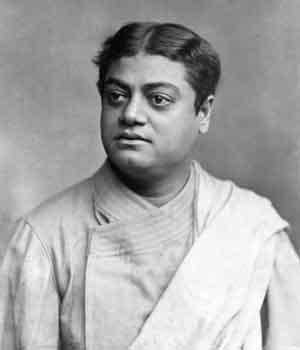
Vivekananda through the Early Pages of ‘Awakened India’

Starting of Three Magazines in the 1890s
SWAMI VIVEKANANDA inspired the founding of three magazines: a Bengali journal named Udbodhan (started in Kolkata in 1899), and two English ones: Brahmavadin (in 1895) and Prabuddha Bharata (in 1896). He also gave vital guidance and decisive ideas for running these magazines through his letters, interactions, and also by contributing his articles, travelogues, and transcripts of his lectures. It is historically significant that both the English magazines were launched in Madras (now Chennai), and while Prabuddha Bharata is now published from Advaita Ashrama, Mayavati in Uttarakhand, and the Brahmavadin, in its reincarnation as The Vedanta Kesari (since 1914), from Sri Ramakrishna Math, Mylapore, Chennai, in Tamil Nadu. All the three magazines continue the mission of spreading Vedanta philosophy in all its aspects in the light of the universal teachings of Sri Ramakrishna. It is no small achievement that all the three magazines have crossed a century and a quarter of their publication and are doing well. What an extraordinary accomplishment! Swamiji, an extraordinary communicator that he was, motivated, inspired, and guided his young followers, disciples, and brother-disciples to broadcast the message of Sri Ramakrishna and Vedanta and of a resurgent India among all who aspired towards a nobler and higher view of life. Swamiji’s interest in the magazine work can be gauged by the fact that he wrote to Alasinga Perumal, who enthusiastically worked as the editor-owner for Brahmavadin in its initial years, on 8 August 1896 from Switzerland: ‘Let this paper be your Ishtadevatâ [‘chosen spiritual ideal’].’1 What a way of elevating the work of running a magazine to a spiritual practice! Not only this, Swamiji also worked hard to get funds as well as subscribers for all these magazines.
Swamiji’s Literary Presence in the Three Journals
Swamiji was a spiritual giant with a burning passion to serve humanity and was especially committed to awaken India from her long slumber and restore her position in the comity of nations. Besides, he was a literary genius from whose versatile pen emerged thought-provoking articles, inspiring letters, and poignant poetry. His charming personality and spiritual eminence can easily be seen in his writings and speeches.
Swamiji travelled extensively from India to America, Europe, and then came back to India. This was some 120 years ago when today’s flying facilities were yet to be discovered and commercialised. It was indeed a stupendous achievement in itself. Swamiji wrote a fairly large memoir in Bengali describing his sea voyage during his second visit to the West. Written in Bengali, in a refreshingly new language and style, these memoirs are a treasure house of Swamiji’s vast knowledge of various countries, their history and customs, and contain many insights about human nature as well. Perhaps it would not be a bad idea to produce a film on what he has written there and may be called ‘A Sea Voyage with Swami Vivekananda!’ It would surely be a great work of his deep understanding and observations in the form of a film. (Its English translation is in the seventh volume of the Complete Works, titled ‘Memoirs of European Travels’.)
Besides, as he travelled, he constantly preached through conversations, personal and newspaper interviews, public lectures, writings, and letters written to his brother disciples, admirers, co-workers, and others. Swamiji’s literary output is truly stupendous, to say the least, besides abounding in such deep thoughts and insights that the passing of a century has in no way reduced their power and charm.
Today we have Swamiji’s Complete Works in nine volumes which contain his writings, letters, and transcripts of lectures and interviews. The compilation of these works of Swamiji, however, took years of painstaking and meticulous efforts by Swamiji’s disciples, monastic and lay, in India and the West (especially in America and England). It required much hard work to collect, arrange, proofread, and publish this valuable treasure. Originally the Complete Works was published in four volumes in 1906 and over the years as things kept emerging, more volumes were added. Ninth volume was released by the President of India in 1997 in a public function held in Kolkata.
Initially, many of what form the contents of the Complete Works appeared either in Brahmavadin or Prabuddha Bharata. Here we will gleam through some of the early issues of the Prabuddha Bharata (shortened to PB) picking up the precious gems of Swamiji’s lectures and writings published in it. Of course, not all contents of the Complete Works were first published in PB or Brahmavadin. Most of these were never published in either PB or Brahmavadin. But Swamiji, as he guided the fledgling magazines, did send some of his writings to the magazines he had started. In a letter to Alasinga Perumal from New York dated 30 July 1895, published in PB July 1977, he wrote: ‘Spread the name of God, and do not talk a word against the social evils and traditions. The “song of the sannyasin” is my first contribution to your journal.’2
On the Footsteps of Swamiji in Prabuddha Bharata
The Prabuddha Bharata was started at the behest of Swami Vivekananda in July 1896 in Madras by his ‘Madras boys’ with B R Rajam Iyer as its first editor. (‘Madras boys’ is a term used by Swamiji in one of his letters. Other names included in ‘Madras Boys’ are Alasinga Perumal, Singaravelu Mudaliyar, G G Narasimhachariar, G Venkataranga Rao, D R Balajai Rao, Dr M C Nanjunda Rao, M Rangacharya, G A Natesan, G Subramania Aiyer, C P Ramaswamy Iyer, V Krishnaswamy Iyer, P R Sundaram Iyer, and others). They all played an important role in carrying out Swamiji’s ideas into reality, to whatever extent they could.
We will take up some of these early publications of Swamiji in PB between 1896 and 1922. All these are from Swamiji’s pen, or transcripts or notes of his lectures. Right in the first issue of the PB published in 1896, one finds transcripts of two lectures delivered by Swamiji in America; titled ‘Doing Good to the World’ and ‘Buddha, the Ideal Karma Yogin’. Rather short in size, both of them are now a part of Karma Yoga (published by the Advaita Ashrama). These were the first glimpses of Swamiji’s lectures and writings in PB. As they are the first glimpses, let us cite from them, in parts. Says Swamiji in ‘Doing Good to the World’:
This world is neither good nor evil; each man manufactures a world for himself. If a blind man begins to think of it, it is either as soft or hard, or cold or hot. We are a mass of happiness or misery; we have seen that, hundreds of times in our lives. As a rule, the young are optimistic, and the old pessimistic. The young have all life before them, and the old are complaining; their day is gone; hundreds of desires, which they cannot fulfil, are struggling in their brain. Life [is] at an end for them. Both are foolish. This life is neither good nor evil. It is according to the different states of mind in which we look at the world. The most practical man would call it neither good nor evil. Fire, by itself, is neither good nor evil. When it keeps us warm, we say: ‘How beautiful is fire!’ When it burns our fingers, we blame the fire. Still it was neither good nor bad. We use it, it produced in us the feeling of good or bad; and so also is this world. It is perfect. By perfection is meant that it is perfectly fitted to meet its ends. We can all be perfectly sure that it will go on, and need not bother our heads wanting to help it.
Towards the end of his lecture on ‘Buddha, the Ideal Karma Yogin’, Swamiji says:
I will tell you in a few words about one man who carried it (Karma Yoga) into practice. That man was Buddha. He is the one man who ever carried this into perfect practice. ... He was the first great reformer the world ever saw. ... He works best who works without any motive power. Neither for money nor anything else, and when a man can do that, he will be a Buddha, and out of him will come the power to work in such a manner as to transform the world. That is the very ideal of Karma Yoga.
In the second issue of PB (August 1896), we find a passage from Swamiji’s lecture delivered in America, titled ‘What is Duty?’. This one-page extract illustrates the idea of duty by the well-known story of a Sannyasin, who acquired some power through his austerity, but had to learn lessons in humility, selflessness, and devotion from a common housewife and later from a butcher. In the beginning of the lecture, Swamiji discusses the idea as to what is a duty. He says: ‘To make an objective definition of duty be entirely impossible. ... There is only one idea which is universal for all mankind, of any age or sect or country, and that has been summed up in the Sanskrit aphorism, “Do not injure any being; non-injuring any being is virtue; injuring any being is vice.”’
Interestingly, the same issue cites a writing of Swamiji from the Brahmavadin about his visit to Professor Max Muller. It describes Swamiji’s visit and later interactions and conversations in Swamiji’s own words. Obviously, Swamiji was deeply appreciative of Max Mullar’s vast scholarship, dedication, and his large-heartedness. He wrote: ‘Max Müller is a Vedantist of Vedantists. He has, indeed, caught the real soul of the melody of the Vedanta, in the midst of all its settings of harmonies and discords—the one light that lightens the sects and creeds of the world, the Vedanta, the one principle of which all religions are only applications.
In one small writing of Swamiji titled ‘Is Vedanta Pessimistic?’, published in PB in September 1897, Swamiji makes a beautiful observation about Vedanta: ‘The Vedanta system begins with tremendous pessimism and ends with real optimism. We deny the sense optimism, but assert the real optimism of supersensuous. Real happiness is not in the sense, but above the senses and it is in every man.’
Swamiji’s incisive analysis of various ideas about the Self or Atman in his lecture titled ‘The Atman’ was published in PB in its October 1896 issue. A passage from it will give the reader an idea of what Swamiji said:
What is the bondage? The necessity of being born and the necessity of dying. Even the highest gods die ... Those who do good works in this world and help others, but with an eye to reward, hoping to reach heaven or to get the praise of their fellow-men, must when they die, reap the benefit of those good works—they become these gods. But that is not salvation; salvation never will come through hope of reward. Whatever man desires the Lord gives him. Men desire power, they desire prestige, they desire enjoyments as gods, and they get these desires fulfilled, but no effect of work can be eternal. The effect will be exhausted after a certain length of time; it may be aeons, but after that it will be gone, and these gods must come down again and become men and get another chance for liberation. ...
All this universe is the reflection of that One Eternal Being, the Atman, and as the reflection falls upon good or bad reflectors, so good or bad images are cast up. Thus in the murderer, the reflector is bad and not the Self. ... The whole of this universe is one Unity, one Existence, physically, mentally, morally and spiritually.
There are other lectures of Swamiji dealing with different aspects of Vedanta philosophy published in various issues of PB. Some of these were published when Swamiji was alive, and some posthumously. These include: ‘The Philosophy of the Atman and the Soul’ (PB January 1898), ‘Cosmology’ (PB, April 1903), ‘Steps of Hindu Philosophic Thought’ (PB October 1903), ‘A Study of Sankhya Philosophy’ (PB January 1904), ‘Bondage and Freedom’ (PB January 1905), ‘The Way to the Realisation of a Universal Religion’ (PB October, 1907) and ‘Religion, Its Methods and Purpose’ (PB July 1912). These lectures show Swamiji’s vast understanding of spiritual truths and how to realise them. For instance, in his lecture on ‘Cosmology’ (PB, April 1903), Swamiji says:
Here are two worlds, the microcosm, and the macrocosm, the internal and the external. We get truth from both of these by means of experience; there are internal experience and external experience. The truths gathered from internal experience are psychology, metaphysics, and religion; from external experience, the physical sciences. Now a perfect truth should be in harmony with experiences in both these worlds. The microcosm must bear testimony to the macrocosm, and the macrocosm to the microcosm; physical truth must have its counterpart in the internal world, and the internal world must have its verification in the outside.
All these lectures find their place in the Complete Works now.
Swamiji’s Nationalistic Lectures in Prabuddha Bharata
Swami Vivekananda’s return to India from his historic mission to the West was marked by unprecedented welcome. He landed in Colombo on 15 January 1897 and was accorded a magnificent welcome by the residents of Colombo which consisted of decorating the roads with flowers and festoons and presenting him a welcome address at a public meeting. Swamiji gave his first public address in the East there. Later he spoke at Jaffna and other places in Sri Lanka before landing at Rameshwaram where he was welcomed by the Raja of Ramnad himself at the seashore. Swamiji spoke at the Rameshwaram temple, and later at Ramnad, Paramakudi, Kumbhakonam, Madurai, and finally at Madras (now Chennai) before proceeding to Calcutta (now Kolkata). His fiery lectures roused the national consciousness by pointing out the eternal message of India and her heritage rooted in Sanātana Dharma. His lectures inspired the Indian masses to fight for freedom from the British colonial rule and develop love for India. Three of these nationalist lectures were published in PB. Here are excerpts from two of these lectures: ‘Sages of India’ and ‘Vedanta in Its Application to Indian Life’. In ‘Sages of India’ (PB March 1897), Swamiji says:
In speaking of the sages of India, my mind goes back to those periods of which history has no record, and tradition tries in vain to bring the secrets out of the gloom of the past. The sages of India have been almost innumerable, for what has the Hindu nation been doing for thousands of years except producing sages? I will take, therefore, the lives of a few of the most brilliant ones, the epoch-makers, and present them before you, that is to say, my study of them.
In the first place, we have to understand a little about our scriptures. Two ideals of truth are in our scriptures; the one is, what we call the eternal, and the other is not so authoritative, yet binding under particular circumstances, times, and places. The eternal relations which deal with the nature of the soul, and of God, and the relations between souls and God are embodied in what we call the Shrutis, the Vedas. The next set of truths is what we call the Smritis, as embodied in the words of Manu, Yâjnavalkya, and other writers and also in the Purânas, down to the Tantras. The second class of books and teachings is subordinate to the Shrutis, inasmuch as whenever any one of these contradicts anything in the Shrutis, the Shrutis must prevail. This is the law. ... As for general directions, the Shrutis are enough; for spiritual life, nothing more can be said, nothing more can be known. All that is necessary has been known, all the advice that is necessary to lead the soul to perfection has been completed in the Shrutis; the details alone were left out, and these the Smritis have supplied from time to time.
In ‘Vedanta in its Application to Indian Life’ (PB March 1897), Swamiji said, in part:
We think many things parrot-like, but never do them; speaking and not doing has become a habit with us. What is the cause of that? Physical weakness. This sort of weak brain is not able to do anything; we must strengthen it. First of all, our young men must be strong. Religion will come afterwards. Be strong, my young friends; that is my advice to you. You will be nearer to Heaven through football than through the study of the Gita. These are bold words; but I have to say them, for I love you. I know where the shoe pinches. I have gained a little experience. You will understand the Gita better with your biceps, your muscles, a little stronger. You will understand the mighty genius and the mighty strength of Krishna better with a little of strong blood in you. You will understand the Upanishads better and the glory of the Atman when your body stands firm upon your feet, and you feel yourselves as men. Thus we have to apply these to our needs.
What is significant to note here is that all these were published almost a month or two after they were delivered in Madras in February 1897. That speaks quite well of the efficiency and hard work of the editorial team of those days which had no such facilities as the Internet, soft copies, and digital technology!
Swamiji’s Poems in Prabuddha Bharata
Students of Swami Vivekananda’s life know that Swamiji was an accomplished poet whose poetry was filled with deep pathos, profound mysticism, and devotion. These poems are a delight for a poetry-lover and a spiritual seeker. Swamiji’s first poem that appeared in PB is a call to ‘awaken’ Awakened India itself. Prabuddha Bharata or Awakened India, as stated earlier, was started in Madras in 1896. Due to various reasons, the magazine was shifted to Almora in Kumaon Himalayas in 1898. In a letter published on 28 June 1898, to the Editor of ‘The Hindu’, Swami Sadananda, a disciple of Swami Vivekananda, wrote:
Sir,
May I request the favor of your kindly allowing me, through the medium of your widely read paper, to announce the fact that Prabuddha Bharat or The Awakened India will not be discontinued as stated in its last issue, but will henceforth be published in an improved form from the Ramakrishna Math, Almora, Kumaon, N.W.P., under a new management of which the head is the illustrious Swami Vivekananda, who will be one of the regular contributors to its pages.
The first issue is expected to appear on or about the 1st August next.
Almora, 19th June.
Sadananda3
Swamiji wrote a beautiful poem invoking the purpose for which the Prabuddha Bharata or ‘Awakened India’ was started. Let us look at some of the stanzas from the poem, ‘To the Awakened India’:
Once more Awake!
For sleep it was, not death, to bring thee life
Anew, and rest to lotus-eyes, for visions
Daring yet. The world in need awaits, O Truth!
No death for thee!… And tell the world—
Awake, arise, dream no more!
This is the land of dreams, where Karma
Weaves unthreaded garlands with our thoughts,
Of flowers sweet or noxious,—and none
Has root or stem, being born in naught, which… Or, if you cannot, dream then truer dreams,
Which are Eternal Love and Service Free.
Besides this, three other poems of Swamiji were published in PB in its early years. PB issue of January 1900 carried a poem of Swamiji titled ‘Peace’. First two stanzas of the poem read thus:
Behold, it comes in might,
The power that is not power,The light that is in darkness,
The shade in dazzling light.
It is joy that never spoke,
And grief unfelt, profound,
Immortal life unlived,
Eternal death unmourned.
‘The Cup’ is an excellent piece of poetry on the idea of Karma and Swadharma, one’s own duty; it was published posthumously in January 1913 issue of PB. (Interestingly, this poem was a part of the English literature syllabus of Bangalore University some two decades ago.) The full poem reads thus:
This is your cup—the cup assigned to you
from the beginning.
Nay, My child, I know how much of that dark
drink is your own brew
Of fault and passion, ages long ago,
In the deep years of yesterday, I know.This is your road—a painful road and drear.
I made the stones that never give you rest.
I set your friend in pleasant ways and clear,
And he shall come like you, unto My breast.
But you, My child, must travel here.This is your task. It has no joy nor grace,
But it is not meant for any other hand,
And in My universe hath measured place,
Take it. I do not bid you understand.
I bid you close your eyes to see My face.
The last of these poems appeared in PB July 1912 issue. Titled ‘My Play is Done’, it was written in the Spring of 1895 in New York. It speaks of Swamiji’s deep longing for freedom and spiritual experience. It is addressed to the Divine Mother to whom he prays to show Her benign face and bestow high spiritual state to him. In part it reads:
I long, oh, long to return home!
Mother, my play is done.
You sent me out in the dark to play,
and wore a frightful mask;
… Where children dream bright, golden dreams,
too soon to find them dust,
… I go adrift and know not whither.
Save me from this fire!
… Let never more delusive dreams
veil off Thy face from me.
My play is done, O Mother,
break my chains and make me free!
Of course, Swamiji wrote a number of other poems in English and Bengali and composed a few Sanskrit hymns, which are all in the Complete Works now. They are all suffused with mystical wisdom and pathos of a poet.
Swamiji’s Other Writings in PB
Obviously, this article cannot put together all that was published from Swamiji’s pen in those early years of PB. Nonetheless, it must be pointed out that PB carried Swamiji’s letters, unpublished notes of class talks, translations of his writings in Bengali, and an interview that gave the fledgling journal a strong philosophical ground. A cursory view of these will give an idea of what Swamiji wrote and said:
First, Meditation should be of a negative nature. Think away everything. Analyse everything that comes in the mind by the sheer action of the will. Next, assert what we really are—existence, knowledge and bliss—being, knowing, and loving. Meditation is the means of unification of the subject and object (‘Jnana Yoga’, PB April 1914).
Numbers do not count, nor does wealth or poverty; a handful of men can throw the world off its hinges, provided they are united in thought, word and deed, —never forget this truth. The more opposition there is, the better. Does a river acquire velocity unless there is resistance? The newer, and better a thing is, the more opposition it will meet with at the outset. It is opposition which foretells success. Where there is no opposition, there is no success either (‘The Indian Problems and Its Solution’, PB March 1922)
After all, it is only Mother’s play. Nothing serious after all. What could move the Almighty? What made Mother create the universe? She could have no goal. Why? Because the goal is something that is not yet attained. What is this creation for? Just fun. We forget this and begin to quarrel and endure misery. We are the playmates of the Mother (‘Mother Worship’, PB October 1919).
Then it was that Shri Bhagavan Ramakrishna incarnated himself in India, to demonstrate what the true religion of the Aryan race is; to show where amidst all its many divisions and offshoots, scattered over the land in the course of its immemorial history, lies the true unity of the Hindu religion, which by its overwhelming number of sects, discordant to superficial view, quarrelling constantly with each other and abounding in customs divergent in every way, has constituted itself a misleading enigma for our countrymen and the butt of contempt for foreigners; and above all, to hold up before men, for their lasting welfare, as a living embodiment of the Sanātana Dharma, his own wonderful life into which he infused the universal spirit and character of this Dharma, so long cast into oblivion by the process of time (‘Hinduism and Sri Ramakrishna’, PB April 1914).
Many wonderful institutions and customs, and many wonderful manifestations of strength and power it has been my good fortune to study in the midst of the various races I have seen, but the most wonderful of all was to find that beneath all these apparent variations of manners and customs, of culture and power, beats the same mighty human heart under the impulsion of the same joys and sorrows, of the same weakness and strength (‘India’s Message to the World’, PB December 1905).
Under the title ‘Epistles of Swami Vivekananda III’, there are a couple of letters of Swamiji. Addressed to various people at different points of time and written mainly from the West, these letters contain some of his oft-quoted words. Here are some excerpts from PB January 1913:
Try to be pure and unselfish—that is the whole of religion.
My children, the secret of religion lies not in theories but in practice. To be good and to do good—that is the whole of religion. Not he that crieth ‘Lord’, ‘Lord’, but he that doeth the will of the Father.
You will be pleased to know that I am also learning my lessons every day in patience and, above all, in sympathy. I think I am beginning to see the Divine, even inside the high and mighty Anglo Indians. I think I am slowly approaching to that state when I would be able to love the very ‘Devil’ himself, if there were any.
Conclusion
This is only a brief survey of Swami Vivekananda’s writings in the early issues of Prabuddha Bharata. What is interesting about Swamiji’s writings is that they do not seem to age at all! More than a century has passed without diminishing the force of his ideas and the charm of his expressions! After all, Swamiji was a mouthpiece of the Eternal Religion. As Sister Nivedita wrote in her famous and trenchant introduction to the Complete Works:
In the four volumes of the Works of the Swami Vivekananda which are to compose the present edition, we have what is not only a gospel to the world at large, but also to its own children, the Charter of the Hindu Faith. What Hinduism needed, amidst the general disintegration of the modern era, was a rock where she could lie at anchor, an authoritative utterance in which she might recognise herself. And this was given to her, in these words and writing of the Swami Vivekananda.4
A former editor of the Vedanta Kesari, Swami Atmashraddhananda is the Secretary, Ramakrishna Mission Ashrama, Kanpur.
Notes and References
1. The Complete Works of Swami Vivekananda, 9 vols (Calcutta: Advaita Ashrama, 1–8, 1989; 9, 1997), 5.111.
2. The famous poem ‘Song of the Sannyasin’ composed by Swamiji at Thousand Island Park, New York, was published in the September 1895 issue of Brahmavadin.
3. Swami Vivekananda in Contemporary Indian News (1893–1902), Ed. Sankari Prasad Basu, 3 vols (Kolkata: Ramakrishna Mission Institute of Culture, 1997), 1.324.
4. Sister Nivedita, ‘Introduction: Our Master and His Message’, Complete Works, 1.ix.
Source: Prabuddha Bharata, January 2021 (Vol. 126, No. 1), pp. 153–160. Read the original issue.
Comments
Sign in to leave a comment