

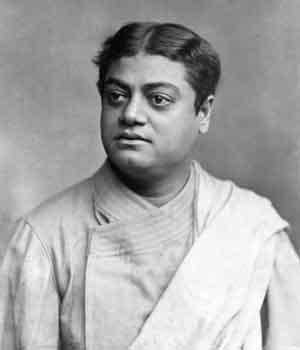
Moving Mountains: Swami Vivekananda’s Himalayan Connections

SWAMI VIVEKANANDA (1863–1902) was one of the most powerful and influential makers of modern India.1 Though there is scarcely an aspect of his dazzling but brief life of less than forty years that has not been studied, his Himalayan connections demand further exploration. Not only because his relationship with the Himalayas was complex, multi-layered, and enduring, but also because some of his major, life-changing spiritual experiences occurred in the mountainous heights of Uttarakhand and Kashmir.2 This essay is an attempt to snapshot those crucial and momentous events in the Swami’s Himalayan sojourns because they continue to reverberate in the national consciousness to this date.
Devatātmā
In his ‘Reminiscences of Swami Vivekananda’, K S Ramaswami Sastri recalls the nine days Vivekananda stayed at their home in Trivandrum (now Tiruvananthapuram) in December 1892. The Swami was accompanied by a Muslim attendant and, at first, himself taken for a ‘Mohammedan’. Sastri was then fourteen years old.3
Sastri recalls how one morning, when he was studying from his textbook, Kalidasa’s Kumārasambhava, Swamiji asked: ‘Can you repeat the great poet’s description of the Himalayas?’ Sastri recited the verses, so well-known, that open the Mahākāvya (great poem):
अस्त्युत्तरस्यां दिशि देवतात्मा
हिमालयो नाम नगाधिराजः।
पूर्वापरौ तोयनिधी विगाह्य स्थितः
पृथिव्या इव मानदण्डः॥Astyuttarasyāṁ diśi devatātmā
himālayo nāma nagādhirājaḥ;
pūrvāparau toyanidhī vigāhya sthitaḥ
pṛthivyā iva mānadaṇḍaḥ.
The couplet may be roughly translated thus: in the northern direction, forming the heartland of Gods, stands the overlord of snowy mountains, Himalaya, like a measuring rod of earth thrust betwixt eastern and western oceans. [1.1]4
Pleased, Swamiji remarks: ‘Do you know that I am coming after a long stay amidst the sublimity of the Himalayan scenes and sights?’ So saying, he asks the boy to repeat the opening verse, this time also explaining its meaning. When Sastri does so, Swamiji says: ‘That is good, but not enough.’ Then, repeating the couplet in ‘his marvellous, musical, measured tones’, Swamiji explains:
The important words in this verse are devatatma (ensouled by Divinity) and mana-danda (measuring-rod). The poet implies and suggests that the Himalaya is not a mere wall accidentally constructed by nature. It is ensouled by Divinity and is the protector of India and her civilization not only from the chill icy blasts blowing from the arctic region but also from the deadly and destructive incursions of invaders. The Himalaya further protects India by sending the great rivers Sindhu, Ganga, and Brahmaputra perennially fed by melted ice irrespective of the monsoon rains. Mana-danda implies that the poet affirms that the Indian civilization is the best of all human civilizations and forms the standard by which all the other human civilizations, past, present, and future, must be tested. Such was the poet’s lofty conception of patriotism.5
This extraordinary explanation not only underscores Vivekananda’s great erudition and deep study of classical Indian literature, but, even more remarkably, his love of the Himalayas.6 Sastri reminisces: ‘I felt thrilled by his words. I treasure them even to this day, and they shine in my heart even now with an undimmed and undiminished splendour’ (ibid.).
The travels in the Himalayas that Swamiji mentioned to Sastri occurred earlier that year in 1890. After Sri Ramakrishna’s death on 16 August 1886, Swamiji had stayed mostly at the Baranagore Monastery for two years, consolidating the order of young sannyasins (renunciates) that he founded. His itinerant days began in 1888, taking him all across the country, as a wandering monk. That year, he had reached as far as Rishikesh in today’s Uttarakhand, but had to return because he contracted malaria. But in 1890, Swamiji again travelled extensively in the Himalayas, going on foot from Nainital to Almora, thence to Rudraprayag, Srinagar (Garhwal), Tehri, Mussoorie, then back to the plains via Rishikesh, Hardwar, and Dehra Dun.
So well-known was his love for the mountains that his standard biography ‘The Life of Swami Vivekananda by His Eastern and Western Disciples’ devotes a whole chapter to Vivekananda’s ‘Wanderings in the Himalayas’.7 Eager ‘to see the snow-capped Himalayas’, he did not wish to tarry in the sacred city of Varanasi, predicting to his host, Pramadadas Mitra: ‘I am now leaving Kashi, and shall not return (here next time) until I have burst on society like a bomb-shell; and it will follow me like a dog.’8
From Nainital, Swamiji, accompanied by his brother monk, Akhandananda, planned to walk all the way to Badrinath. But they could not proceed beyond Karnaprayag. The region was famine-struck, with the onward roads closed by the government. Both Swamiji and Akhandananda fell ill, wracked by high fever and chills. Nevertheless, their party spent many memorable days in Chati, Alakananda, Tehri, Srinagar (Garhwal), Ganeshprayag, Rishikesh, and Hardwar, before doctors advised them to return to the plains, to convalesce in Dehra Dun.
There were two notable incidents in this period that bear emphasis. Towards the beginning of their Himalayan sojourn, they stopped near a stream, in a place known as Kakrighat, about fourteen and a half miles from Almora by road. Under an ancient peepul tree, Swamiji sat totally absorbed in meditation. When he came back, he declared to Akhandananda: ‘Oh, Gangadhar!9 I have just passed through one of the greatest moments of my life. Here, under this peepul tree, one of the greatest problems of my life has been solved. I have found the oneness of the macrocosm with the microcosm. In this microcosm of the body, everything that is there (in the macrocosm) exists. I have seen the whole universe within an atom.’10 This was one of his great realisations, jotted down in a fragment in Bengali in his notebook, translated later in the following fashion:
In the beginning was the Word etc.
The microcosm and the macrocosm are built on the same plan. Just as the individual soul is encased in the living body, so is the Universal Soul in the Living Prakriti (Nature)—the objective universe. Shivā (i.e. Kali)11 is embracing Shiva; this is not a fancy. This covering of the one (Soul) by the other (Nature) is analogous to the relation between an idea and the word expressing it: they are one and the same, and it is only by a mental abstraction that one can distinguish them. Thought is impossible without words. Therefore, ‘in the beginning was the Word’ etc.
This dual aspect of the Universal Soul is eternal. So what we perceive or feel is this combination of the Eternally Formed and the Eternally Formless (ibid.).
Priyanjali Bhalla, writing in the Doon Mozaic, refers to the above incident and says that it was during this period that Swamiji ‘got enlightenment about the similarity between the macrocosm and the microcosm’. In her view: ‘The spirit of the Himalayas helped Swami Vivekananda reach his climax of being a spiritual teacher.’12 She also refers to his realisation of the unity between the macrocosm and microcosm, which would be a recurring theme in his teachings.13 For Bhalla, the sum of the Swami’s teaching, whose secret he discovered in the Himalayas, is: ‘Adjust the microcosm which is in your power to do, the macrocosm will adjust itself for you. All the power is inside you. Discover it, believe it. That’s all you need to do’ (ibid). Later, Swamiji would deliver his famous lecture on the same theme, ‘The Cosmos: The Macrocosm’, delivered in New York, on 19 January 1896, which I shall come to later.
During this period, Swamiji received a telegram from his brother informing him of the suicide of his sister. Some claim that this experience made him a champion of women’s rights throughout his life. As Sister Nivedita puts it:
news reached him, of the death in pitiful extremity, of the favourite sister of his childhood, and he had fled into the wilder mountains, leaving no clue. … it seemed that this death had inflicted on the Swami’s heart a wound, whose quivering pain had never for one moment ceased. And we may, perhaps, venture to trace some part at least of his burning desire for the education and development of Indian women to this sorrow.14
Though these wanderings in the hills suited him temperamentally, he was forced, as it were, to descend once more to the plains to engage with the toils and troubles of the suffering masses. Later, he remembered renunciation and freedom of the ‘stern ascetics’ of Hardwar and Hrishikesh:
I saw many great men in Hrishikesh. One case that I remember was that of a man who seemed to be mad. He was coming nude down the street, with boys pursuing and throwing stones at him. The whole man was bubbling over with laughter, while blood was streaming down his face and neck. I took him and bathed his wound, putting ashes (made by burning a piece of cotton cloth) on it to stop the bleeding. And all the time, with peals of laughter, he told me of the fun the boys and he had been having, throwing the stones. ‘So the Father plays’, he said (159–60).
In the same spirt, later in life, he declared in his letter of 9 July 1897 to Mary Hale, one of his spiritual sisters: ‘May I be born again and again and suffer thousands of miseries so that I may worship the only God that exists, the only God I believe in, the sum total of all souls: and, above all, my God the wicked, my God the miserable, my God the poor of all races, of all species, is the special object of my worship.’15
Mayavati
Swamiji left for Western shores on 31 May 1893. Setting sail from Bombay (now Mumbai), he travelled through Colombo, Malaya, Hong Kong, Kobe, (overland through Osaka, Kyoto and Tokyo) to Yokohama. There he boarded another ship, reaching Vancouver on 25 July. Then he rode a train that brought him to Chicago on 30 July. After his dazzling debut at the World’s Parliament of Religions on 11 September 1893, he lectured and travelled throughout the United States. He made two trips to Britain and the Continent in 1895 and 1896. Towards the end of the latter, he started his journey back to India, arriving in Colombo (Sri Lanka) to an ecstatic welcome on 15 January 1897. Swamiji’s triumphal return to his homeland ended in Calcutta, his birth-city, where he founded the Ramakrishna Mission on 1 May 1897.
Almost immediately after, he repaired to the Himalayas to rest and recuperate in Almora. There he was received and welcomed in a moving Hindi oration offered by the prominent citizens of the region. Comparing him to Acharya Shankara, the ‘Welcome Address’ praised his work in spreading the authentic message of Hindu Dharma in North America and Europe. Hoping that Swamiji would establish an Ashrama in the Himalayas, it added:
We have heard with great pleasure that you intend establishing a Math (monastery) here, and we sincerely pray that your efforts in this direction be crowned with success. The great Shankaracharya also, after his spiritual conquest, established a Math at Badarikâshrama in the Himalayas for the protection of the ancient religion. Similarly, if your desire is also fulfilled, India will be greatly benefited. By the establishment of the Math, we, Kumaonese, will derive special spiritual advantages, and we shall not see the ancient religion gradually disappearing from our midst. From time immemorial, this part of the country has been the land of asceticism. The greatest of the Indian sages passed their time in piety and asceticism in this land; but that has become a thing of the past (3.351–2).
Swamiji responded with equal enthusiasm and praise for his hosts in the hills:
This is the land of dreams of our forefathers, in which was born Pârvati, the Mother of India. This is the holy land where every ardent soul in India wants to come at the end of its life, and to close the last chapter of its mortal career. On the tops of the mountains of this blessed land, in the depths of its caves, on the banks of its rushing torrents, have been thought out the most wonderful thoughts. … This is the land which, since my very childhood, I have been dreaming of passing my life in, and … yet it is the hope of my life to end my days somewhere in this Father of Mountains where Rishis lived, where philosophy was born. … the Himalayas always teach us, that one theme which is reverberating in the very atmosphere of the place, the one theme the murmur of which I hear even now in the rushing whirlpools of its rivers—renunciation!
सर्वं वस्तु भयान्वितं भुवि नृणां वैराग्यमेवाभयम्—‘Everything in this life is fraught with fear. It is renunciation alone that makes one fearless.’ Yes, this is the land of renunciation.
Friends, you have been very kind to allude to an idea of mine, which is to start a centre in the Himalayas, and perhaps I have sufficiently explained why it should be so, why, above all others, this is the spot which I want to select as one of the great centres to teach this universal religion. These mountains are associated with the best memories of our race; if these Himalayas are taken away from the history of religious India, there will be very little left behind. Here, therefore, must be one of those centres, not merely of activity, but more of calmness, of meditation, and of peace; and I hope some day to realise it (3.352–4).
We get a glimpse of his daily routine and activities from his letters written during this period. Writing to Doctor Shashi (Bhushan Ghosh) on 29 May 1897 from Almora, he says:
Here I feel that I have no disease whatsoever … I feel very, very strong now. You ought to see me, Doctor, when I sit meditating in front of the beautiful snow-peaks and repeat from the Upanishads:
‘न तस्य रोगो न जरा न मृत्युः प्राप्तस्य योगाग्निमयं शरीरम्—He has neither disease, nor decay, nor death; for, verily, he has obtained a body full of the fire of Yoga’ (5.128–9).
Swamiji stayed on in Kumaon for two and a half months, returning to the plains on 8 August 1897. His English disciples, Capt. James Henry Sevier and his wife Charlotte Elizabeth Sevier, along with Swami Swarupananda, whom he had ordained into sannyasa, made Swamiji’s dream of creating a Himalayan centre come true. Mr Sevier had served as a non-commissioned officer in the British Indian army before returning to England. He and his wife met Swamiji in London in 1895. The following year, they accompanied him on his continental journey in 1896. In July, recuperating in the Swiss Alps, Swamiji expressed his wish that he wanted to set up a spiritual retreat in the Himalayas.
The Seviers travelled with him back to India on the same ship from Naples. They rented a house near Almora, where Swamiji came to stay. Later, in 1898, they found a secluded tea estate at a height of 6400 ft, recessed in thicket of deodars, pine, and oak, affording spectacular views of the snowy mountains. Nine kilometres from Lohaghat in Champawat district, Uttarakhand, it is known as Mayavati. That is where the Seviers, along with Swami Swarupananda, founded the Advaita Ashrama on 19 March 1899.16
Swamiji, who could not be present at the inauguration of the ashrama, sent a powerful message on the ‘Oneness of all beings’ as a foundational truth, with its ‘particularisation’ being the aim of sadhana or spiritual practice: ‘knowing Him—and therefore the Universe—as our Self, alone extinguishes all fear, brings an end to misery and leads to Infinite Freedom’.17 For Swamiji, Advaita was the only system that gave ‘man complete possession of himself, takes off all dependence and its associated superstitions, thus making us brave to suffer, brave to do, and in the long run attain to Absolute Freedom’ (ibid.). Hence Swamiji declared: ‘Dependence is misery. Independence is happiness’ (ibid.). The purpose of the Himalayan ashrama was to provide a place where these truths could be realised:
To give this One Truth a freer and fuller scope in elevating the lives of individuals and leavening the mass of mankind, we start this Advaita Ashrama on the Himalayan heights, the land of its first expiration.
Here it is hoped to keep Advaita free from all superstitions and weakening contaminations. Here will be taught and practised nothing but the Doctrine of Unity, pure and simple; and though in entire sympathy with all other systems, this Ashrama is dedicated to Advaita and Advaita alone (ibid.).
Swamiji went on his second trip abroad from July 1899 to December 1900. So keen was he about his Himalayan retreat that on 27 December 1899 he wrote to one of his disciples, Sister Christine:18
I will buy a little place in the Himalayas—a whole hill—about say, six thousand feet high with a grand view of the eternal snows. There must be springs and a tiny lake. Cedars—the Himalayan cedar forests—and flowers, flowers everywhere. I will have a little cottage; in the middle, my vegetable gardens, which I will work myself—and—and—and—my books—and see the face of man only once in a great while.19
The following year, still in the US, it is likely that he was referring to Mayavati in his lecture ‘Is Vedanta the Future Religion?’ delivered on 8 April 1900 at San Francisco:
But on the heights of the Himalayas I have a place where I am determined nothing shall enter except pure truth. … There are an Englishman and an Englishwoman in charge of the place. The purpose is to train seekers of truth and to bring up children without fear and without superstition. They shall not hear about Christs and Buddhas and Shivas and Vishnus—none of these. They shall learn, from the start, to stand upon their own feet. They shall learn from their childhood that God is the spirit and should be worshipped in spirit and in truth. Everyone must be looked upon as spirit (8.140).
Consequently, when Swamiji visited Mayavati in 1901, he criticised attempts to institute dualistic worship. Yet, those used to such modes of worship, continued with a small shrine to Sri Ramakrishna till March 1902. When it was removed, some were unhappy to be deprived of it. It is only when Sri Sarada Ma, Sri Ramakrishna’s consort also known as Holy Mother, intervened in favour of unalloyed Advaita that the matter was resolved.20
The Seviers, at Swamiji’s behest, also revived Prabuddha Bharata, the Ramakrishna Order’s English journal, with Swarupananda as its editor. Originally published from Madras (now Chennai) since 1896, the magazine floundered in July 1898 with the untimely death of its founding editor, B R Rajam Iyer. Swamiji requested Capt. Sevier to assume responsibility of its publication. Mr Sevier bought a hand press, type, paper, ink, and all the necessary equipment from Calcutta (now Kolkata), transporting it all the way to Almora, from where the journal was revived in August 1898.21 Swamiji wrote a rousing poem in vīra rasa (the heroic mode), ‘To the Awakened India’, to commemorate this historic revival, linking it with the rebirth of India.22 From March 1899 the editing, printing, and binding of Prabuddha Bharata were done in Mayavati.
After Capt. Sevier died in October 1900, Swamiji came to Mayavati soon after his return to India to pay his respects to Mrs Sevier and see his dream ashrama. On 6 January, ensconced in the ‘very, very beautiful … and simply exquisite’ environs, he wrote to Sara Bull: ‘The snow is lying all round six inches deep, the sun is bright and glorious, and now in the middle of the day we are sitting outside, reading’ (5.151–3).
In the same letter, he praised Mrs Sevier’s wonderful work: ‘Today I walked over the snow uphill about a mile, seeing Mrs. Sevier’s lands; she has made beautiful roads all over. Plenty of gardens, fields, orchards, and large forests, all in her land. The living houses are so simple, so clean, and so pretty, and above all so suited for the purpose’ (ibid.).
Mrs Sevier, whom he used to call ‘mother’, continued to stay at Mayavati for many years before returning to England. She passed away in 1930 at the age of eighty-three. Her remarkable story of dedication, idealism, sacrifice, and spiritual progress is told in Mother of Mayavati: The Story of Charlotte Sevier and Advaita Ashrama by Amrita M Salm (Advaita Ashrama, Mayavati, 2013). A luminous and inspiring personality, Swarupananda died young, before reaching the age of thirty-five.23
(To be continued)
A well-known author, Makarand R Paranjape is the Director, Indian Institute of Advanced Study, Shimla.
Notes and References
1. See my study, Swami Vivekananda: Hinduism and India’s Road to Modernity (New Delhi: HarperCollins, 2020), where I demonstrate this at length. Swamiji’s Himalayan sojourns have been recorded by Union Minister of Education, Ramesh Pokhriyal Nishank, in his Hindi book, Himalaya Mein Vivekanand (New Delhi: NBT, 2016). In addition, there is a Doordarshan documentary worth watching on this subject: <https://www.youtube.com/embed/FLVvWa7Pebo>.
2. Though Vivekananda’s major experiences occurred in Uttarakhand and Kashmir, he also loved the Eastern Himalayas, the hill station closest to Calcutta being Darjeeling. He would retreat to the mountains, as his letters in March-April 1897 and April 1898 show, to rest and recuperate from the heat and toils of the cities. For instance, on 23 April 1897, he was writing to Swami Brahmananda that he had just returned from Sandakphu, the highest peak in the Singalila Ridge, West Bengal, near the Indo-Nepal border, Darjeeling district: ‘My health was excellent on my return from Sandukphu (11,924 ft.) and other places’ (https://www.ramakrishnavivekananda.info/vivekananda/volume_8/epistles_fourth_series/126_rakhal.htm). Future citations from www.ramakrishnavivekananda.info will be provided in parenthesis after the reference.
3. See His Eastern and Western Admirers, Reminiscences of Swami Vivekananda (Kolkata: Advaita Ashrama, 2017), 270–1. Also available at <https://www.ramakrishnavivekananda.info/reminiscences/098_ksrs.htm>. K S Ramaswami Sastri’s father, K Sundarama Iyer’s reminiscences were published in an article, ‘My first Navaratri with Swami Vivekananda’, which is available at <https://www.ramakrishnavivekananda.info/reminiscences/057_ksi.htm>.
4. Sourced from the English notes and commentary of Raghunath Damodar Karmarkar and S D Gajendragadkar’s edition of Kumarasambhava (Bombay: Vishwanath and Co., 1923).
5. Reminiscences of Swami Vivekananda, 271.
6. This incident is mentioned in ‘Himalayas—Not Ordinary Mountains, But The Divine Protectors of India’ by Pulkit Mathur: ‘when we read Swami Vivekananda’s in-depth explanation of the verse, which goes much beyond the literal translation, the true spirit in which Kalidasa wrote the stanza, along with the Divine significance of the Himalayas as protectors of India’s Vedantic knowledge, shines forth’ (https://www.spiritualbee.com/posts/himalayas-divine-protectors-of-india/).
7. <https://www.ramakrishnavivekananda.info/swamieastwest/2_files/1-14.html>. Quotations and information in the next few paragraphs detailing Vivekananda’s Himalayan sojourn in 1890 are from this source.
8. His Eastern and Western Disciples, The Life of Swami Vivekananda, 2 vols (Kolkata: Advaita Ashrama, 2004), 1.248.
9. Gangadhar Ghatak (Gangopadhyay) was Swami Akhandananda’s pre-monastic name. In those days, Swamiji too went by other names, including Vividishananda; Vivekananda became his stable name later.
10. The Life of Swami Vivekananda, 1.250.
11. Original gloss in the biography: ‘The reference is to the Tantrika conception of Kali embracing Shiva. Kali is the Mother of the universe, and Shiva, Her Divine Spouse.’
12. See <https://doonmozaic.com/vivekanandas-teaching/>.
13. Suchismita Sengupta Pandey also documents Vivekananda’s Himalayan footprint in a series of articles in The Pioneer. See <https://www.pioneeredge.in/swami-vivekananda-dehradun-swami-vivekanandas-footprint-garhwal-himalayas/>.
14. Sister Nivedita, The Master as I Saw Him (Kolkata: Udbodhan Office, 2004), 62. This source is abbreviated as Master in subsequent references.
15. The Complete Works of Swami Vivekananda, 9 vols (Calcutta: Advaita Ashrama, 1–8, 1989; 9, 1997), 5.137.
16. The ashrama, with its own printing press, library, museum, and charitable hospital. It was the first to publish Swamiji’s Complete Works. Swami Satyapriyananda, editor of Prabuddha Bharata from January 1997 to December 1998, edited a volume on the history and early reminiscences of the ashrama in The Charm of Mayavati Ashrama (Kolkata: Advaita Ashrama, 2004). Also see ‘Remembering Vivekananda’s affinity with Himalayas’ by Vineet Upadhyay, Times of India, 11 January 2016 (https://timesofindia.indiatimes.com/city/dehradun/Remembering-Vivekanandas-affinity-with-Himalayas/articleshow/50537468.cms). Also ‘His deep spiritual connection with the Himalayas is memorable’ by Jaskiran Chopra, The Pioneer, 5 July 2018, <https://www.dailypioneer.com/2018/state-editions/his-deep-spiritual-connection-with-the-himalayas-is-memorable.html>.
17. Complete Works, 5.435–6.
18. Christina Greenstidel (1866–1930) who met Swamiji in February 1894 in Detroit soon came under his spell. Recalling that first meeting she wrote: ‘Never have I heard such a voice, so flexible, so sonorous. It was the voice of God to me! That range of emotion, that silvery music—I have never heard in any other. It was sheer music. … It was the mind that made the first great appeal, that amazing mind! What can one say that will give even a faint idea of its majesty, its splendour? It was a mind so far transcending other minds, even of those who rank as geniuses. … Its ideas were so clear, so powerful, so transcendental that it seemed incredible that they could have emanated from the intellect of a limited human being.’ See A Portrait of Sister Christine by Pravrajika Vrajaprana (Calcutta: Ramakrishna Mission Institute of Culture, 1996), pg. 5. Sister Christine came to India in 1902 to work as a school teacher and social worker. After Sister Nivedita’s death, she took charge of Nivedita Girls’ School, Calcutta.
19. Complete Works, 9.131–2.
20. Swami Vimalananda wrote to the Holy Mother about his inner conflict, the conflict tearing his mind. She made her view amply evident in her letter of September 1902: ‘The one who is our guru [Sri Ramakrishna] is an Advaitin. I can emphatically say that you are surely all Adavaitavadins.’ See ‘Swami Vivekananda’s Footprint on Uttarakhand Himalayas,’ by Suchismita Sengupta Pandey, The Pioneer, April 13, 2018 (https://www.pioneeredge.in/5427-2/).
21. See The Charm of Mayavati Ashrama, Ed. Swami Satyapriyananda (Kolkata: Advaita Ashrama, 2009), 87.
22. See Complete Works, 4.387–9.
23. Born on 8 July 1871, Ajay Hari Bannerjee met Swami Vivekananda April 1897, after the latter’s return to Calcutta. The following year, in March 1898, he was ordained and given his monastic name. Vivekananda assigned him the task of teaching and mentoring Nivedita. He taught the latter the Bhagavad Gita. Swarupananda served as the founding president of the Advaita Ashrama as well as the editor of Prabuddha Bharata. He died in Nainital on 27 June 1906.
Source: Prabuddha Bharata, January 2021 (Vol. 126, No. 1), pp. 96–103. Read the original issue.
About the author
Makarand R ParanjapeA well-known author, Makarand R Paranjape is the Director, Indian Institute of Advanced Study, Shimla.
All articlesComments
Sign in to leave a comment