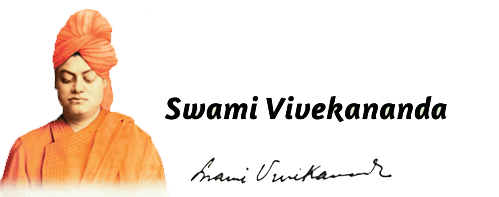

Swami Vivekananda: Analysis of His Thoughts on Human Development in India

AS A PROPHET OF HUMANITY, what was Swami Vivekananda’s mantra towards the development of human beings in India? The present article reflects on this question and offers an analysis of Swamiji’s thoughts on human development in India.
Vivekananda’s Rationale for Select Approaches to Human Development in India
All through his supremely active life, since the attainment of enlightenment from his Guru Sri Ramakrishna in his early twenties till his death at the age of thirty-nine on 4 July 1902, Swamiji worked incessantly for the development of humanity in the West and the East. Having preached his Vedantic ideas on the unity of mankind in the West from 1893 to 1896, he returned to India in January 1897 to work on the development of his beloved fellow Indians and his dearer-than-life-motherland India. The thought of lifting Indians and India ‘was to him like the air he breathed’.1
Human development, man-making,2 as Swamiji said, was the task that he undertook in this connection. He aimed to do this with the dissemination of the Vedantic idea that a human is Atman with infinite powers, and he conceived his task to inspire people in India to apply such Vedantic theory in practical situations of life and in relation with other human beings. Swamiji believed that only such a mantra given in earnestness could bring back strength to the low-lying Indians and ensure a glorious future for India as a nation. This meant that the Vedantic approach leading to strength or, so to say, a combination of the ‘classical approach’ and the ‘manliness approach’ is what Swamiji wanted to highlight towards the human development in India in the days ahead, which is relevant in the modern times.
Why did the people in India need to embrace spirituality wholeheartedly? Swamiji’s answer to this question was that it was so because spirituality alone could give a human in India the strength and vitality needed to develop one’s true nature. To quote Swamiji: ‘Each of us is heir-apparent to the Emperor of emperors; we are of the substance of God Himself. Nay, according to the Advaita, we are God Himself though we have forgotten our own nature in thinking of ourselves as little men.’3
Thus, the first necessity of human in India is to remind oneself of one’s infinite nature and then to ‘stand up, be active and strong’ (3.167). Having thus developed oneself, one must also do one’s best to bring out development in one’s fellow beings, because human beings in essence are all one. Swamiji wanted such a Vedantic idea and its practical application to the development of strong and compassionate human beings in India. To quote Swamiji: ‘I tell you … that it is the one great life-giving idea [of Vedanta] … which the mute masses of India want for their uplifting, for none can regenerate this land of ours without the practical application and effective operation of this ideal of the oneness of things’ (3.189).
It stands to the credit of Swamiji that he turned the ancient Vedantic ideal of India into the modern and ever-relevant strength approach by re-orienting the ideal in the following terms: ‘We have had weeping enough; no more is this time for us to become soft. This softness has been with us till we have become like masses of cotton and are dead. What our country wants are muscles of iron and nerves of steel, gigantic wills which nothing can resist’ (3.190).
The essential requirement towards the kind of strong spirit that Swamiji contemplated for the Indians was the latter’s faith in themselves, faith that they were nothing but divinities. To restore the faith of these hapless people in themselves, to restore their human dignity so to say, was, therefore, the task that lay before all right-thinking Indians. Unfortunately, the educated people of India, observed Swamiji, ‘with all their boasted education of modern times’, shrank ‘at once from the duty of lifting them up, these poor downtrodden people. Not only so, but I also find that all sorts of most demoniacal and brutal arguments, culled from the crude ideas of hereditary transmission and other such gibberish from the Western world, are brought forward to brutalise and tyrannise over the poor all the more’ (3.192).
Turning the hereditary argument over its head, Swamiji contributed an idea which remains as relevant for the concept of social justice in the present times as it was at the time Swamiji spoke of it: ‘Ay, Brahmins, if the Brahmin has more aptitude for learning on the ground of heredity than the Pariah, spend no more money on the Brahmin’s education, but spend all on the Pariah. Give to the weak, for there all the gift is needed. … This is justice and reason as I understand it’ (3.193).
Swamiji’s remedy for eliminating the evil of hereditary inequality of Indians, his remedy indeed towards restoring the Indians’ faith in themselves was Vedantic—to preach the Advaita Vedanta which tells us that the same Infinite Atman lives in every man and woman. As he put it: ‘Ay, let every man and woman and child, without respect of caste or birth, weakness or strength, hear and learn that behind the strong and the weak, behind the high and the low, behind every one, there is that Infinite soul, assuring the infinite possibility and infinite great and good’ (ibid.).
Having stressed the Vedantic ideal and its role in rousing the human soul, the all-important addition that Swamiji made to it was that the ideal must be applied to the details of daily life. Vedanta, that is to say, must be turned into Practical Vedanta towards the realisation of its great ideal. He said in this regard: ‘I only ask you to work to realise more and more the Vedantic ideal of the solidarity of man and his inborn divine nature’ (3.196).
The Vedantic ideal of the inborn divine nature of a person and its realisation through faith, strength, and fearlessness represented respectively the Vedantic and spirit of strength approaches of Swamiji—a combination of which he articulated tirelessly towards the elevation or development of human beings in India.
Swamiji’s Thoughts Vis-à-vis the Reform Approach
In drawing a comparison between the social reform approach of the Indian reformists and the Vedantic-cum-spirit of strength approaches as advocated by himself, Swamiji pointed out the areas where the former was deficient vis-à-vis the latter.
First, the reform approach was in the nature of dictation to society—‘this way thou shouldst move and not that’ (3.213). Second, the reform approach was critical, condemnatory, and even abusive of the orthodox and conservative sections of society. The result was that except for producing the most vituperative literature, little good was done to society. To lecture someone on the evils that exist in society and then leave him at that is like telling a drowning boy of the virtues of swimming when he is crying out pleading that he be taken out of the water first. Thus, Swamiji pleaded that India had enough of lectures, societies, and papers. What she badly needed indeed was people with love, sympathy, and the constructive method along with the zeal to put that method into action, that is to say, not criticism or condemnation but a helping hand to drag the drowning people of India out of their problems.
And along with lending a helping hand to the drowning people, they had to be given education to this effect that they were not really as helpless as they thought themselves to be. They had to be taught that they had the infinite powers of their own lying deposited in themselves. They had to bring those potential powers out. Swamiji asserted that every human being in India had to be taught to go to the very root of the matter, to the very basis of the soul, to the Atman. Thus one has to be brought up gradually to the highest ideal of development as a human being. Sri Rama’s bridge over the ocean was not built in a day nor was it built by the efforts of any single person. Every human being in India had to be inspired so that each one contributed one’s mite like the little squirrel that contributed its small quota of sand-dust to the building of Rama’s bridge. With everybody in India being inspired with the idea of realising this highest ideal and thus being induced to set oneself to the task of actualising one’s highest potential, all-round development of human beings was bound to take place. In short, as Swamiji said that the development all the way up to the highest point had to come spontaneously from within everybody and not by way of any imposition or dictation from outside or above.
Apart from the tendency to dictate and condemn, the reform approach had problems on two other counts: one, such reforms touched only little bits; two, they touched only the first two castes, and not the people in general. ‘But that is no reformation’, Swamiji observed, ‘You must go down to the basis of the thing, to the very root of the matter’ (3.216).
Not reform from without but growth from within constituted the essence of Swamiji’s Vedantic approach. Growth is best encouraged when an individual is not criticised or condemned but is encouraged by telling her or him in the fashion of great teachers of India such as Acharya Shankara, Acharya Ramanuja, and Sri Ramakrishna: ‘O man, you have been good, but you can certainly be better now’ or ‘what you have done is good, but you can certainly do better’ (3.219). As Swamiji observed, ‘We must grow according to our nature’ (ibid.) and any help that is offered or received must be in the form of sympathetic stimulation of spontaneously motivated growth. Swamiji went on to add that ‘this is the first lesson to learn’ (3.220).
His Plan of Campaign
Having postulated that his Vedantic and spirit of strength approaches offered the ultimate solution to the problems of development of human beings in India, Swamiji laid out his plan of campaign in India towards the realisation of his goal of human development.
First, he planned to tell every woman and man in India that spirituality formed the core of everybody’s life in India. Spirituality or the doctrine that the Atman (the true Self of an individual) is one with the Paramātman (the supreme universal Self, eternal and infinite) is the most humane doctrine that has been laid down in the Upanishads. It simply means that a human is divine in the essential nature of one’s being and that one has to do one’s utmost to realise one’s divinity with all the strength and powers of one’s soul in this life and this world. With spirituality running in the blood of every Indian and with spiritual life forming the centre or the keynote of the music of national life in India, every Indian, indeed India herself, must seek to vitalise individual and national life through spirituality alone and not through social reform or politics. Indeed, social reform or politics in India, to have any impact on the individual and society, must be preached through spirituality. ‘In India’, Swamiji observed, ‘social reform has to be preached by showing how much more spiritual a life the new system will bring; and politics has to be preached by showing how much it will improve the one thing that the nation wants—its spirituality’ (3.221).
Thus, the first point in Swamiji’s plan of campaign towards raising the people in India was to preach the truths of the Upanishads bringing spiritual knowledge of Oneness and strength and fearlessness to every Indian.
Swamiji’s second point was to start institutions in India, so that with appropriate training received in these institutions, young preachers can start their preaching work towards the end as mentioned above. Swamiji firmly believed that with the spiritual knowledge of oneness, faith, strength and fearlessness honestly brought to the masses of India, the common masses who, on account of their sub-human existence for centuries as mere ‘hewers of wood and drawers of water’ (3.192) lost all faith in themselves, can be raised for certain. As Swamiji said:
It is a man-making religion that we want. It is man-making theories that we want. It is man-making education all round that we want. And here is the test of truth—anything that makes you weak physically, intellectually, and spiritually, reject as poison. … truth must be strengthening, must be enlightening, must be invigorating (3.224–5).
By man-making religion, Swamiji meant such stimulation to his countrymen as would enable them to have faith in themselves with the conviction that the Atman within them is Paramātman and thus lead them into constructive struggles towards the realisation of their real and highest nature in this life itself and would induce them to help fellow human beings to have the similar realisation. ‘Be and make’, so to say, is the motto of man-making religion. By man-making education, Swamiji meant such stimulation to Indians as would enable them to assimilate ideas—spiritual and secular (the intellectual dimension), to acquire skill towards earning their living (the professional dimension), and above all, to build their character in terms of strength and fearlessness to engage in struggles of life as well as orientation to serve and sacrifice for the fellow human beings (the spiritual dimension).
Intent on building up the Indians as truly developed human beings, Swamiji urged them to manifest their inherent divinity in every movement of life by taking up the truths of the Upanishads and living up to them (3.225).
Swamiji identified three qualities as the defining characteristics of patriotism or love for India, namely, intense feelings for the countrymen, indomitable will to serve them, and steadfastness in their development. Having pointed out that in such a helpful approach to one’s fellow beings in India lay the way to the development of human beings in India, Swamiji observed that if the national ship, in course of ferrying the millions of souls across the water to the other shore for centuries, had developed a leak here or there, the appropriate course of action was not to condemn in the fashion of reformists but to do one’s best to plug the leak and keep it going. The important thing was not to let the people drown but to lift them up by all means.
Vedanta-Based Approach and Its Extent
Swamiji had to satisfy queries about the inclusivism of his Vedantic approach. He was asked if Puranists, Tantriks, and the Vaidikas could be brought within the fold of his Vedantic approach. His affirmative answer to this effect was that anybody who accepted the doctrine of the soul and believed that all powers, all purity, and all greatness were already there in the soul and that the work of a person lay in bringing them out or in manifesting them was a Vedantist. He went on to observe that ‘In the Atman they found the solution—the greatest of all Atmans, the God, the Lord of this universe, His relation to the Atman of man, our duty to Him, and through that our relation to each other’ (3.331).
As to another query, whether he meant by Vedanta, Advaita or pure monism alone, Swamiji answered that while Advaitism was undoubtedly the Vedanta par excellence, Vedanta covered the grounds of qualified monism and dualism as well (3.230). Elsewhere, he says that ‘my mission in life [is] to show that the Vedantic schools are not contradictory, that they all necessitate each other, all fulfil each other, and one, as it were, is the stepping-stone to the other, until the goal, the Advaita, the Tat Tvam Asi, is reached’ (3.324). To substantiate this thesis, Swamiji held that the Upanishads had all begun with dualistic ideas and ended with a grand flourish of Advaitic ideas. He referred to the symbolical picture of two birds—one sitting on the lower branch of a tree and the other on the higher branch of the same tree—to show how the Upanishads, through this symbolical picture, gave the most perfect expression to the whole philosophy of the world as also to the whole dream of the Hindu ideal of freedom:
Upon the same tree there are two birds of beautiful plumage … the one on the lower branch eating sweet and bitter fruits in turn and becoming happy and unhappy, but the other on the top, calm and majestic; he eats neither sweet nor bitter fruits, cares neither for happiness nor misery, immersed in his own glory. This is the picture of the human soul (3.235).
The message is that the human is really the higher bird, which one forgets and like the lower bird keeps pursuing the name, fame, and fortune, and enjoying, so to say, the sweet and bitter fruits of this life. After a while, as the ‘lower bird’ in human looks up, one finds some light from the higher bird playing around one’s own plumage. With the transformation thus begun in the lower bird, it goes nearer and nearer to the higher bird only to find itself melting away into the higher bird and disappearing altogether. The final discovery of the lower bird before it melts away into the higher bird is that ‘He did not really exist; it was but the reflection of the other bird who was there: calm and majestic amidst the moving leaves. It was all his glory, that upper bird’s. He then becomes fearless, perfectly satisfied, calmly serene’ (3.236). ‘In this figure’, observes Swamiji, ‘the Upanishads take you from the dualistic to the utmost Advaitic conception’ (ibid.).
Swamiji’s Stress on Self-faith, Strength, and Fearlessness
Since no literature had conceived the whole scheme of human development and painted the picture of the sublime in human more beautifully than the Upanishads, Swamiji based his basic approach to human development on Vedanta alone. But having done that, he transformed the classical philosophico-religious Vedantic approach into the contemporary and ‘spirit of strength’ approach. In lecture after lecture that he delivered in India, he spoke of shraddhā or faith in one’s self, strength, and fearlessness. His constant refrain to his fellow Indians was: ‘You must stand on your own feet. … The true man is he who is strong as strength itself and yet possess a woman’s heart. You must feel for the millions of beings around you’ (3.448). We will quote extensively from Swamiji’s own lectures to provide the best documentation of how he sought to infuse into Indians the spirit of strength and national vigour.
In the lecture delivered at Chennai on 13 February 1897 entitled ‘Vedanta in its Application to Indian Life’, Swamiji made the eloquent plea to the young men of Chennai in favour of the cultivation of strength in the following words:
Strength, strength is what the Upanishads speak to me from every page. … O man, be not weak. Are there no human weaknesses?—says man. There are, say the Upanishads, but will more weaknesses heal them, would you try to wash dirt with dirt? … Strength, O man, strength, say the Upanishads, stand up and be strong. Ay, it is the only literature in the world where you find the word ‘Abhih’, ‘fearless’, used again and again; in no other scripture in the world is this adjective applied either to God or to man (3.237).
Swamiji gave an example of what strength was like by citing the instance of a conversation between an old Indian Sannyasin and the great Emperor of the West, Alexander the Great. Almost naked and starving, the Sannyasin was profoundly learned all the same. Astonished at the wisdom of the Sannyasin, Alexander tempted him with gold and honour to come to Greece. With the Sannyasin spurning the Emperor’s offer, Alexander threatened to kill him to which the man gave a characteristic reply: ‘Who can kill me? Me you kill, Emperor of the material world! Never! For I am Spirit unborn and undecaying: Never was I born and never do I die; I am the Infinite, the Omnipresent, the Omniscient; and you kill me, child that you are!’ (3.238). Having referred to this reply of the Sannyasin, Swamiji observes: ‘That is strength, that is strength! And the more I read the Upanishads, my friends, my countrymen, the more I weep for you, for therein is the great practical application. Strength, strength for us. What we need is strength’ (ibid.).
Despite the greatness of the Upanishads and its call to be free from bonds of nature and weakness, the Indians, Swamiji observed, remained weak for several reasons. First, they were lazy and negligent in their work. Secondly, they were intensely selfish and jealous of each other. Thirdly, their selfishness and jealousy made it impossible for them to unite. Fourthly, disorganised as they were, they could not put up a united front against the foreign invading armies for centuries. Fifthly, they spoke of many things parrot-like but never followed them in practice. And behind all this lurked the physical weakness of the Indians. The first necessity, therefore, for the Indians, as Swamiji diagnosed it, was this: ‘Our young men must be strong. Religion will come afterwards. … You will understand the Upanishads better and the glory of the Atman when your body stands firm upon your feet, and you feel yourselves as men’ (3.242).
Having been physically strong, the young men of India, said Swamiji, will draw upon the Upanishads to fortify themselves with faith in themselves. They will repeat to themselves day and night the blessed words of the Upanishads to this effect: ‘I am the infinitely powerful, infinitely pure and holy Atman’. He says, ‘Me the sword cannot cut; nor weapons pierce, me the fire cannot burn, me the air cannot dry; I am the Omnipotent, I am the Omniscient’ (3.244). Every young person of India, being fortified with strength and faith of Atman will say to oneself that there is nothing that one cannot do.
Swamiji brought these two conceptions—strength and faith—of Vedanta out from the forests and caves and put it to work, as he himself said, ‘at the bar and the bench, in the pulpit, and the cottage of the poor man, with the fishermen that are catching fish, and with the students that are studying’ (3.245). His call was to everyone, every man and woman in every occupation of life. To quote Swamiji: ‘Let everyone do what little he can. If the fisherman thinks that he is the Spirit, he will be a better fisherman; if the student thinks that he is the Spirit, he will be better student. If the lawyer thinks that he is the Spirit, he will be a better lawyer, and so on’ (ibid.).
Having been better human beings in this way, every Indian will look upon every man and woman as a manifestation of God and serve the children of the Lord as Lord Himself. One will serve especially the Lord in the shape of the poor and downtrodden and consider oneself privileged for being allowed to serve the Lord in such shapes. And what will be the overall effect of such effort of Swamiji turning the ‘Vedantic approach’ into the ‘Spirit of strength approach’? The result will be a better human being, a better society, better governance with all-round national vigour. And for all that, the additional gain will be the liberty of the individual (everyone will grow in her or his true nature) and the equality of all. As Swamiji put it candidly:
If you teach Vedanta to the fisherman, he will say, I am as good a man as you; I am a fisherman, you are a philosopher, but I have the same God in me as you have in you. And that is what we want, no privilege for anyone, equal chances for all; let everyone be taught that the divine is within and everyone will work out his own salvation (3.246).
And in the wake of such assertion came the assurance that showed how beautifully Swamiji harmonised his doctrine of Atman and his Vedantic and spirit of strength approaches. The key was the individual’s belief in himself and the strength issuing therefrom: ‘Whatever you believe, that you will be. … All glory, power, and purity are within the soul already; … All power is within you; you can do anything and everything. Stand up and express the divinity within you’ (ibid.).
Steps Suggested for ‘Man-making’ in India
According to Swamiji, the basic problem in human-development as also in nation-building in India lies in the superimposed weakness among Indians. The people had been weakened over the last thousand years along the lines of religion, caste, race, and had also been weakened by negative thinking and lack of will power. Hence, for a solution to the problem, India had to go back to the roots and ‘strengthen the man’, as Swamiji puts it.4
In the perception of Swamiji, since ‘the Indian mind is first religious, then anything else’ (3.289), and since spirituality constituted the life-blood of Indians, the first effort towards strengthening the Indian mind had to begin with religion as the realisation of the divinity of human beings. His ideas in this regard were along the following lines:
- To bring out the gems of spirituality stored up in the scriptures such as the Upanishads.
- To release them from the possession of a few in the monasteries, caves, and forests.
- To translate them into the vernaculars from Sanskrit, which was inaccessible to the masses.
- To make the gems of spirituality (brought out in ways as mentioned above) the common property of all, of every man and woman in India; and to teach the masses the ideas of spirituality in the vernaculars, and also to encourage them at the same time to learn the Sanskrit language, because Sanskrit alone, Swamiji felt, can fortify education with culture.5
Swamiji clarified:
Teach the masses in the vernaculars, give them ideas; they will get information, but something more is necessary, give them culture. Until you give them that, there can be no permanence in the raised condition of the masses. … The only safety, I tell you, men who belong to the lower castes, the only way to raise your condition is to study Sanskrit, and this fighting and writing and frothing against the higher castes is in vain, it does no good, and it creates fight and quarrel, and this race, unfortunately already divided, is going to be divided more and more. The only way to bring about the levelling of caste is to appropriate the culture, the education which is the strength of the higher castes. That done, you have what you want (3.291).
Fighting among castes can only exacerbate the relations of castes and intensify the existing divide along caste line. The solution lies not in fighting, not in bringing down the higher castes but in raising the lower castes to the level of the higher castes by giving them appropriate education and culture. The onus in this regard is as much on the higher castes as on the lower castes. The Brahmins must open their treasury of virtue and culture and distribute their valuables to the lower castes. The lower castes must also be opening up. Given the complexity of this problem eating into the vitals of the Indian nation to this day, it will be benefitting to quote Swamiji’s words as to its solution:
To the non-Brahmin castes, I say, wait, be not in a hurry. Do not seize every opportunity of fighting the Brahmin. … Instead of wasting your energies in vain discussions and quarrels in the newspapers, instead of fighting and quarrelling in your own homes—which is sinful—use all your energies in acquiring the culture which the Brahmin has, and the thing is done (3.298).
Swamiji hoped that with the lower castes themselves working out their salvation by making efforts towards raising themselves up and with the Brahmins lending a genuinely helping hand towards raising the lower castes, it would be possible to reach an ideal solution to the caste problem in India.
Swamiji had a larger purpose behind preaching the cooperative relations between the castes in India. The purpose was to overcome the tensions and cleavages arising out of hierarchy and complexes inherent in the traditional caste system of India and ensure the unity and strength of India as a nation. He placed before us the ancient ideal, which is equally applicable to all castes in India. That ideal was Brahminhood—the realisation of Brahman, the real Self of all living beings.
Everybody in India, irrespective of the traditional caste she or he belonged to, had to make efforts towards the attainment of this ideal. Such was the original condition of the caste system in India, contended Swamiji. In the Satya Yuga, with everybody seeking enlightenment of Brahman, only the caste of Brahmins prevailed. Swamiji preached restoration of the ideal of Brahminhood to humanity in India in the interest of moulding India into a union of people whose ideal was directed to the attainment of oneness with their real Self. Swamiji claimed in support of such a contention that such was the end towards which the great souls like Acharya Shankara worked. To quote him:
They would sometimes get hordes of Baluchis and at once make them Kshatriyas, also get hold of hordes of fishermen and make them Brahmins forthwith. … So, be you all Rishis and sages; that is the secret. What is meant by a Rishi? The pure one. Be pure first, and you will have power (3.296).
Such was the great ideal that Swamiji placed before India as the ultimate solution to her caste problem. He knew this goal had to be worked out through generations, but, meanwhile, with a great end before their eyes, the Indians should know that fighting among the castes would not do them any good except dividing, weakening, and degrading them all the more.
Swamiji disapproved of fighting and quarrelling not only over castes but also over the so-called racial division in India between the Aryans and the Dravidians. It was claimed that the Aryans who belonged to the North of India were different as a race from the Dravidians who belonged to the South. Swamiji laughed at such racial division of India which also involved a North-South regional divide. Denying any difference between the North and the South, except in language, Swamiji observed:
I do not see any other difference. We are so many Northern men here, and I ask my European friends to pick out the Northern and Southern men from this assembly. … Do not believe in such silly things. There may have been a Dravidian people who vanished from here [the South], and the few who remained lived in forests and other places. It is quite possible that the language may have been taken up, but all these are Aryans who came from the North. The whole of India is Aryan, nothing else (3.292).
Swamiji rejected two other theories. The one claimed that the Aryans came from outside India or that they were not the original inhabitants of India. Swamiji pointed out that had it been so, the ancient scriptures of India must have mentioned this in some way or the other somewhere in their contents. But there was no reference to this in the scriptures of India which proved that such a theory was unfounded. The other theory was that the people belonging to the lower castes were all non-Aryans, that they were a multitude and that they lived as the slaves of the Aryans. Swamiji rejected this theory as illogical and irrational with an observation which deserves to be quoted for the sheer wit of it:
It could not have been possible in those days that a few Aryans settled and lived there [in India] with a hundred thousand slaves at their command. These slaves would have eaten them up, and made ‘chutney’ of them in five minutes (3.293).
Among other things that left Indians weak was the prevalent system of what he called negative education. Such education, Swamiji observed, had at best put some information into the brains of students, which, unfortunately for most students, remained undigested all through their lives. In place of such negative education, what was needed, said Swamiji, was a man-making education that gave the students ‘life-building, man-making, character-making assimilation of ideas’ (3.302). Without such man-making education producing character and enabling men and women to stand on their own feet, asserted Swamiji, there could not have been any salvation either for the Indians individually or for India as a nation collectively. His ideal as well as plan, therefore, was that ‘We must have the whole education of our country, spiritual and secular, in our own hands, and it must be on national lines, through national methods, as far as practical’ (ibid.).
Swamiji’s plan involved the founding of an institution for training teachers who would preach religion and impart secular education to people. Such teachers would carry religion as also secular education to the doors of the people, making each Indian—man and woman—strong with knowledge and faith in themselves. India’s future, said Swamiji, depends on the making of such men and women in abundance—human beings with faith in themselves, with the will to organise themselves and to co-ordinate their will powers and accumulate power therefrom.
‘It is will that is the power’, said Swamiji (3.299). With such an assertion, he gives us a clear inkling of his opinion as to the chief reason for the British conquest of India and as to the way to secure release from the British rule of India. To get the full psychological-cum-political significance of Swamiji’s opinion, we should quote his words:
Why is it, to take a case in point, that forty millions of Englishmen rule three hundred millions of people here? What is the psychological explanation? Those forty millions put their wills together and that means infinite power, and you three hundred millions [of Indians] have a will each separate from the other. Therefore to make a great future India, the whole secret lies in organisation, accumulation of power, co-ordination of wills (ibid.).
Swamiji went on to say that over the centuries the Indians had been kicked around by foreigners. The time had now come for the slaves to become masters. Indians should give up the slavish mentality and make Mother India the keynote of their life. To quote Swamiji’s exhortation to this effect:
So give up being a slave. For the next fifty years, this alone shall be our keynote—this, our great Mother India. Let all other vain gods disappear for the time from our minds. … and the first gods we have to worship are our countrymen. These we have to worship, instead of being jealous of each other and fighting each other (3.300–1).
In brief, Swamiji’s message was that instead of frittering away their energies into quarrels and fights over sects, faiths, castes, or races, the Indians, with the help of man-making religion and character-building education, and with the accumulation of power achieved from the organisation and coordination of wills, should develop themselves into strong and powerful individuals. With such individuals as her asset, India, he asserted, was sure to make great strides as a nation.
Conclusion
It follows from the analysis presented in this article that Swamiji’s ideas in terms of the development of human as also the building of the nation in India were: (1) to stand up boldly and work out the Vedanta in every field of life, (2) to bring Advaita down from the spiritual plane into the material world for the sake of the sinking millions of India, and (3) to extend a helping hand to them with a feeling heart. As Swamiji said: ‘Arise and awake and be perfectly sincere’ (3.431). This was his mantra for the rising of Indians and India.
Dr Anil Baran Ray is a Former Professor and Head, Department of Political Science, University of Burdwan, West Bengal and Dr Sukanya Ray is an Assistant Professor, Department of International Relations, Jadavpur University, Kolkata.
Notes and References
1. Sister Nivedita, The Master as I Saw Him (Kolkata: Udbodhan, 2004), 40.
2. Vivekananda used the word ‘man’, not in a gender-specific sense but in a generic sense to mean human beings.
3. The Complete Works of Swami Vivekananda, 9 vols (Calcutta: Advaita Ashrama, 1–8, 1989; 9, 1997), 3.160.
4. See ‘The Future of India’, the lecture delivered at Madras on 14 February 1897; Complete Works, 3.285–304.
5. ‘Sanskrit and prestige go together in India’, observed Vivekananda (3.299).
Source: Prabuddha Bharata, January 2021 (Vol. 126, No. 1), pp. 73–83. Read the original issue.
About the author
Dr Anil Baran Dr Sukanya RayDr Anil Ray, retired Professor of Political Science, University of Burdwan, West Bengal; Dr Sukanya Ray, Assistant Professor of Political Science, Lady Brabourne College, Kolkata
All articlesComments
Sign in to leave a comment