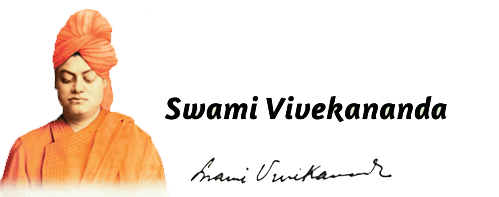
Para-Bhakti or Supreme Devotion
VIII. The God of Love Is His Own Proof
WHAT IS THE IDEAL of the lover who has quite passed beyond the idea of selfishness, of bartering and bargaining, and who knows no fear? Even to the great God such a man will say, “I will give You my all, and I do not want anything from You; indeed there is nothing that I can call my own.” When a man has acquired this conviction, his ideal becomes one of perfect love, one of perfect fearlessness of love. The highest ideal of such a person has no narrowness of particularity about it; it is love universal, love without limits and bonds, love itself, absolute love. This grand ideal of the religion of love is worshipped and loved absolutely as such without the aid of any symbols or suggestions. This is the highest form of Parā-Bhakti—the worship of such an all-comprehending ideal as the ideal; all the other forms of Bhakti are only stages on the way to reach it.
All our failures and all our successes in following the religion of love are on the road to the realisation of that one ideal. Object after object is taken up, and the inner ideal is successively projected on them all; and all such external objects are found inadequate as exponents of the ever-expanding inner ideal and are naturally rejected one after another. At last the aspirant begins to think that it is vain to try to realise the ideal in external objects, that all external objects are as nothing when compared with the ideal itself; and, in course of time, he acquires the power of realising the highest and the most generalised abstract ideal entirely as an abstraction that is to him quite alive and real. When the devotee has reached this point, he is no more impelled to ask whether God can be demonstrated or not, whether He is omnipotent and omniscient or not. To him He is only the God of Love; He is the highest ideal of love, and that is sufficient for all his purposes. He, as love, is self-evident. It requires no proofs to demonstrate the existence of the beloved to the lover. The magistrate-Gods of other forms of religion may require a good deal of proof to prove Them, but the Bhakta does not and cannot think of such Gods at all. To him God exists entirely as love. “None, O beloved, loves the husband for the husband’s sake, but it is for the sake of the Self who is in the husband that the husband is loved; none, O beloved, loves the wife for the wife’s sake, but it is for the sake of the Self who is in the wife that the wife is loved.”
It is said by some that selfishness is the only motive power in regard to all human activities. That also is love lowered by being particularised. When I think of myself as comprehending the Universal, there can surely be no selfishness in me; but when I, by mistake, think that I am a little something, my love becomes particularised and narrowed. The mistake consists in making the sphere of love narrow and contracted. All things in the universe are of divine origin and deserve to be loved; it has, however, to be borne in mind that the love of the whole includes the love of the parts. This whole is the God of the Bhaktas, and all the other Gods, Fathers in Heaven, or Rulers, or Creators, and all theories and doctrines and books have no purpose and no meaning for them, seeing that they have through their supreme love and devotion risen above those things altogether. When the heart is purified and cleansed and filled to the brim with the divine nectar of love, all other ideas of God become simply puerile and are rejected as being inadequate or unworthy. Such is indeed the power of Parā-Bhakti or Supreme Love; and the perfected Bhakta no more goes to see God in temples and churches; he knows no place where he will not find Him. He finds Him in the temple as well as out of the temple, he finds Him in the saint’s saintliness as well as in the wicked man’s wickedness, because he has Him already seated in glory in his own heart as the one Almighty inextinguishable Light of Love which is ever shining and eternally present.
Comments
Comments
Sign in to leave a comment