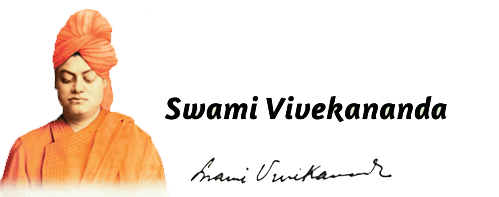
Swami Vivekananda
The Complete Works: Volume VIIIPage 1 of 1

Writings: Prose and Poems

The Birth Of Religion

Written by the Swami during his first visit to America in answer to questions put by a Western disciple.

The beautiful flowers of the forest with their many-coloured petals, nodding their heads, jumping, leaping, playing with every breeze; the beautiful birds with their gorgeous plumage, their sweet songs echoing through every forest glade—they were there yesterday, my solace, my companions, and today they are gone—where? My playmates, the companions of my joys and sorrows, my pleasures and pastime—they also are gone—where? Those that nursed me when I was a child, who all through their lives had but one thought for me—that of doing everything for me—they also are gone. Everyone, everything is gone, is going, and will go. Where do they go? This was the question that pressed for an answer in the mind of the primitive man. “Why so?” you may ask, “Did he not see everything decomposed, reduced to dust before him? Why should he have troubled his head at all about where they went?”

To the primitive man everything is living in the first place, and to him death in the sense of annihilation has no meaning at all. People come to him, go away, and come again. Sometimes they go away and do not come. Therefore in the most ancient language of the world death is always expressed by some sort of going. This is the beginning of religion. Thus the primitive man was searching everywhere for a solution of his difficulty—where do they all go?

There is the morning sun radiant in his glory, bringing light and warmth and joy to a sleeping world. Slowly he travels and, alas, he also disappears, down, down below! But the next day he appears again—glorious, beautiful! And there is the lotus—that wonderful flower in the Nile, the Indus, and the Tigris, the birth-places of civilisation—opening in the morning as the solar rays strike its closed petals and with the waning sun shutting up again. Some were there then who came and went and got up from their graves revivified. This was the first solution. The sun and the lotus are, therefore, the chief symbols in the most ancient religions. Why these symbols? because abstract thought, whatever that be, when expressed, is bound to come clad in visible, tangible, gross garments. This is the law. The idea of the passing out as not out of existence but in it, had to be expressed only as a change, a momentary transformation; and reflexively, that object which strikes the senses and goes vibrating to the mind and calls up a new idea is bound to be taken up as the support, the nucleus round which the new idea spreads itself for an expression. And so the sun and the lotus were the first symbols.

There are deep holes everywhere—so dark and so dismal; down is all dark and frightful; under water we cannot see, open our eyes though we may; up is light, all light, even at night the beautiful starry hosts shedding their light. Where do they go then, those I love? Not certainly down in the dark, dark place, but up, above in the realm of Everlasting Light. That required a new symbol. Here is fire with its glowing wonderful tongues of flame—eating up a forest in a short time, cooking the food, giving warmth, and driving wild animals away—this life-giving, life-saving fire; and then the flames—they all go upwards, never downwards. Here then was another—this fire that carries them upwards to the places of light—the connecting link between us and those that have passed over to the regions of light. “Thou Ignis”, begins the oldest human record, “our messenger to the bright ones”. So they put food and drink and whatever they thought would be pleasing to these “bright ones” into the fire. This was the beginning of sacrifice.

So far the first question was solved, at least as far as to satisfy the needs of these primitive men. Then came the other question: Whence has all this come? Why did it not come first? Because we remember a sudden change more. Happiness, joy, addition, enjoyment make not such a deep impression on our mind as unhappiness, sorrow, and subtraction. Our nature is joy, enjoyment, pleasure, and happiness. Anything that violently breaks it makes a deeper impression than the natural course. So the problem of death was the first to be solved as the great disturber. Then with more advancement came the other question: Whence they came? Everything that lives moves: we move; our will moves our limbs; our limbs manufacture forms under the control of our will. Everything then that moved had a will in it as the motor, to the man-child of ancient times as it is to the child-man of the present day. The wind has a will; the cloud, the whole of nature, is full of separate wills, minds, and souls. They are creating all this just as we manufacture many things; they—the “Devas”, the “Elohims” are the creators of all this.

Now in the meanwhile society was growing up. In society there was the king—why not among the bright ones, the Elohims? Therefore there was a supreme “Deva”, an Elohim-Jahveh, God of gods—the one God who by His single will has created all this—even the “bright ones”. But as He has appointed different stars and planets, so He has appointed different “Devas” or angels to preside over different functions of nature—some over death, some over birth, etc. One supreme being, supreme by being infinitely more powerful than the rest, is the common conception in the two great sources of all religions, the Aryan and Semitic races. But here the Aryans take a new start, a grand deviation. Their God was not only a supreme being, but He was the Dyaus Pitar, the Father in heaven. This is the beginning of Love. The Semitic God is only a thunderer, only the terrible one, the mighty Lord of hosts. To all these the Aryan added a new idea, that of a Father. And the divergence becomes more and more obvious all through further progress, which in fact stopped at this place in the Semitic branch of the human race. The God of the Semitic is not to be seen—nay, it is death to see Him; the God of the Aryan cannot only be seen, but He is the goal of being; the one aim of life is to see Him. The Semitic obeys his King of kings for fear of punishment and keeps His commandments. The Aryan loves his father; and further on he adds mother, his friend. And “Love me, love my dog”, they say. So each one of His creatures should be loved, because they are His. To the Semitic, this life is an outpost where we are posted to test our fidelity; to the Aryan this life is on the way to our goal. To the Semitic, if we do our duty well, we shall have an ever-joyful home in heaven. To the Aryan, that home is God Himself. To the Semitic, serving God is a means to an end, namely, the pay, which is joy and enjoyment. To the Aryan, enjoyment, misery—everything—is a means, and the end is God. The Semitic worships God to go to heaven. The Aryan rejects heaven to go to God. In short, this is the main difference. The aim and end of the Aryan life is to see God, to see the face of the Beloved, because without Him he cannot live. “Without Thy presence, the sun, the moon, and the stars lose their light”.

Share
Comments

Comments

Sign in to leave a comment

Contents

Lectures and Discourses
  1. Discourses On Jnana-Yoga
  2. Six Lessons On Raja-Yoga
  3. Women Of India
  4. My Life And Mission
  5. Buddha's Message To The World
  6. Discipleship
  7. Is Vedanta The Future Religion?
Writings: Prose and Poems
  1. The Struggle For Expansion
  2. The Birth Of Religion
  3. Four Paths Of Yoga
  4. Cyclic Rest And Change
  5. A Preface To The Imitation Of Christ
  6. An Interesting Correspondence
  7. Thou Blessed Dream
  8. Light
  9. The Living God
  10. To An Early Violet
  11. To My Own Soul
  12. The Dance Of Shiva
  13. Shiva In Ecstasy
  14. To Shri Krishna
  15. A Hymn To Shri Ramakrishna
  16. A Hymn To Shri Ramakrishna
  17. No One To Blame
Notes of Class Talks and Lectures
  1. Notes Of Class Talks
  2. Man The Maker Of His Destiny
  3. God: Personal And Impersonal
  4. The Divine Incarnation Or Avatara
  5. Pranayama
  6. Women Of The East
  7. Congress Of Religious Unity
  8. The Love Of God-I
  9. The Love Of God--II
  10. India
  11. Hindus And Christians
  12. Christianity In India
  13. The Religion Of Love
  14. Jnana And Karma
  15. The Claims Of Vedanta On The Modern World
  16. The Laws Of Life And Death
  17. The Reality And The Shadow
  18. Way To Salvation
  19. The People Of India
  20. I Am That I Am
  21. Unity
  22. The Worship Of The Divine Mother
  23. The Essence Of Religion
Sayings and Utterances
  1. Sayings and Utterances
Epistles: Fourth Series
  1. 1. I have received the book of Pānini which you so kindly sent me
  2. 2. The will of Vishweshwara, the Lord of the universe, will prevail
  3. 3. I am under homoeopathic treatment
  4. 4. My difficulties here have almost come to a close
  5. 5. We also are spreading out here and there in small groups of two or three.
  6. 6. I have seen the Library and the pictures of Ravi Varma
  7. 7. It was quite a privilege to make his acquaintance
  8. 8. This is the first and the last of its kind and made only under very peculiar circumstances.
  9. 9. The world really is enriched by men, high-souled, noble-minded, and kind, like you
  10. 10. I start for Dharwar by the morning train tomorrow.
  11. 11. Experience is the greatest teacher in the world
  12. 12. Have you got lion’s cubs now in Junagad? Can you lend me one for my Rājā?
  13. 13. I love you and respect you like a father
  14. 14. The very best of men even are troubled and visited with tribulations in this world
  15. 15. Three things are necessary to make every man great, every nation great
  16. 16. My last address was the best I ever delivered
  17. 17. My idea of doing good is this: to evolve out a few giants, and not to strew pearls before swine
  18. 18. The full name being Narendra meaning the “Chief of men”
  19. 19. Long life brings queer experiences!
  20. 20. Educate and raise the masses, and thus alone a nation is possible.
  21. 21. Oh! If only I had one man of some true abilities and brains to back me in India!
  22. 22. Each must follow his own religion.
  23. 23. I am weeping like a child at His mercy—He never leaves His servant, sisters.
  24. 24. Darn it, forget everything
  25. 25. To your family I am ever, ever beholden.
  26. 26. I am very anxious about the Indian mail
  27. 27. If a Guru dies, his disciple is his heir
  28. 28. It also has been penetrated with my deep meditations on the Absolute
  29. 29. Hindus are head and shoulders above all other nations in morality and spirituality
  30. 30. Your kindness has left nothing more to be desired here
  31. 31. Hope your worry is over.
  32. 32. The word “Dharma” means religion
  33. 33. I am neither a sightseer nor an idle traveller; but you will see, if you live to see, and bless me all your life.
  34. 34. The secret of success of the Westerners is the power of organisation and combination.
  35. 35. I have a class every morning here on Vedānta and other topics.
  36. 36. Why do you not come to see Mrs. Ole Bull, Miss Farmer, and Mrs. Adams the physical culturist from Chicago?
  37. 37. I am going away next Tuesday to New York.
  38. 38. Women deserve and are fit for everything
  39. 39. It is an unavoidable circumstance, and not the will, that stands in the way
  40. 40. The West is the field for work if a man wants to benefit humanity
  41. 41. The man who is pure, and who dares, does all things
  42. 42. I am glad now the old man has seen the truth
  43. 43. I have succeeded in doing something in this country at last
  44. 44. Experiences are gathering a bit thick round you. I am sure they will lift many a veil more.
  45. 45. This is the bark in which all holy writings are written in India
  46. 46. This world will always be a mixture of good and evil, of happiness and misery
  47. 47. Denial of the will to live, knowledge, and same-sightedness is the trinity of liberation
  48. 48. Hari Om Tat Sat. He exists; nothing else does
  49. 49. Multitude counts for nothing
  50. 50. The lifelong struggle not to talk alone, but to live the life.
  51. 51. I have a cordial invitation from Miss Müller
  52. 52. I am very much more at home here than anywhere out of India
  53. 53. Be up and doing! “Fortune favours the brave and energetic.”
  54. 54. Breaking the ice is slow always.
  55. 55. This being in a sense my native country, I send you my welcome first
  56. 56. I have become an awful vegetarian now
  57. 57. In the ordinary sense religion is philosophy concretised through rituals and symbols.
  58. 58. The subject is “Indian Philosophy and Western Society”
  59. 59. We shall work on our own lines and let things grow
  60. 60. So far the journey has been very beautiful.
  61. 61. After ten days of a most tedious and rough voyage I safely arrived in New York
  62. 62. After 10 days of the most disastrous voyage I ever had I arrived in New York
  63. 63. There is no willing without knowing. How can we desire unless we know the object of desire?
  64. 64. My health is breaking down under constant work.
  65. 65. I would not have called you to any task which you are incompetent to do
  66. 66. We will work. “Wah guru ki fateh"
  67. 67. This year my work in New York is going on splendidly
  68. 68. My friends have engaged a stenographer (Goodwin)
  69. 69. I tell you plainly, I would not be played upon by any rogue.
  70. 70. One book, the Karma-Yoga has been already published
  71. 71. Ours is the Gospel of oneness of all beings
  72. 72. Every little bit of time I get I spend in the library
  73. 73. I sail on board the White Star Line Germanic tomorrow
  74. 74. Have you written for the Atharva-Veda Samhitā?
  75. 75. I love America more when I am out of it
  76. 76. I had a beautiful visit with Prof. Max Müller. He is a saint—a Vedantist through and through
  77. 77. By rousing interest here I really do more for India than in India
  78. 78. The scenery is very beautiful
  79. 79. Ought great attempts to be made
  80. 80. Do not for a moment give up your trust in the Lord, and you will see the light
  81. 81. What is there to be desired in this little mud-puddle of a world, with its ever-recurring misery, disease, and death?
  82. 82. The Seviers are good and kind
  83. 83. America is a good training ground to bring out all that is in a man
  84. 84. I have at last seen Prof. Deussen
  85. 85. He who wants perfection in the world is a madman, for it cannot be.
  86. 86. The coming of Goodwin was very opportune
  87. 87. Poor souls! Let them have a little satisfaction in barking
  88. 88. What am I? Asiatic, European, or American?
  89. 89. I do not work alone, but He is always with me
  90. 90. The episodes of the divine relationship between Rādhā and Krishna are quite unsuitable for young minds
  91. 91. Things come and go, dear friend. Only the Lord is unchangeable and He is Love.
  92. 92. We want more and more new members.
  93. 93. Keep a copy of the letter you sent me.
  94. 94. Sleep, eat, and exercise; exercise, eat, and sleep—that is what I am going to do some months yet.
  95. 95. It is through the heart, and that alone, that the world can be reached.
  96. 96. For the first time since the days of Buddha, Brahmin boys are found nursing by the bed-side of cholera-stricken pariahs.
  97. 97. The best time to come is to arrive in India by October or beginning of November
  98. 98. A work can be judged by its results only
  99. 99. Is not the soul the Light of the world?
  100. 100. I did not know before that I could be oratorical in Hindi.
  101. 101. The Punjab and Rajputana are indeed fields for work.
  102. 102. Today I am leaving by the two o’clock train with all my party for Kashmir.
  103. 103. The secret of the whole thing is to agitate and agitate without respite.
  104. 104. It is the one land fit for Yogis, to my mind.
  105. 105. I am in Kashmir. I have travelled far and wide, but I have never seen such a country.
  106. 106. From November to the middle of February India is cool
  107. 107. To do good, perfect unselfishness is absolutely necessary.
  108. 108. The people of our country have not yet offered me even as much as a pice for my travelling expenses
  109. 109. Do what you think best after considering the healthiness and other factors.
  110. 110. A leader must be impersonal.
  111. 111. I want my work to be quick like lightning, and firm as adamant.
  112. 112. Accounts, accurate to the last pie, must be kept of the amounts
  113. 113. Too much sentiment hurts work.
  114. 114. Without regular exercise the body does not keep fit
  115. 115. Now, come on, work with redoubled energy.
  116. 116. If you can get hold of some very old ghee, then send some of it
  117. 117. We must hold the big festival on our own plot of ground
  118. 118. Unless each goes about independently, he will not be able to do anything.
  119. 119. See that nobody is unduly bossed over.
  120. 120. No immediate result can be expected, but in the long run it will prove a more beneficial work
  121. 121. My gratitude for your very kind invitation to speak.
  122. 122. Work on with energy. India is a rotten corpse inside and outside. We shall revive it by the blessings of Shri Mahārāj.
  123. 123. Death I have conquered long ago when I gave up life. My only anxiety is the work
  124. 124. I have him always in mind, poor child; his devotion I can never repay.
  125. 125. I am so glad to learn that Miss Noble delivered an address at the R. K. Mission.
  126. 126. My health was excellent on my return from Sandukphu
  127. 127. On Sunday I leave Darjeeling, probably stopping for a day or two at Kurseong
  128. 128. Take care that funds do not run short in times of need and that there is no waste of money.
  129. 129. It was arranged between us that we would not object to anybody’s publishing my books.
  130. 130. For stomach troubles a cold climate is an unfailing remedy.
  131. 131. Set up such a machine as will go on automatically, no matter who dies or lives.
  132. 132. My head will be a full-blown white lotus by the time you see me next.
  133. 133. My present plan is to go to America via China and Japan in November or December
  134. 134. I have not witnessed the Durgā-Pujā for the last nine years
  135. 135. Shri Mother is going this morning to see the new Math.
  136. 136. Did you come across Max Müller’s new book, Ramakrishna: His Life and Sayings?
  137. 137. Turiyānanda is with me
  138. 138. Grind on, old lady; it is Karma and none can avoid.
  139. 139. If you want, even if the body be torn and bleeding, you may enjoy the greatest peace in your mind.
  140. 140. I want work, I want vigour—no matter who lives or dies.
  141. 141. It is an awful spell of the bad turn of fortune with me last six months.
  142. 142. I never saw a man who could satisfy everyone.
  143. 143. I am going to learn French.
  144. 144. I am much better now and growing so every day.
  145. 145. We have started a new India—a growth—waiting to see what comes.
  146. 146. My method is never to ask but wait for voluntary help.
  147. 147. How I curse the day that brought me celebrity!
  148. 148. Get experience while still there is a chance; I am not concerned whether you win or lose.
  149. 149. I never was so bad as now in finding my way in and out.
  150. 150. Die in obeying commands like a soldier, and go to Nirvāna, but no cowardice.
  151. 151. I am grinding on in Pasadena; hope some result will come out of my work here.
  152. 152. The only way to keep my peace is to teach others. Work is my only safety valve
  153. 153. I am happy just now and hope to remain so for all the rest of my life.
  154. 154. Mother wants me to undergo the same that She made the great Āchārya undergo in old days
  155. 155. I can always work better alone, and am physically and mentally best when entirely alone!
  156. 156. When my father died, it was a pang for months, and I had been so disobedient.
  157. 157. The last two years have been specially bad. I have been living in mental hell.
  158. 158. I can use my voice, however, to make 3,000 people hear me
  159. 159. They come in crowds when there is a free lecture and very few when there is something to pay.
  160. 160. You have done for me more than I ever deserve.
  161. 161. Alas, sickness, sorrow, and pain have been my companions for the last two years.
  162. 162. I am only a worker. My mission is to obey and work.
  163. 163. So glad to hear of Margot’s success. I have given her over to you, and am sure you will take care of her.
  164. 164. My nature is the retirement of a scholar. I never get it!
  165. 165. Thank God, nothing is eternal except Himself.
  166. 166. I have just received a bill of lading from Mrs. Banerji. She has sent some Dāl (pulses) and rice.
  167. 167. Work morning and evening, go to bed at 12 p.m. after a heavy supper!
  168. 168. I am cooking, eating whatever comes, working day and night, and I am all right and sleeping soundly!
  169. 169. The boys are working up; well, scolding has both sides, you see; it makes them up and doing.
  170. 170. Doing good is not always smooth!
  171. 171. Well, take what comes.
  172. 172. I am the servant of Ramakrishna. I am merely a machine. I know nothing else.
  173. 173. Money is not evil after all—in good hands.
  174. 174. I have finished my work. I am retired, Joe.
  175. 175. I am learning now how to be detached as well as attached
  176. 176. The Mother will take care of me. She is not going to strand me now after guarding me all my life.
  177. 177. After the incessant work I require a breath of God’s free air
  178. 178. Sudden indisposition and fever prevent my starting for Chicago yet.
  179. 179. I am going to throw off all worry, and glory unto Mother.
  180. 180. All blessings on you. Don’t despond in the least.
  181. 181. The Upanishads teach us all there is of religion.
  182. 182. I am only existence and knowledge.
  183. 183. I have been much censured by everyone for cutting off my long hair.
  184. 184. I am all alone, and washing; I like it.
  185. 185. I have to get the passage and sail. Mother knows the rest.
  186. 186. May the Swan (the Supreme Self) send us that.
  187. 187. They like you immensely, and I am sure you have found in them genuine, pure, and absolutely unselfish friends.
  188. 188. Devotion to the mother is the root of all welfare.
  189. 189. His work He knows, you and I are but servants and nothing else.
  190. 190. I like boldness and adventure and my race stands in need of that spirit very much
  191. 191. There is not a single person on whom I can depend
  192. 192. I have been having intense meditation and repetition of the Lord’s name.
  193. 193. Through Mother’s will all work will go on; don’t be afraid.
  194. 194. I have been very happy and content here.
  195. 195. We shall in the end find what we are looking for, isn’t it?
  196. 196. I am holding my soul in patience.
  197. 197. I don’t know the future of the work in the Himalayas.