The Complete Works: Volume IIPage 1 of 1

Reports in American Newspapers

The Religions of India (Boston Herald, May 17, 1894)

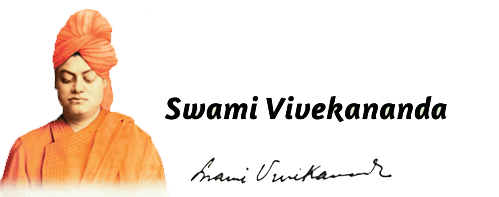
THE BRAHMIN MONK, Swami Vivekananda, lectured yesterday afternoon in Association Hall on “The Religions of India”, in aid of the Ward 16 Day Nursery. There was a large attendance.

The speaker first gave an account of the Mahommedans, who formed, he said, one-fifth of the population. They believed in both Old and New Testaments, but Jesus Christ they regarded only as a prophet. They had no church organization, though there was reading of the Koran.

The Parsees, another race, called their sacred book the Zend-Avesta, and believed in two warring deities, Armuzd the good and Ahriman the evil. They believed that finally the good would triumph over the evil. Their moral code was summed up in the words: “Good thought, good words, good deeds.”

The Hindus proper looked up to the Vedas as their religious scripture. They held each individual to the customs of caste, but gave him full liberty to think for himself in religious matters. A part of their method was to seek out some holy man or prophet in order to take advantage of the spiritual current that flowed through him.

The Hindus had three different schools of religion—the dualistic, the qualified monistic and the monistic—and these three were regarded as stages through which each individual naturally passed in the course of his religious development.

All three believed in God, but the dualistic school believed that God and man were separate entities, while the monistic declared that there was only one existence in the universe, this unitary existence being neither God nor soul, but something beyond.

The lecturer quoted from the Vedas to show the character of the Hindu religion, and declared that, to find God, one must search one’s own heart.

Religion did not consist of pamphlets or books; it consisted of looking into the human heart, and finding there the truths of God and immortality. “Whomsoever I like,” said the Vedas, “him I create a prophet,” and to be a prophet was all there was of religion.

The speaker brought his lecture to a close by giving an account of the Jains, who show remarkable kindness to dumb animals, and whose moral law is summed up in the words: “Not to injure others is the highest good.”

Share
Comments

Comments

Comments are closed for this post.

Contents

Lectures
  1. Work and its Secret
  2. The Powers of the Mind
  3. Hints on Practical Spirituality
  4. Bhakti or Devotion
Jnana-Yoga
  1. I. The Necessity of Religion
  2. II. The Real Nature of Man
  3. III. Maya and Illusion
  4. IV. Maya and the Evolution of the Conception of God
  5. V. Maya and Freedom
  6. VI. The Absolute and Manifestation
  7. VII. God in Everything
  8. VIII. Realisation
  9. IX. Unity in Diversity
  10. X. The Freedom of the Soul
  11. XI. The Cosmos: The Macrocosm
  12. XII. The Cosmos: The Microcosm
  13. XIII. Immortality
  14. XIV. The Atman
  15. XV. The Atman: Its Bondage and Freedom
  16. XVI. The Real and the Apparent Man
Practical Vedanta
  1. Practical Vedanta Part I
  2. Practical Vedanta Part II
  3. Practical Vedanta Part III
  4. Practical Vedanta Part IV
Other Lectures
  1. The Way to the Realization of a Universal Religion
  2. The Ideal of a Universal Religion (23rd February, 1900)
  3. The Open Secret (5th January 1900)
  4. The Way to Blessedness
  5. Yajnavalkya and Maitreyi
  6. Soul, Nature, and God
  7. Cosmology
  8. A Study of the Sankhya Philosophy
  9. Sankhya and Vedanta
  10. The Goal (Delivered in San Francisco, March 27, 1900)
Reports in American Newspapers
  1. Divinity of Man (Ada Record, February 28, 1894)
  2. Swami Vivekananda on India (Bay City Daily Tribune, March 21, 1894)
  3. Religious Harmony (Saginaw Evening News, March 22, 1894)
  4. From Far Off India (Saginaw Courier-Herald, March 22, 1894)
  5. An Evening with Our Hindu Cousins (Northampton Daily Herald, April 16, 1894)
  6. The Manners and Customs of India
  7. The Religions of India (Boston Herald, May 17, 1894)
  8. Sects and Doctrines in India (Harvard Crimson, May 17, 1894)
  9. Less Doctrine and More Bread (Baltimore American, October 15, 1894)
  10. The Religion of Buddha (Morning Herald, October 22, 1894)
  11. All Religions Are Good (Washington Post, October 29, 1894)
  12. The Hindu View of Life (Brooklyn Times, December 31, 1894)
  13. Ideals of Womanhood (Brooklyn Standard Union, January 21, 1895)
  14. True Buddhism (Brooklyn Standard Union, February 4, 1895)
  15. India’s Gift to the World (Brooklyn Standard Union, February 27, 1895)
  16. Child Widows of India (Daily Eagle, February 27, 1895)
  17. Some Customs of the Hindus (Brooklyn Standard Union, April 8, 1895)