
Swami Vivekananda Quotes on Oneness

Chapter 24: Oneness
A profound collection of 30 sayings and teachings of Swami Vivekananda on Oneness, compiled from the Complete Works of Swami Vivekananda (C.W.).
“The highest creed is Oneness.”
“Oneness alone is love and fearlessness; separation leads us to hatred and fear.”
“Wherever there is evil and wherever there is ignorance and want of knowledge, I have found out by experience that all evil comes, as our scriptures say, relying upon differences, and that all good comes from faith in equality, in the underlying sameness and oneness of things. This is the great Vedantic ideal.”
“Vedanta formulates, not universal brotherhood, but universal oneness. I am the same as any other man, as any animal—good, bad, anything. It is one body, one mind, one soul throughout.”
“The goal of the universe is to realise oneness with the “Om” or One Existence.”
“You and I are not only brothers—every literature voicing man’s struggle towards freedom has preached that for you—but that you and I are really one. This is the dictate of Indian philosophy. This oneness is the rationale of all ethics and all spirituality.”
“Wherever there has been expansion in love or progress in well-being, of individuals or numbers, it has been through the perception, realisation, and the practicalisation of the Eternal Truth—THE ONENESS OF ALL BEINGS.”
““Ours is the Gospel of oneness of all beings,” and all national feelings are but wicked superstitions.”
“Everything that makes for oneness is truth. Love is truth, and hatred is false, because hatred makes for multiplicity. It is hatred that separates man from man; therefore it is wrong and false. It is a disintegrating power; it separates and destroys.”
“In all our actions we have to judge whether it is making for diversity or for oneness. If for diversity we have to give it up, but if it makes for oneness we are sure it is good. So with our thoughts; we have to decide whether they make for disintegration, multiplicity, or for oneness, binding soul to soul and bringing one influence to bear. If they do this, we will take them up, and if not, we will throw them off as criminal.”
“Out of this idea of separation between atom and atom comes all misery. But the Vedanta says this separation does not exist, it is not real. It is merely apparent, on the surface. In the heart of things there is Unity still. If you go below the surface, you find that Unity between man and man, between races and races, high and low, rich and poor, gods and men, and men and animals. If you go deep enough, all will be seen as only variations of the One, and he who has attained to this conception of Oneness has no more delusion. What can delude him? He knows the reality of everything, the secret of everything.”
“You must always remember that the one central ideal of Vedanta is this oneness. There are no two in anything, no two lives, nor even two different kinds of life for the two worlds. You will find the Vedas speaking of heavens and things like that at first; but later on, when they come to the highest ideals of their philosophy, they brush away all these things. There is but one life, one world, one existence. Everything is that One, the difference is in degree and not in kind.”
“This mind, so deluded, so weak, so easily led, even this mind can be strong and may catch a glimpse of that knowledge, that Oneness, which saves us from dying again and again. As rain falling upon a mountain flows in various streams down the sides of the mountain, so all the energies which you see here are from that one Unit. It has become manifold falling upon Maya. Do not run after the manifold; go towards the One.”
“He who in this world of evanescence finds Him who never changes, he who in this universe of death finds that One Life, he who in this manifold finds that Oneness, and all those who realise Him as the Soul of their souls, to them belongs eternal peace; unto none else, unto none else.”
“The eternal, the infinite, the omnipresent, the omniscient is a principle, not a person. You, I, and everyone are but embodiments of that principle, and the more of this infinite principle is embodied in a person, the greater is he, and all in the end will be the perfect embodiment of that and thus all will be one as they are now essentially. This is all there is of religion, and the practice is through this feeling of oneness that is love.”
“We want to lead mankind to the place where there is neither the Vedas, nor the Bible, nor the Koran; yet this has to be done by harmonising the Vedas, the Bible and the Koran. Mankind ought to be taught that religions are but the varied expressions of THE RELIGION, which is Oneness, so that each may choose that path that suits him best.”
“Love and charity for the whole human race, that is the test of true religiousness. I do not mean the sentimental statement that all men are brothers, but that one must feel the oneness of human life.”
“Knowledge of oneness is virtue; seeing diversity is sin. The difference between weakness and strength is one of degree; the difference between virtue and vice is one of degree, the difference between heaven and hell is one of degree, the difference between life and death is one of degree, all differences in this world are of degree, and not of kind, because oneness is the secret of everything.”
“All is One, which manifests Itself, either as thought, or life, or soul, or body, and the difference is only in degree. As such, we have no right to look down with contempt upon those who are not developed exactly in the same degree as we are. Condemn none; if you can stretch out a helping hand, do so. If you cannot, fold your hands, bless your brothers, and let them go their own way. Dragging down and condemning is not the way to work. Never is work accomplished in that way. We spend our energies in condemning others. Criticism and condemnation is a vain way of spending our energies, for in the long run we come to learn that all are seeing the same thing, are more or less approaching the same ideal, and that most of our differences are merely differences of expression.”
“He is an atheist who does not believe in himself. The old religions said that he was an atheist who did not believe in God. The new religion says that he is the atheist who does not believe in himself. But it is not selfish faith because the Vedanta, again, is the doctrine of oneness. It means faith in all, because you are all. Love for yourselves means love for all, love for animals, love for everything, for you are all one. It is the great faith which will make the world better.”
“What is there to be taught more in religion than the oneness of the universe and faith in one’s self? All the works of mankind for thousands of years past have been towards this one goal, and mankind is yet working it out.”
“You speak of matter, the whole universe as one mass, one ocean of matter, in which you and I, the sun and the moon, and everything else are but the names of different little whirlpools and nothing more. Mentally speaking, it is one universal ocean of thought in which you and I are similar little whirlpools; and as spirit it moveth not, it changeth not. It is the One Unchangeable, Unbroken, Homogeneous Atman.”
“Where is there a more practical God than He whom I see before me—a God omnipresent, in every being, more real than our senses? For you are He, the Omnipresent God Almighty, the Soul of your souls, and if I say you are not, I tell an untruth. I know it, whether at all times I realise it or not. He is the Oneness, the Unity of all, the Reality of all life and all existence.”
“Where is the scientific man today who fears to acknowledge the truth of this oneness of the universe? Who is there who dares talk of many worlds? All these are superstitions. There is only one life and one world, and this one life and one world is appearing to us as manifold. This manifoldness is like a dream.”
“Get rid, in the first place, of all these limited ideas and see God in every person—working through all hands, walking through all feet, and eating through every mouth. In every being He lives, through all minds He thinks. He is self-evident, nearer unto us than ourselves. To know this is religion, is faith, and may it please the Lord to give us this faith! When we shall feel that oneness, we shall be immortal.”
“Why does one man injure another? Because he fears he will not have enough enjoyment. One man fears that, perhaps, he will not have enough money, and that fear causes him to injure others and rob them. How can there be fear if there is only one existence? If a thunderbolt falls on my head, it was I who was the thunderbolt, because I am the only existence. If a plague comes, it is I; if a tiger comes, it is I. If death comes, it is I. I am both death and life. We see that fear comes with the idea that there are two in the universe. We have always heard it preached, “Love one another.” What for? That doctrine was preached, but the explanation is here. Why should I love every one? Because they and I are one. Why should I love my brother? Because he and I are one. There is this oneness; this solid ā rity of the whole universe.”
“When man has seen himself as one with the Infinite Being of the universe, when all separateness has ceased, when all men and women, and gods and angels, all animals and plants, and the whole universe have melted into that Oneness, then all fear disappears. Can I hurt myself? Can I kill myself? Can I injure myself? Whom to fear? Can you fear yourself? Then will all sorrow disappear. What can cause me sorrow? I am the One Existence of the universe. Then all jealousies will disappear; of whom to be jealous? Of myself? Then all bad feelings disappear. Against whom can I have bad feeling? Against myself? There is none in the universe but I.”
“Our Upanishads say that the cause of all misery is ignorance; and that is perfectly true when applied to every state of life, either social or spiritual. It is ignorance that makes us hate each other, it is through ignorance that we do not know and do not love each other. As soon as we come to know each other, love comes, must come, for are we not ones.”
“The Vedanta teaches oneness—one life throughout.”
“When a kettle of water is coming to the boil, if you watch the phenomenon, you find first one bubble rising, and then another and so on, until at last they all join, and a tremendous commotion takes place. This world is very similar. Each individual is like a bubble, and the nations, resemble many bubbles. Gradually these nations are joining, and I am sure the day will come when separation will vanish and that Oneness to which we are all going will become manifest. A time must come when every man will be as intensely practical in the scientific world as in the spiritual, and then that Oneness, the harmony of Oneness, will pervade the whole world.”
Comments
Comments are closed for this post.
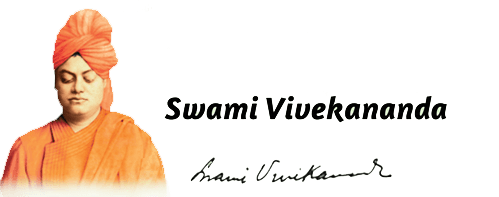
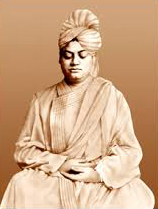
Swami Vivekananda (12 January 1863 – 4 July 1902) was an Indian saint, social reformer, and a great teacher of mankind. He was the foremost disciple of Bhagavan Sri Ramakrishna Paramahamsa Dev who is considered as the prophet of modern age. Swami Vivekananda was a towering spiritual personality, great thinker, orator and the prophet of universal harmony and progress.