
Swami Vivekananda Quotes on Knowledge

Chapter 20: Knowledge
A profound collection of 30 sayings and teachings of Swami Vivekananda on Knowledge, compiled from the Complete Works of Swami Vivekananda (C.W.).
“With God every knowledge is sacred. Knowledge is God.”
“All the knowledge that we have in this world, where did it come from? It was within us. What knowledge is outside? None. Knowledge was not in matter; it was in man all the time. Nobody ever created knowledge; man brings it from within. It is lying there.”
“Like fire in a piece of flint, knowledge exists in the mind; suggestion is the friction which brings it out.”
“We say Newton discovered gravitation. Was it sitting anywhere in a corner waiting for him? It was in his own mind; the time came and he found it out. All knowledge that the world has ever received comes from the mind; the infinite library of the universe is in your own mind. The external world is simply the suggestion, the occasion, which sets you to study your own mind, but the object of your study is always your own mind.”
“No knowledge comes from outside; it is all inside. What we say a man “knows,” should, in strict psychological language, be what he “discovers” or “unveils”; what a man “learns” is really what he “discovers,” by taking the cover off his own soul, which is a mine of infinite knowledge.”
“Knowledge is power. We have to get this power.”
“Only knowledge can free and save us, but with knowledge must go virtue.”
“The power of attention, when properly guided, and directed towards the internal world, will analyse the mind, and illumine facts for us. The powers of the mind are like rays of light dissipated; when they are concentrated, they illumine. This is our only means of knowledge.”
“The practice of meditation is the great scientific method of knowledge. There is no knowledge without the power of meditation.”
“The real life of man consists of knowledge. Ignorance is death, knowledge is life. Life is of very little value, if it is a life in the dark, groping through ignorance and misery.”
“Human knowledge is not antagonistic to human well-being. On the contrary, it is knowledge alone that will save us in every department of life—in knowledge is worship. The more we know the better for us.”
“Every man is capable of receiving knowledge if it is imparted in his own language. A teacher who cannot convince others should weep on account of his own inability to teach the people in their own language, instead of cursing them and dooming them to live in ignorance and superstition, setting up the plea that the higher knowledge is not for them.”
“Without Jnāna (knowledge) liberation cannot be ours. It consists in knowing what we really are, that we are beyond fear, beyond birth, beyond death.”
“We are Shiva, we are immortal knowledge beyond the senses.”
“So long as we have no knowledge of our real nature, we are beggars.”
“Monasticism and the householder’s life are both good, according to different circumstances. Knowledge is the only thing necessary.”
“To attain liberation through work, join yourself to work but without desire, looking for no result. Such work leads to knowledge, which in turn brings emancipation.”
“Any amount of theoretical knowledge one may have; but unless one does the thing actually, nothing is learnt.”
“When in search of knowledge or prosperity think that thou would never have death or disease, and when worshipping God think that death’s hand is in your hair.”
“Unity is knowledge, diversity is ignorance. This knowledge is your birthright. I have not to teach it to you.”
“Whatever exists is one. There cannot be many. That is what is meant by science and knowledge. Ignorance sees manifold. Knowledge realises one. Reducing the many into one is science. The whole of the universe has been demonstrated into one. That science is called the science of Vedanta. The whole universe is one. The one runs through all this seeming variety.”
“The whole universe is one existence. There cannot be anything else. Out of diversities we are all going towards this universal existence. Families into tribes, tribes into races, races into nations, nations into humanity—how many wills going to the One! It is all knowledge, all science—the realisation of this unity.”
““That which exists is One, sages call It variously.” Nothing can be higher than this knowledge, and in those purified by Yoga it comes in flashes to the soul. The more one has been purified and prepared by Yoga and meditation, the clearer are these flashes of realization.”
“There is no other object in work except the purification of the soul—to make it fit for knowledge.”
“Books suggest the inner light and the method of bringing that out, but we can only understand them when we have earned the knowledge ourselves. When the inner light has flashed for you, let the books go, and look only within.”
“There is no knowledge in nature; all knowledge comes from the human soul. Man manifests knowledge, discovers it within himself, which is pre-existing through eternity. Everyone is the embodiment of Knowledge, everyone is the embodiment of eternal Bliss, and eternal Existence.”
“Who can injure us, the omnipresent? All weakness has vanished from us, and our only work is to arouse this knowledge in our fellow beings. We see that they too are the same pure self, only they do not know it; we must teach them, we must help them to rouse up their infinite nature. This is what I feel to be absolutely necessary all over the world.”
“Spiritual knowledge is the only thing that can destroy our miseries for ever; any other knowledge satisfies wants only for a time. It is only with the knowledge of the spirit that the faculty of want is annihilated for ever; so helping man spiritually is the highest help that can be given to him.”
“Pleasure is not the goal of man, but knowledge. Pleasure and happiness come to an end. It is a mistake to suppose that pleasure is the goal. The cause of all the miseries we have in the world is that men foolishly think pleasure to be the ideal to strive for. After a time man finds that it is not happiness, but knowledge, towards which he is going, and that both pleasure and pain are great teachers, and that he learns as much from evil as from good.”
“Virtuous deeds take off the veil from knowledge, and knowledge alone can make us see God.”
Comments
Comments are closed for this post.
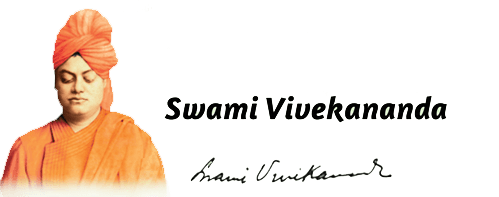
Swami Vivekananda (12 January 1863 – 4 July 1902) was an Indian saint, social reformer, and a great teacher of mankind. He was the foremost disciple of Bhagavan Sri Ramakrishna Paramahamsa Dev who is considered as the prophet of modern age. Swami Vivekananda was a towering spiritual personality, great thinker, orator and the prophet of universal harmony and progress.