
Swami Vivekananda Quotes on Guru

Chapter 14: Guru
A profound collection of 30 sayings and teachings of Swami Vivekananda on Guru, compiled from the Complete Works of Swami Vivekananda (C.W.).
“The Guru is the bright mask which God wears in order to come to us. As we look steadily on, gradually the mask falls off and God is revealed.”
“The real Guru is the one through whom we have our spiritual descent. He is the channel through which the spiritual current flows to us, the link which joins us to the whole spiritual world.”
“The Guru is the conveyance in which the spiritual influence is brought to you. Anyone can teach, but the spirit must be passed on by the Guru to the Shishya (disciple), and that will fructify.”
“The Guru passes the thought power, the Mantra, that he has received from those before him; and nothing can be done without a Guru. In fact, great danger ensues. Usually without a Guru, these Yoga practices lead to lust; but with one, this seldom happens.”
“Prophets preach, but the Incarnations like Jesus, Buddha, Ramakrishna, can give religion; one glance, one touch is enough. That is the power of the Holy Ghost, the “laying on of hands”; the power was actually transmitted to the disciples by the Master— the “chain of Guru-power.” That, the real baptism, has been handed down for untold ages.”
“The Guru is the means of realisation. “There is no knowledge without a teacher.””
“Think of nothing but liberation. Have faith in Guru, in his teachings, and in the surety that you can get free.”
“Too much faith in personality has a tendency to produce weakness and idolatry, but intense love for the Guru makes rapid growth possible, he connects us with the internal Guru. Adore your Guru if there be real truth in him; that Guru-bhakti (devotion to the teacher) will quickly lead you to the highest.”
“God can only be known in and through man. Vibrations of light are everywhere, even in the darkest corners; but it is only in the lamp that it becomes visible to man. Similarly God, though everywhere, we can only conceive Him as a big man. All ideas of God such as merciful preserver, helper, protector—all these are human ideas, anthropomorphic; and again these must cling to a man, call him a Guru or a Prophet or an Incarnation.”
“If a man has unflinching devotion to the Guru, spiritual practices—meditation, Japa, and so forth—come quite naturally; one need not struggle for them. ‘The Guru is Brahmâ, the Guru is Vishnu, and the Guru is Shiva Himself.’”
“So long as you have love for God and Guru and faith in truth, nothing can hurt you, my son. But the loss of any of these is dangerous.”
“Do not lose heart, do not lose faith in your Guru, do not lose faith in God. So long as you possess these three, nothing can harm you.”
“The Guru-Bhakta will conquer the world—this is the one evidence of history.”
“Remember that perfect purity, disinterestedness, and obedience to the Guru are the secret of all success.”
“Once you have pledged your faith to a particular teacher, stick to him with all force.”
“Man learns as he lives, and experience is the greatest teacher in the world.”
“We can give nothing to God; He gives all to us. He is the Guru of Gurus. Then we find that He is the “Soul of our souls,” our very Self. No wonder we love Him, He is the Soul of our souls; whom or what else can we love?”
“You have gratitude for books and teachers without bondage to them; and worship your Guru as God, but do not obey him blindly; love him all you will, but think for yourself. No blind belief can save you, work out your own salvation.”
“In point of character, Paramahamsa Deva beats all previous records; and as regards teaching, he was more liberal, more original, and more progressive than all his predecessors. In other words, the older Teachers were rather one-sided, while the teaching of this new Incarnation or Teacher is that the best point of Yoga, devotion, knowledge, and work must be combined now so as to form a new society. … The older ones were no doubt good, but this is the new religion of this age—the synthesis of Yoga, knowledge, devotion, and work—the propagation of knowledge and devotion to all, down to the very lowest, without distinction of age or sex.”
“Don’t despond in the least. Shri wah Guru! Shri wah Guru!”
“We may read books, hear lectures, and talk miles, but experience is the one teacher, the one eye-opener.”
“‘Shravana’ not only means hearing from the Guru, but also repetition to our own selves. 'आवृत्तिः असकृत्-उपदेशात्—Scriptural truth should be often repeated for such has been repeatedly enjoined’—In this Sutra of Vedānta, Vyāsa lays stress on repetition.””
“Victory to the Guru! Victory to the Guru! You are my only refuge—you are my only refuge!”
“Only through this twilight of nescience you think this is your wife, that is your child, this is your own, that is not your own, and so on, and fail to realise the existence of the Ātman, the illuminator of everything. When through the Guru’s instructions and your own conviction you will see, not this world of name and form, but the essence which lies as its substratum then only you will realise your identity with the whole universe from the Creator down to a clump of grass, then only you will get the state in which “भिद्यते हृदयग्रन्थिश्छिद्यन्ते सर्वसंशया:—The knots of the heart are cut asunder and all doubts are dispelled”.”
“Sri Râma was the Paramâtman and Sitâ was the Jivâtman, and each man’s or woman’s body was the Lanka (Ceylon). The Jivatman which was enclosed in the body, or captured in the island of Lankâ , always desired to be in affinity with the Paramatman, or Sri Rama. But the Râkshasas would not allow it, and Rakshasas represented certain traits of character. For instance, Vibhishana represented Sattva Guna; Râvana, Rajas; and Kumbhakarna, Tamas. Sattva Guna means goodness; Rajas means lust and passions, and Tamas darkness, stupor, avarice, malice, and its concomitants. These Gunas keep back Sita, or Jivatman, which is in the body, or Lanka, from joining Paramatman, or Rama. Sita, thus imprisoned and trying to unite with her Lord, receives a visit from Hanumân, the Guru or divine teacher, who shows her the Lord’s ring, which is Brahma-Jnâna, the supreme wisdom that destroys all illusions; and thus Sita finds the way to be at one with Sri Rama, or, in other words, the Jivatman finds itself one with the Paramatman.”
“Mantra is a special word, or sacred text, or name of God chosen by the Guru for repetition and reflection by the disciple. The disciple must concentrate on a personality for prayer and praise, and that is his Ishta.”
“Initiation by the Guru is necessary. Why? Because it is the bringing of yourself into connection with that great source of power which has been handed down through generations from one Guru to another, in uninterrupted succession.”
“The devotee must seek and accept the Guru or spiritual preceptor as his counsellor, philosopher, friend, and guide. In short, the Guru is the sine qua non of progress in the path of spirituality.”
“After initiation there should be in the aspirant after Truth, Abhyāsa or earnest and repeated attempt at practical application of the Truth by prescribed means of constant meditation upon the Chosen Ideal. Even if you have a burning thirst for God, or have gained the Guru, unless you have along with it the Abhyasa, unless you practise what you have been taught, you cannot get realisation. When all these are firmly established in you, then you will reach the Goal.”
“Know it for certain that without steady devotion for the Guru and unflinching patience and perseverance, nothing is to be achieved. You must have strict morality. Deviate an inch from this, and you are gone forever.”
Comments
Comments are closed for this post.
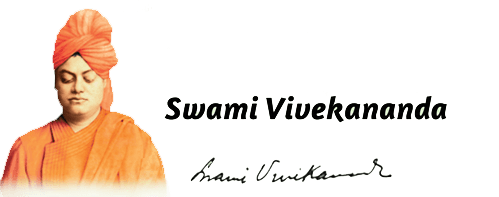
Swami Vivekananda (12 January 1863 – 4 July 1902) was an Indian saint, social reformer, and a great teacher of mankind. He was the foremost disciple of Bhagavan Sri Ramakrishna Paramahamsa Dev who is considered as the prophet of modern age. Swami Vivekananda was a towering spiritual personality, great thinker, orator and the prophet of universal harmony and progress.