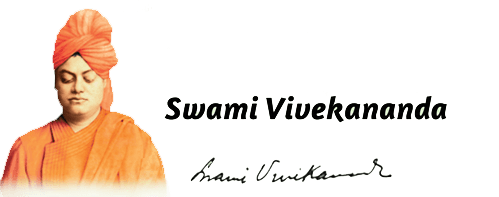

Swami Vivekananda Quotes on Education

Chapter 9: Education
A profound collection of 30 sayings and teachings of Swami Vivekananda on Education, compiled from the Complete Works of Swami Vivekananda (C.W.).
“What is education? Is it book-learning? No. Is it diverse knowledge? Not even that. The training by which the current and expression of will are brought under control and become fruitful is called education.”
“The true education may be described as a development of faculty, not an accumulation of words, or as a training of individuals to will rightly and efficiently.”
“The present system of education is all wrong. The mind is crammed with facts before it knows how to think. Control of the mind should be taught first.”
“Education is not filling the mind with a lot of facts. Perfecting the instrument and getting complete mastery of my own mind is the ideal of education.”
“Mere book-learning won’t do. We want that education by which character is formed, strength of mind is increased, the intellect is expanded, and by which one can stand on one’s own feet.”
“The education which does not help the common mass of people to equip themselves for the struggle for life, which does not bring out strength of character, a spirit of philanthropy, and the courage of a lion—is it worth the name? Real education is that which enables one to stand on one’s own legs.”
“The secret of life is not enjoyment, but education through experience.”
“All knowledge that we have, either of the external or internal world, is obtained through only one method — by the concentration of the mind. No knowledge can be had of any science unless we can concentrate our minds upon the subject.”
“To me the very essence of education is concentration of mind, not the collecting of facts. If I had to do my education over again, and had any voice in the matter, I would not study facts at all. I would develop the power of concentration and detachment, and then with a perfect instrument I could collect facts at will.”
“Education is not the amount of information that is put into your brain and runs riot there, undigested, all your life. We must have life-building, man-making, character-making assimilation of ideas. If you have assimilated five ideas and made them your life and character, you have more education than any man who has got by heart a whole library.”
“My idea of education is personal contact with the teacher—Gurugriha-Vâsa. Without the personal life of a teacher there would be no education.”
“Through education comes faith in one’s own Self.”
“How can there be any progress of the country without the spread of education, the dawning of knowledge?”
“Education, education, education alone! Travelling through many cities of Europe and observing in them the comforts and education of even the poor people, there was brought to my mind the state of our own poor people, and I used to shed tears. What made the difference? Education was the answer I got.”
“Education is the manifestation of the perfection already in man.”
“Find out, by the powers of reason, education, and culture that it is all in yourself.”
“Men must have education. They speak of democracy, of the equality of all men, these days. But how will a man know he is equal with all? He must have a strong brain, a clear mind free of nonsensical ideas; he must pierce through the mass of superstitions encrusting his mind to the pure truth that is in his inmost Self. Then he will know that all perfections, all powers are already within himself, that these have not to be given him by others. When he realises this, he becomes free that moment, he achieves equality. He also realises that every one else is equally as perfect as he, and he does not have to exercise any power, physical, mental or moral, over his brother men. He abandons the idea that there was ever any man who was lower than himself. Then he can talk of equality; not until then.”
“No one was ever really taught by another; each of us has to teach himself. The external teacher offers only the suggestion which rouses the internal teacher to work to understand things.”
“A child teaches itself. But you can help it to go forward in its own way. What you can do is not of the positive nature, but of the negative. You can take away the obstacles, but knowledge comes out of its own nature. Loosen the soil a little, so that it may come out easily. Put a hedge round it; see that it is not killed by anything, and there your work stops. You cannot do anything else. The rest is a manifestation from within its own nature. So with the education of a child; a child educates itself. You come to hear me, and when you go home, compare what you have learnt, and you will find you have thought out the same thing; I have only given it expression. I can never teach you anything: you will have to teach yourself, but I can help you perhaps in giving expression to that thought.”
“Satyakama went to live the life of a Brahmacharin with his Guru. The Guru gave into his charge some cows and sent him away to the forest with them. Many months passed by, and when Satyakama saw that the number of cows was doubled, he thought of returning to his Guru. On his way back, one of the bulls, the fire, and some other animals gave him instruction about the Highest Brahman. When the disciple came back, the Guru at once saw by a mere glance at his face that the disciple had learnt the knowledge of the Supreme Brahman. Now, the moral this story is meant to teach is that true education is gained by living in constant communion with Nature.”
“Does higher education mean mere study of material sciences and turning out things of everyday use by machinery? The use of higher education is to find out how to solve the problems of life, and this is what is engaging the profound thought of the modern civilised world, but it was solved in our country thousands of years ago.”
“Negative thoughts weaken men. Do you not find that where parents are constantly taxing their sons to read and write, telling them they will never learn anything, and calling them fools and so forth, the latter do actually turn out to be so in many cases? If you speak kind words to boys and encourage them, they are bound to improve in time.”
“It is man-making education all round that we want.”
“All the wealth of the world cannot help one little Indian village if the people are not taught to help themselves. Our work should be mainly educational, both moral and intellectual.”
“All the members of a society ought to have the same opportunity for obtaining wealth, education, or knowledge.”
“The very reason of nature’s existence is for the education of the soul; it has no other meaning; it is there because the soul must have knowledge, and through knowledge free itself. If we remember this always, we shall never be attached to nature; we shall know that nature is a book in which we are to read, and that when we have gained the required knowledge, the book is of no more value to us.”
“If ever I get money in my possession, I shall first spend that in the service of man. Man is first to be saved; he must be given food, education, and spirituality.”
“If the poor cannot come to education, education must reach them at the plough, in the factory, everywhere. How? You have seen my brethren. Now I can get hundreds of such, all over India, unselfish, good, and educated. Let these men go from village to village bringing not only religion to the door of everyone but also education. So I have a nucleus of organising the widows also as instructors to our women.”
“There should be an institution to train teachers who must go about preaching religion and giving secular education to our people; they must carry both. As we have been already carrying religion from door to door, let us along with it carry secular education also.”
“Appreciation or no appreciation, I am born to organise these young men; nay, hundreds more in every city are ready to join me; and I want to send them rolling like irresistible waves over India, bringing comfort, morality, religion, education to the doors of the meanest and the most downtrodden. And this I will do or die.”
Comments
Comments are closed for this post.
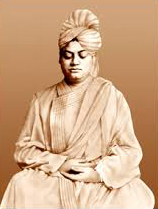
Swami Vivekananda (12 January 1863 – 4 July 1902) was an Indian saint, social reformer, and a great teacher of mankind. He was the foremost disciple of Bhagavan Sri Ramakrishna Paramahamsa Dev who is considered as the prophet of modern age. Swami Vivekananda was a towering spiritual personality, great thinker, orator and the prophet of universal harmony and progress.