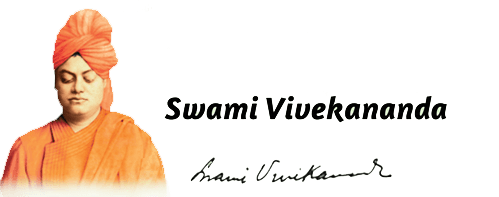

Swami Vivekananda Quotes on Death

Chapter 7: Death
A profound collection of 30 sayings and teachings of Swami Vivekananda on Death, compiled from the Complete Works of Swami Vivekananda (C.W.).
“To the person who never finds a moment to question the credentials of his senses, whose every moment is occupied with some sort of sense-enjoyment—even to him death comes, and he also is compelled to ask, “Is this real?” Religion begins with this question and ends with its answer.”
“So long as there is death, the question must come again and again, “Is death the end of all these things to which we are clinging, as if they were the most real of all realities, the most substantial of all substances?” The world vanishes in a moment and is gone. Standing on the brink of a precipice beyond which is the infinite yawning chasm, every mind, however hardened, is bound to recoil and ask, “Is this real?” The hopes of a lifetime, built up little by little with all the energies of a great mind, vanish in a second. Are they real? This question must be answered.”
“Krishna says: “You cannot die nor can I. There was never a time when we did not exist. There will never be a time when we shall not exist. As in this life a man begins with childhood, and passes through youth and old age, so at death he merely passes into another kind of body. Why should a wise man be sorry?””
“The Hindu believes that every soul is a circle whose circumference is nowhere, but whose centre is located in the body, and that death means the change of this centre from body to body.”
“Birth, life, and death are but old superstitions. None was ever born, none will ever die; one changes one’s position—that is all.”
“You were never born, and you will never die. What is this birth and death that we see around us? This belongs to the body only, because the soul is omnipresent.”
“The human soul is eternal and immortal, perfect and infinite, and death means only a change of centre from one body to another.”
“The going from birth to death, this travelling, is what is called Samsāra in Sanskrit, the round of birth and death literally. All creation, passing through this round, will sooner or later become free.”
“At death all the senses go into the mind and the mind goes into Prana, vitality. The soul goes out and carries part of the mind out with him. He carries a certain part of the vitality, and he carries a certain amount of very fine material also, as the germ of the spiritual body. The Prana cannot exist without some sort of vehicle…. It gets lodgement in the thoughts, and it will come out again. So you manufacture this new body and new brain. Through that it will manifest.”
“A man dies; the body falls away and goes back to the elements; but the Samskāras remain, adhering to the mind which, being made of fine material, does not dissolve, because the finer the material, the more persistent it is. But the mind also dissolves in the long run, and that is what we are struggling for.”
“Birth and death are in nature, not in you. Yet the ignorant are deluded; just as we under delusion think that the sun is moving and not the earth, in exactly the same way we think that we are dying, and not nature. These are all, therefore, hallucinations. Just as it is a hallucination when we think that the fields are moving and not the railway train, exactly in the same manner is the hallucination of birth and death.”
“I am studying a book, page after page is being read and turned over. Another page comes and is turned over. Who changes? Who comes and goes? Not I, but the book. This whole nature is a book before the soul, chapter after chapter is being read and turned over, and every now and then a scene opens. That is read and turned over. A fresh one comes, but the soul is ever the same— eternal. It is nature that is changing, not the soul of man. This never changes. Birth and death are in nature, not in you.”
“In this world we find that all happiness is followed by misery as its shadow. Life has its shadow, death. They must go together, because they are not contradictory, not two separate existences, but different manifestations of the same unit, life and death, sorrow and happiness, good and evil.”
“The whole world is going towards death; everything dies. All our progress, our vanities, our reforms, our luxuries, our wealth, our knowledge, have that one end—death. That is all that is certain. Cities come and go, empires rise and fall, planets break into pieces and crumble into dust, to be blown about by the atmospheres of other planets. Thus it has been going on from time without beginning. Death is the end of everything. Death is the end of life, of beauty, of wealth, of power, of virtue too. Saints die and sinners die, kings die and beggars die. They are all going to death, and yet this tremendous clinging on to life exists. Somehow, we do not know why, we cling to life; we cannot give it up. And this is Maya.”
“Death is stalking day and night over this earth of ours, but at the same time we think we shall live eternally. A question was once asked of King Yudhishthira, “What is the most wonderful thing on this earth?” And the king replied, “Every day people are dying around us, and yet men think they will never die.” And this is Maya.”
“Birth is re-composition, death is de-composition.”
“Virtue is the only friend which follows us even beyond the grave. Everything else ends with death.”
“Departed spirits cannot manufacture a body; and those that are very weak do not remember that they are dead…. They try to get more enjoyment from this spirit life by getting into the bodies of others, and any person who opens his body to them runs a terrible risk. They seek his vitality.”
“All our efforts are only to stave off, for a season, the great climax—death! Oh, what would the world do without you, Death! Thou great healer!”
“There is success and failure in every work. But I am inclined to believe that one who is a coward will be born after death as an insect or a worm, that there is no salvation for a coward even after millions of years of penance.”
“Set yourselves to work—to work! Do not tarry—the time of death is approaching day by day! Do not sit idle, thinking that everything will be done in time, later on! Mind—nothing will be done that way!”
“Work unto death—I am with you, and when I am gone, my spirit will work with you. This life comes and goes—wealth, fame, enjoyments are only of a few days. It is better, far better to die on the field of duty, preaching the truth, than to die like a worldly worm. Advance!”
“Death is better than a vegetating ignorant life; it is better to die on the battlefield than to live a life of defeat… Come, do something heroic! Brother, what if you do not attain mukti, what if you suffer damnation a few times?”
“Life is short, but the soul is immortal and eternal, and one thing being certain, death, let us therefore take up a great ideal and give up our whole life to it. Let this be our determination.”
“He who has known God has become God. There is nothing impossible to such a free soul. No more birth and death for him. He is free for ever.”
“There is death, you know, inevitable death, in water, in air, in the palace, in the prison—death everywhere. What makes you fearless? When you have realised what you are—that infinite spirit, deathless, birthless. Him no fire can burn, no instrument kill, no poison hurt. Not theory, mind you. Not reading books.”
“In life and in death, in happiness and in misery, the Lord is equally present. The whole world is full of the Lord. Open your eyes and see Him.”
“Look here—we shall all die! Bear this in mind always, and then the spirit within will wake up. Then only, meanness will vanish from you, practicality in work will come, you will get new vigour in mind and body, and those who come in contact with you will also feel that they have really got something uplifting from you.”
“The body is but gross—it dies and dissolves into the five elements. But the bundle of mental impressions, which is the mind, does not die soon. It remains for some time in seed-form and then sprouts and grows in the form of a tree—it takes on another physical body and goes the round of birth and death, until Self-knowledge arises. Therefore I say, by meditation and concentration and by the power of philosophical discrimination plunge this mind in the Ocean of Existence-Knowledge-Bliss Absolute. When the mind dies, all limiting adjuncts vanish and you are established in Brahman.”
“Man is a thinking being and must struggle on until he conquers death, until he sees the light. He must not spend himself in vain talking that bears no fruit.”
Comments
Comments are closed for this post.
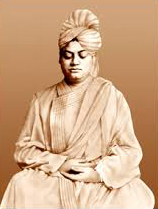
Swami Vivekananda (12 January 1863 – 4 July 1902) was an Indian saint, social reformer, and a great teacher of mankind. He was the foremost disciple of Bhagavan Sri Ramakrishna Paramahamsa Dev who is considered as the prophet of modern age. Swami Vivekananda was a towering spiritual personality, great thinker, orator and the prophet of universal harmony and progress.