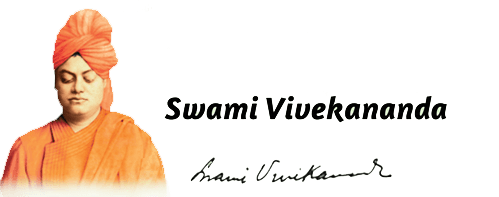

Swami Vivekananda Quotes on Character

Chapter 5: Character
A profound collection of 30 sayings and teachings of Swami Vivekananda on Character, compiled from the Complete Works of Swami Vivekananda (C.W.).
“First make character—that is the highest duty you can perform.”
“It is character that pays everywhere.”
“Neither money pays, nor name, nor fame, nor learning; it is character that can cleave through adamantine walls of difficulties. Bear this in mind.”
“What the world wants is character. The world is in need of those whose life is one burning love, selfless. That love will make every word tell like thunderbolt.”
“We may convert every house in the country into a charity asylum, we may fill the land with hospitals, but the misery of man will still continue to exist until man’s character changes.”
“What we want is character, that steadiness and character that make a man cling on to a thing like grim death.”
“Referring to history, we see that only that fragment which is fit will survive, and what makes fit to survive but character?”
“Of all the sects, they alone shall gain the day who are able to show most character in their lives, no matter how far they may be.”
“It is the patient up building of character, the intense struggle to realize the truth, which alone will tell in the future of humanity.”
“The history of the world is that of six men of faith, six men of deep pure character.”
“What is in the man? Not the body not the soul, but character. And that is left for all ages. All that have passed and died, they have left for us their characters, eternal possessions for the rest of humanity; and these characters are working—working all through.”
“What I am just at this moment is the effect of the sum total of all the impressions of my past life. This is really what is meant by character; each man’s character is determined by the sum total of these impressions. If good impressions prevail, the character becomes good; if bad, it becomes bad. If a man continuously hears bad words, thinks bad thoughts, does bad actions, his mind will be full of bad impressions; and they will influence his thought and work without his being conscious of the fact.”
“When a man has done so much good work and thought so many good thoughts that there is an irresistible tendency in him to do good in spite of himself and even if he wishes to do evil, his mind, as the sum total of his tendencies, will not allow him to do so; the tendencies will turn him back; he is completely under the influence of the good tendencies. When such is the case, a man’s good character is said to be established.”
“Each work we do, each thought we think, produces an impression, called in Sanskrit Samskāra, upon the mind and the sum total of these impressions becomes the tremendous force which is called “character.” The character of a man is what he has created for himself; it is the result of the mental and physical actions that he has done in his life. The sum total of the Samskāras is the force which gives a man the next direction after death.”
“One should live from his very boyhood with one whose character is like a blazing fire and should have before him a living example of the highest teaching.”
“Talking about faith and belief and doctrine is easy, but it is so difficult to build character and to stem the tide of the senses.”
“You know, “श्रेयांसि बहुविघ्नानि—Great undertakings are always fraught with many obstacles.” It is these obstacles which knock and shape great characters.”
“Onward! Upon ages of struggle a character is built. Be not discouraged.”
“The road to the Good is the roughest and steepest in the universe. It is a wonder that so many succeed, no wonder that so many fall. Character has to be established through a thousand stumbles.”
“Wait, money does not pay, nor name; fame does not pay, nor learning. It is love that pays; it is character that cleaves its way through adamantine walls of difficulties.”
“Do good because it is good; ask no more questions; that is enough. A man made to do good by a fable, a story, a superstition—he will be doing evil as soon as the opportunity comes. That man alone is good who does good for good’s sake, and that is the character of the man.”
“Education must be an eye-opener in all matters. Ideal characters must always be presented before the view of the girls to imbue them with a devotion to lofty principles of selflessness. The noble examples of Sitā , Sāvitri, Damayanti, Lilāvati, Khanā , and Mirā should be brought home to their minds, and they should be inspired to mould their own lives in the light of these.”
“Whether we be ten or two, do not care, but those few must be perfect characters.”
“Always the wave that is backed by the greatest purity and the noblest character is what breaks upon the world as movement of social reform.”
“If you really want to judge of the character of a man, look not at his great performances. Every fool may become a hero at one time or another. Watch a man do his most common actions; those are indeed the things which will tell you the real character of a great man. Great occasions rouse even the lowest of human beings to some kind of greatness, but he alone is the really great man whose character is great always, the same wherever he be.”
“No man should be judged by his defects. The great virtues a man has are his especially, his errors are the common weaknesses of humanity and should never be counted in estimating his character.”
“The first great thing to accomplish is to establish a character, to obtain, as we say, the प्रतिष्ठिता प्रज्ञा (established in Wisdom). This applies equally to individuals and to organised bodies of individuals.”
“His (Sri Ramakrishna Paramahamsa) principle was, first form character, first earn spirituality and results will come of themselves. His favourite illustration was, “When the lotus opens, the bees come of their own accord to seek the honey; so let the lotus of your character be full-blown and the results will follow.” This is a great lesson to learn.”
“God, though everywhere, can be known to us in and through human character. No character was ever so perfect as Ramakrishna’s, and that should be the centre round which we ought to rally, at the same time allowing everybody to regard him in his own light, either as God, saviour, teacher, model, or great man, just as he pleases. We preach neither social equality nor inequality, but that every being has the same rights, and insist upon freedom of thought and action in every way.”
“The life of Sri Ramakrishna proves that the greatest breadth, the highest catholicity and the utmost intensity can exist side by side in the same individual, and that society also can be constructed like that, for society is nothing but an aggregate of individuals. He is the true disciple and follower of Sri Ramakrishna, whose character is perfect and all-sided like this. The formation of such a perfect character is the ideal of this age, and everyone should strive for that alone.”
Comments
Comments are closed for this post.
Swami Vivekananda (12 January 1863 – 4 July 1902) was an Indian saint, social reformer, and a great teacher of mankind. He was the foremost disciple of Bhagavan Sri Ramakrishna Paramahamsa Dev who is considered as the prophet of modern age. Swami Vivekananda was a towering spiritual personality, great thinker, orator and the prophet of universal harmony and progress.