
Footnotes to The Imitation of Christ

Swami Vivekananda’s partial Bengali translation of The Imitation of Christ includes as footnotes quotations from Hindu scriptures that parallel à Kempis’s ideas, comments or commentary. For the sake of clarity, these footnotes (numbered 1 through 17) have been appended to their respective verses in The Imitation of Christ (indicated in parentheses), arranged under their appropriate chapter headings in the book, and reproduced here in bold.
Many of the Sanskrit footnotes to the Bengali translation were later rendered into English during the course of Swami Vivekananda’s lecturing or writing. For the sake of interest, these English translations have also been added to the Swami’s restored footnote text. Otherwise, Sanskrit verses have been translated by the Publisher for the convenience of the reader.
दैवी ह्येषा गुणमयी मम माया दुरत्यया ।
मामेव ये प्रपद्यन्ते मायामेतां तरन्ति ते ॥
2. Let therefore our chief endeavour be to meditate upon the life of Jesus Christ. (The Imitation of Christ V.1.)
Uttara-Kanda 5.54 (RamaGita)
ध्यात्वैवमात्मानमहर्निशं मुनिः ।
तिष्ठॆत्सदा मुक्तसमस्तबन्धनः ॥
3. The doctrine of Christ exceedeth all the doctrines of holy men; and he that hath the Spirit will find therein the hidden manna. (The Imitation of Christ V.2.)
4. But it falleth out, that many who often hear the Gospel of Christ, are yet but little affected, because they are void of the Spirit of Christ. But whosoever would fully and feelingly understand the words of Christ, must endeavour to conform his life wholly to the life of Christ. (The Imitation of Christ V.2.)
श्रुत्वाप्येनं वेद न चैव कश्चित् ।
न गच्छति विना पानं व्याधिरौषधशब्दतः ।
विनाऽपरॊक्षानुभवं ब्रह्मशब्दैर्न मुच्यतॆ ॥
श्रुतॆन किं यॆन न धर्ममाचरॆत् ।
5. What will it avail thee to dispute profoundly of the Trinity if thou be void of humility and art thereby displeasing to the Trinity? (The Imitation of Christ V.3.)
6. Surely great words do not make a man holy and just; but a virtuous life maketh him dear to God. (The Imitation of Christ V.3.)
वाग्वैखरी शब्दझरी शास्त्रव्याख्यानकौशलम्।
वैदुष्यं विदुषां तद्वद् भुक्तयॆ न तु मुक्तये॥
7. If thou didst know the whole Bible by heart and the sayings of all the philosophers, what would it profit thee without the love of God and without grace? (The Imitation of Christ V.3.)
8. "Vanity of vanities, all is vanity" (Eccles.) except to love God and to serve Him only. (The Imitation of Christ V.3.)
कॆ सन्ति सन्तॊऽखिलवीतरागाः ।
अपास्तमॊहाः शिवतत्त्वनिष्ठाः ॥
9. Call often to mind that proverb "The eye is not satisfied with seeing, nor the ear filled with hearing". (The Imitation of Christ V.5.)
10. Endeavour, therefore, to withdraw thy heart from the love of visible things and to turn thyself to the invisible. For they that follow their lusts stain their own consciences and lose the grace of God. (The Imitation of Christ V.5.)
Swami Vivekananda's Footnote: Mahabharata, 2.63
न जातु कामः कामानुपभोगेन शाम्यति ।
हविषा कृष्णवर्त्मॆव भूय एवाभिवर्धते ॥
12. He to whom the Eternal Word speaketh is delivered from many an opinion.(The Imitation of Christ V.2.)
नैषा तर्कॆण मतिरापनॆया ।
14. Let not the authority of the writer offend thee, whether he be of great or small learning; but let the love of pure truth draw thee to read. (The Imitation of Christ V.1.)
आददीत शुभां विद्यां प्रयत्नादवरादपि ।
इन्द्रियाणां हि चरतां यन्मनोऽनु विधीयते ।
तदस्य हरति प्रज्ञां वायुर्नावमिवाम्भसि ॥
16. The proud and covetous can never rest. The poor and humble in spirit live together in all peace.
The man that is not yet perfectly dead to himself, is quickly tempted and overcome in small and trifling things. (The Imitation of Christ V.1.)
ध्यायतो विषयान्पुंसः संगस्तेषूपजायते ।
संगात्संजायते कामः कामात्क्रोधोऽभिजायते ॥
क्रोधाद्भवति संमोहः संमोहात्स्मृतिविभ्रमः ।
स्मृतिभ्रंशाद् बुद्धिनाशो बुद्धिनाशात्प्रणश्यति ॥
17. There is then no peace in the heart of a carnal man, nor in him that is addicted to outward things, but in the spiritual and devout man. (The Imitation of Christ V.2.)
यततो ह्यपि कौन्तेय पुरुषस्य विपश्चितः ।
इन्द्रियाणि प्रमाथीनि हरन्ति प्रसभं मनः ॥
Comments
Sign in to leave a comment
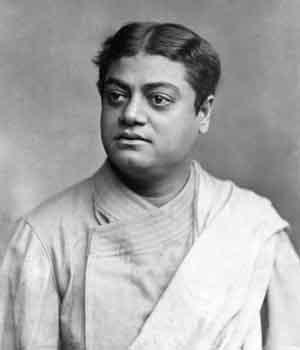
Swami Vivekananda (12 January 1863 – 4 July 1902) was an Indian saint, social reformer, and a great teacher of mankind. He was the foremost disciple of Bhagavan Sri Ramakrishna Paramahamsa Dev who is considered as the prophet of modern age. Swami Vivekananda was a towering spiritual personality, great thinker, orator and the prophet of universal harmony and progress.