
NIRVANASHATKAM

April 11, 2009 worksofvivekananda
(New Discoveries, Vol. 2, pp. 149-50 (Arena, October 1899, p. 499).)
[Swami Vivekananda’s partial translation of the “Nirvânashatkam” by Shankara, recited at Greenacre, Maine, and reported in an 1894 issue of the Greenacre Voice]
(Vide the notes from discourses delivered at Greenacre, Maine, entitled “The Religions of India”, in this volume of the Complete Works.)
Under the Swami’s famous pine at Greenacre, Vivekananda said:
“I am neither body nor changes of the body; nor am I senses nor objects of the senses. I am Existence Absolute. Bliss Absolute. Knowledge Absolute. I am It. I am It.
“I am neither death nor fear of death; nor was I ever born, nor had I parents. I am Existence Absolute. Bliss Absolute. Knowledge Absolute. I am It. I am It.
“I am not misery nor have I misery. I am not enemy nor have I enemies. I am Existence Absolute. Bliss Absolute. Knowledge Absolute. I am It. I am It.
“I am without form, without limit, beyond space, beyond time; I am in everything, I am the basis of the universe — everywhere am I. I am Existence Absolute. Bliss Absolute. Knowledge Absolute. I am It. I am It.”
Comments
Sign in to leave a comment
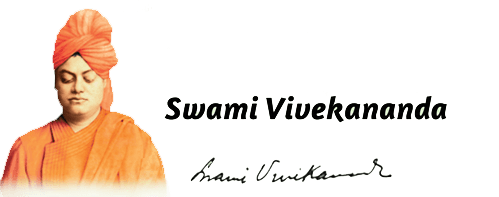
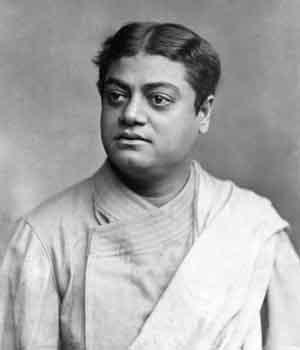
Swami Vivekananda (12 January 1863 – 4 July 1902) was an Indian saint, social reformer, and a great teacher of mankind. He was the foremost disciple of Bhagavan Sri Ramakrishna Paramahamsa Dev who is considered as the prophet of modern age. Swami Vivekananda was a towering spiritual personality, great thinker, orator and the prophet of universal harmony and progress.